|
|

TODAY.AZ / Politics
Caspian Sea at turning point after two decades of environmental cooperation
14 August 2026 [14:35] - TODAY.AZ
 By Ulviyya Poladova
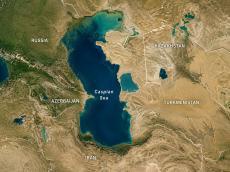
This year marks the 20th anniversary of Caspian Day, also known as the Day for the Protection of the Environment of the Caspian Sea. On August 12, 2006, the five Caspian Sea countries - Azerbaijan, Iran, Kazakhstan, Russia, and Turkmenistan - marked a major milestone when the Tehran Convention (the Framework Convention for the Protection of the Marine Environment of the Caspian Sea) officially entered into force. Since then, the day has served as a reminder of the ecological importance of the Caspian Sea and the shared responsibility of the five littoral states to preserve it for future generations.
The Caspian Sea occupies a unique place in the geography, ecology, economy, and politics of Eurasia. Although it is called a sea, it is actually the largest enclosed inland body of water in the world. It borders Azerbaijan, Iran, Kazakhstan, Russia, and Turkmenistan, and its vast waters support fisheries, transportation, energy infrastructure, and coastal communities. At the same time, the Caspian is an environmentally sensitive basin that faces serious pressures from pollution, biodiversity loss, industrial activity, and natural fluctuations in water level. For that reason, cooperation among the neighboring states has long been essential.
Caspian Day emerged from the process that led to the adoption and implementation of the Framework Convention for the Protection of the Marine Environment of the Caspian Sea, widely known as the Tehran Convention. This agreement was prepared by experts from the Caspian littoral states with the support of the United Nations Environment Programme and other international organizations.
Discussions on the text of the convention continued for several years. Meetings held between 1995 and 2003 helped shape the final legal framework. On November 4, 2003, the convention was signed by the Caspian states. Because it was adopted in Tehran, it became commonly known as the Tehran Convention. After ratification by the governments of all five coastal states, it officially entered into force on August 12, 2006. Later, that date began to be observed annually as Caspian Day.
The convention is significant because it was the first legally binding regional agreement among the five Caspian coastal states specifically focused on nature protection and environmental cooperation in the basin. In addition to setting principles, it also created the institutional basis for joint action and environmental governance in the region.
Why the Tehran Convention matters
The Tehran Convention was designed to address a broad range of environmental threats facing the Caspian Sea. Its central aim is to prevent, reduce, and control pollution from all sources. This includes industrial discharges, land-based pollution, shipping-related contamination, and other forms of environmental pressure that can damage water quality and marine habitats.
The agreement also emphasizes the protection, preservation, and restoration of the Caspian marine environment. This is especially important because the Caspian basin is home to valuable biological resources, including numerous fish species and unique ecosystems. Among the most well-known of these are the sturgeon populations for which the Caspian has historically been famous.
Another important feature of the convention is its attention to sustainable and efficient use of biological resources. Rather than treating the sea only as a source of extraction, the agreement promotes a longer-term view in which conservation and responsible use go hand in hand. It also includes provisions related to environmental impact assessment, ecological monitoring, and scientific research.
In practice, the Tehran Convention recognizes that the Caspian Sea is a shared ecosystem.Pollution released in one area can affect distant coastlines. Declining fish stocks do not stop at national borders. Shoreline degradation, habitat loss, and environmental emergencies require regional coordination. The convention therefore represents both a legal instrument and a framework for collective responsibility.
Another major event connected with this convention took place in 2018, when the heads of the Caspian states met in Aktau, Kazakhstan, for their fifth summit. During that meeting, they signed the Convention on the Legal Status of the Caspian Sea.
This agreement became historic because it addressed the long-debated legal status of the Caspian and established a framework for how the states would regulate rights, responsibilities, and cooperation in the region. While distinct from the Tehran Convention, the Aktau agreement also has environmental significance. Clear legal arrangements are important for managing navigation, resource development, security, and ecological protection in a coordinated way.
Together, the Tehran Convention and the 2018 Aktau Convention represent two pillars of regional cooperation where one focused primarily on the environmental protection of the Caspian Sea, and the other on its broader legal status.
One of the most remarkable features of the Caspian Sea is that its water level is constantly changing. Unlike the world's open oceans, the Caspian is a closed basin, which means its level depends on a complex balance of river inflow, precipitation, evaporation, and climatic conditions. As a result, rises and falls in water level are a natural part of its long-term history.
Over the last 200 years, the level of the Caspian Sea has risen and fallen several times. Historical observations show repeated cycles of increase and decline. Between 1855 and 1885, the level rose by about 80 centimeters. From 1886 to 1910, it dropped by approximately 100 centimeters. Between 1911 and 1929, another increase of about 30 centimeters was recorded. Then, from 1930 to 1977, a major decline of up to 3 meters was observed.
This pattern changed again in the late twentieth century. Between 1978 and 1995, the Caspian rose by about 2.5 meters, affecting coastlines, settlements, and infrastructure. After that, from 1996 to 2025, the sea level reportedly declined again by about 2.55 centimeters.
These shifts demonstrate that the Caspian is far from static. Long-term observations over roughly the last four thousand years suggest that the sea tends to follow periodic cycles, with notable rises occurring approximately every 200 to 250 years. In this view, fluctuation is not an exception but a defining characteristic of the Caspian system.
Over the past two centuries, the amplitude of change in the Caspian has approached 4 meters. The maximum level has been noted at around -25 meters in the Baltic height system, whereas the current level is described as below -29 meters.
These fluctuations have serious implications. Changes in water level can alter coastlines, flood or expose land, affect ports and infrastructure, influence wetlands and fish habitats, and create challenges for urban planning and economic development. In a region where oil and gas facilities, transport routes, fishing grounds, and densely used coastal zones all intersect, even modest changes in sea level can produce major consequences.
This is why the principles of the Tehran Convention remain so relevant. Pollution control, ecological monitoring, and scientific research are not abstract goals. They are practical tools for understanding and managing a living, changing ecosystem.
URL: http://www.today.az/news/politics/269551.html
 Print version
Connect with us. Get latest news and updates.
See Also
- 14 August 2026 [19:45]
Azerbaijan facilitates another Russian grain shipment to Armenia - 14 August 2026 [17:23]
Baku, Beijing discuss expansion of law enforcement cooperation - 14 August 2026 [16:23]
Azerbaijan, Georgia reaffirm commitment to strategic partnership - 14 August 2026 [14:35]
Caspian Sea at turning point after two decades of environmental cooperation - 14 August 2026 [13:13]
Intricacies of energy security: why region cannot do without Zangezur transmission line - 13 August 2026 [15:15]
Avanesov laments "masterpieces": how illegal construction of Karabakh is being passed off as world heritage site - 13 August 2026 [13:13]
TRIPP and Armenian "equality": revanchists have forgotten who owes whom - 12 August 2026 [14:14]
Nakhchivan is a crossroads that is reclaiming its historical role. - 12 August 2026 [12:08]
President Ilham Aliyev allocates 258 million manats to accelerate socio-economic development of Nakhchivan - 11 August 2026 [16:33]
Caspian littoral states to hold high-level meeting in Tehran
Most Popular
 Nakhchivan is a crossroads that is reclaiming its historical role.
 Azerbaijan continues construction of Nakhchivan railway toward Ordubad
 Azerbaijan, Chile explore new opportunities to expand business cooperation
 South Korea aims to land on Moon by 2030
 IEA: Azerbaijan keeps oil production stable amid global supply disruptions
 President Ilham Aliyev allocates 258 million manats to accelerate socio-economic development of Nakhchivan
 US, Iran agree to extend 60-day ceasefire