|
|

TODAY.AZ / Politics
Azerbaijani gas for Ukraine: desires and opportunities
11 August 2026 [14:14] - TODAY.AZ
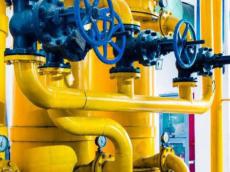
Azerbaijan is ready, if necessary, to supply gas to friendly Ukraine.
This was stated last week during a visit to Kyiv by the head
of the Azerbaijani Foreign Ministry, Jeyhun Bayramov.
The energy ties between the two countries are nothing new.
Azerbaijani SOCAR has been present on the Ukrainian market for many years and
is making plans for the future, anticipating new dynamics. Azerbaijan exports
its gas to 16 countries, and this is not the limit — it is ready to
expand the geography of supplies and has the capabilities to do so.
What the Azerbaijani minister said in Kyiv does not mean
that supplies are about to begin. This is a proposal, a signal to the Ukrainian
side that it can count on Azerbaijan if needed.
In principle, the export of Azerbaijani gas to Ukraine has
already stopped being a hypothetical project: the first delivery took place in
2025. Now, the main question is whether it is possible to turn pilot supplies
into a steady flow and how technically and economically justified this is.
Although most foreign
experts tend to believe that Azerbaijani gas for Ukraine is more about politics
than economics, there is still enough economic rationale in this matter. Of
course, like any economic deal, especially in the energy sector, this one also
has a political component. No one denies that Baku has its own political goals,
just like any oil and gas exporter. Oil and gas are a strategic asset of
foreign policy, and this will remain the case for a very, very long time. By
expanding the geography of supplies, Azerbaijan is strengthening its position
in Europe. It is hard to disagree that it is achieving its goals, and quite
successfully.
In July 2025, SOCAR and Ukraine’s Naftogaz concluded the
first deal for the supply of Azerbaijani gas. The pilot volume was delivered
via the route Azerbaijan–Georgia–Turkey–Bulgaria–Romania–Ukraine.
Those experts who, after Bayramov’s statement, try to be
sarcastic in the style of “are they going to build a new pipeline or
something?” are poorly informed. Pilot supplies for Ukraine were carried out
via the Trans?Balkan
gas pipeline. This is a pipeline connecting Ukraine, Moldova, Romania,
Bulgaria, and Turkey. Previously, it was used to transit Russian gas to the
Balkans, and now it has been reoriented for supplies in reverse mode, i.e., in
the opposite direction.
That is, there will be no need to lay a pipeline to Ukraine.
The basic infrastructure exists, and the task is to increase the required capacity
and build a commercially sustainable supply chain. This raises the question of
Azerbaijan’s capabilities. How much gas can it supply to Ukraine, and will this
meet its needs?
In 2025, Azerbaijan exported 25.2 billion cubic meters of
gas, of which 12.8 billion cubic meters were sent to Europe. Supplies to the
European Union are planned to be increased to 20 billion cubic meters. This
refers to a specific commitment made under the Memorandum signed in July 2022
between Baku and the European Commission. This volume is almost equal to the
total volume of gas consumed by Ukraine. Ukraine’s annual natural gas needs
amount to about 21 billion cubic meters, and it is clear that Azerbaijan cannot
redirect all supplies to it.
Few people know that Ukraine is a gas?producing country. Before the war, it
almost fully met its needs through domestic production, but due to
infrastructure damage, it is now forced to become an importer. The main volume
of natural gas in Ukraine is produced, or rather, was produced in the Eastern
region, mainly in the Kharkiv and Poltava regions. Earlier this year, Ukraine
received American LNG for the first time via the terminal in Klaip?da and
through Germany.
After the war, Ukraine will undoubtedly restore its
capacity, but for now, any alternative supply source will be helpful. Winter is
ahead, and it needs to be prepared for. If the hostilities continue, the
country will face a difficult winter. However, it will be no easier for
Russians either.
Ukraine could become one of the new European destinations
for Azerbaijani gas. The most important thing is that Azerbaijan has a pipeline
— the Southern Gas Corridor. The lack of pipeline infrastructure is the most
complex problem, which cannot be solved overnight. By offering Azerbaijani gas to
the Ukrainian side, the head of the Azerbaijani Foreign Ministry made a
proposal that is backed by concrete opportunities.
Experts believe that, in addition to supplies via the Trans?Balkan corridor,
Azerbaijani gas entering Europe via the Southern Gas Corridor can be
transferred to Ukraine and, via Greece, along the route
Azerbaijan — Turkey — Greece — Bulgaria — Romania — Ukraine
via interconnectors. As for the volumes, experts estimate that the initial
supply should be 1 billion cubic metres, with gradual growth as production
increases and the gas transmission infrastructure is expanded by European
partners.
In any case, both sides will benefit. Ukraine gains a
reliable alternative source, and Azerbaijan gains another outlet to the
European market.
There is another point. When the issue of Azerbaijani gas is
linked to Ukraine, it inevitably comes to mind. This is inevitable.
In June 2024, Bloomberg, citing sources, reported that EU
officials are holding talks on continuing gas supplies via the key
Russia–Ukraine pipeline in 2025. According to sources, one of the options under
discussion is for European companies to purchase gas from Azerbaijan and pump
it into Russian pipelines.
URL: http://www.today.az/news/politics/269443.html
 Print version
Connect with us. Get latest news and updates.
See Also
- 11 August 2026 [16:33]
Caspian littoral states to hold high-level meeting in Tehran - 11 August 2026 [16:17]
Armenia could import gas from Azerbaijan in future - 11 August 2026 [14:14]
Azerbaijani gas for Ukraine: desires and opportunities - 10 August 2026 [20:54]
New Muslim defence alliance taking shape - but how far will its members go? - 10 August 2026 [15:39]
China deepens its energy push in Azerbaijan as green power takes centre stage - 10 August 2026 [15:17]
Azerbaijan, Indonesia discuss potential economic forum - 10 August 2026 [13:13]
Pashinyan is preparing for a fight with the revanchists over Meghri — “Not just for life, but for death.” - 10 August 2026 [11:51]
Lithuanian Prime Minister makes phone call to President Ilham Aliyev - 10 August 2026 [11:12]
President Ilham Aliyev thanks Masoud Pezeshkian for remarks on Azerbaijan - 08 August 2026 [14:50]
French MFA issues statement marking anniversary of Washington summit
Most Popular
 Rainy and cloidy weather expected in country
 One worker killed, another injured in tunnel collapse in Türkiye’s Adana
 Trump tests economic pressure strategy as Iran talks remain frozen
 Pashinyan is preparing for a fight with the revanchists over Meghri — “Not just for life, but for death.”
 Ukraine war evolves into global contest as Russia, Iran face pressure
 Higher costs expected for iPhone 18 Pro
 President Ilham Aliyev thanks Masoud Pezeshkian for remarks on Azerbaijan