|
|

TODAY.AZ / Politics
Path of Turkmen gas to Europe: it cannot be done without Azerbaijan
06 April 2026 [11:11] - TODAY.AZ
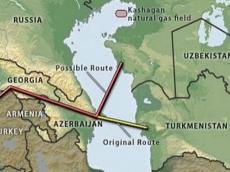
If the war in the Middle East continues for a few more months, the energy crisis in Europe will be felt in full force. So far, in the opinion of experts, the situation is not so bad, but there is no end in sight to the war, which means that the most unfavorable forecasts may come true. This is when oil and gas won't just be expensive. There won't be any at all. And if Europe doesn't find a way out in the coming months, it's going to have a very cold winter ahead.
As follows from the message of the European Commission, the EU countries managed to preserve some reserves in underground gas storage facilities after the winter season. The EC notes that the storage facilities are currently filled by an average of more than 28 percent. There are 100 gas storage facilities in the EU countries. Things are best in Spain, Italy, Poland, and Bulgaria, while the Netherlands, Sweden, and others finished the winter the worst. In other words, countries with warmer climates managed to save money, while their northern neighbors had a harder time.
European Commissioner for Energy Dan Jorgensen assured at a special session in Brussels that the European Commission continues to coordinate the filling of storage facilities and develops support measures for households and businesses. Jorgensen said that since the beginning of the war in Ukraine, the EU's dependence on Russian gas has decreased threefold. But this news has hardly inspired the Europeans with optimism in the current situation. The conflict in the Middle East is getting worse, and the Strait of Hormuz is open only to selected countries. The demonstrative closure of airspace for American military cargo, announced in recent days by a number of European countries, is unlikely to help appease Tehran, which does not intend to allow tankers with fuel produced in countries with American military bases on its territory.
Before the war, about 20 percent of the world's oil and gas supplies passed through the Strait of Hormuz. As a result of the military actions, gas facilities in Iran, the largest liquefied natural gas (LNG) hub in Qatar (Ras Laffan), as well as energy targets in other Persian Gulf countries were damaged. This led to the shutdown of part of the production, serious disruptions in fuel transportation and rising prices. According to data at the end of last week, the price of oil reached 140 dollars per barrel. And the price of gas in Europe increased 1.5 times in March, to about $633 per 1,000 cubic meters. Currently, there is an accelerated search for alternative gas suppliers - the Europeans are looking for them in the USA, Canada, Norway, Algeria and Azerbaijan.
In the current situation, Turkmen gas is back on the agenda. Turkmenistan's huge reserves, which are impossible to reach the European consumer, have long been of concern to the EU. There is a lot of Turkmen gas and it has not yet entered the world market. The energy resources of Central Asia, primarily Turkmenistan and Kazakhstan, can be a solution to the problem, allowing Europe to get rid of dependence on Russian gas and reduce vulnerability to instability in the Middle East. But the obstacle in the form of the Caspian Sea and the lack of an existing gas transportation infrastructure put the issue at a dead end.
The Trans-Caspian gas pipeline, which has been talked about since the late 90s, was considered an impractical project from a financial point of view. Europe had Russian gas, it did not want to spend money on the construction of the pipeline, and the project was firmly forgotten. They started talking about him again in connection with the sanctions against Russia and the prospect of losing the source of supplies. They tried to replace Russian energy resources with Middle Eastern and African ones. But even here, all the risks were not calculated. The outbreak of war in the Middle East and the blocking of the Strait of Hormuz have made us think again about Central Asia and transit through the Caspian Sea and the South Caucasus.
Eric Rudenshiold, a senior researcher at the Center for Caspian Policy Studies, writes in an article for The Daily Signal that Turkmenistan, which has huge gas reserves, can compensate for the problems that have arisen with the resources of the Middle East.
"The western route through the Caspian Sea to the Southern Gas Corridor could transform the region's economy and strengthen Europe's security," the expert believes. To begin with, Rudenshiold suggests building an interconnector between the Turkmen and Azerbaijani offshore platforms. The length of the connecting pipeline will be 70-75 kilometers, and the project will cost 400-600 million dollars. At the first stage, according to expert estimates, the pipe will be able to pass 5 billion cubic meters per year, and then it will be possible to expand supplies to 30 billion.
John Roberts, an expert on energy security, senior fellow at the Atlantic Council, and an expert on energy in the Caucasus and Central Asia, shares the same opinion.
In an interview with one of the publications, he stressed that mining is meaningless if there are no export routes. Although Qatar, for example, is a major producer, it does not have pipelines to bring resources to world markets. Qatar depends on the Strait of Hormuz. Unlike Qatar, Turkmen gas can be routed through the Caspian Sea to an existing system, the Southern Gas Corridor, Roberts believes. And to begin with, you don't have to build a 300-kilometer pipe across the entire sea, it's enough to connect the Turkmen and Azerbaijani terminals.
However, the idyll was disrupted by a journalist's question about who would invest in the project. The European Union, private companies - who?
According to Roberts, private investment cannot be avoided here, we must talk about large-scale supplies on a long-term basis, for which the EU will have to change its policy. First, the European Union should again allow the European Investment Bank to invest in both fossil fuel extraction and transport infrastructure to bring it to markets. Secondly, the EU should think about long-term contracts.
In both cases, the expert is right. And this applies not only to the ephemeral pipeline across the Caspian Sea. Baku has repeatedly stated its readiness to increase gas production and supplies to European partners if they are ready to conclude long-term contracts and invest in expanding the gas transportation infrastructure. But the doctrine of decarbonization hangs like a sword of Damocles over the European energy sector. However, there are already opinions about the need to lift the ban on European financial institutions from financing oil and gas projects in Azerbaijan. If the situation continues to deteriorate, it is possible that the fight against climate change will have to be postponed until better times.
The same applies to the Trans-Caspian gas pipeline. The idea has been in the air for thirty years. In 1996, Europe and the United States became interested in Turkmenistan's vast gas reserves and began to think about how to deliver them from the eastern shore of the Caspian Sea. In 1999, the Turkmen government signed an agreement with American companies to study the route of the proposed pipeline. In the same year, at the ECO event in Istanbul, Turkiye, Georgia, Azerbaijan and Turkmenistan signed a number of agreements on the construction of an underwater gas pipeline. It should be noted that Azerbaijan has repeatedly proposed in the past to build a connecting pipe and transport Turkmenistan's gas through the Azerbaijani pipeline system. Our country was not averse to becoming a transit country for Turkmen gas. This was hampered by the lack of a legal status for the Caspian Sea, as well as the lack of consensus among partners and uncertainty about financing. In 2018, the Caspian Convention was signed, and this resolved many issues. However, by that time, Azerbaijan had turned into an exporter of its own gas due to the discovery of the Shah Deniz field. It was after Azerbaijan left the project in 2013 that the idea of Nabucco began to live for a long time. At the end of December 2020, Azerbaijani gas reached European countries.
In July 2023, answering questions from participants of the Shusha Media Forum, President Ilham Aliyev said that in order to provide additional volumes of gas from the eastern coast of the Caspian Sea, it is necessary, firstly, to lay a Trans-Caspian gas pipeline along its bottom, and secondly, to build something like the Southern Gas Corridor from Baku to Europe. "The main question is who will finance these important projects? We have no answer to it," the head of state said. According to him, when Azerbaijan was building the Southern Gas Corridor, in addition to corporate financing, it received funds from the European Bank for Reconstruction and Development, the European Investment Bank, the Asian Development Bank, and the Asian Infrastructure Investment Bank. Now, two of these European organizations have stopped financing projects related to fossil fuels.
The initiators of the revival of the project do not take into account another very important factor. When making plans for the Southern Gas Corridor, they do not realize that they are talking about an existing infrastructure with specific parameters and capabilities.
As the head of the Azerbaijan Petroleum Research Center, Ilham Shaban, noted earlier, Azerbaijan is the only oil and gas producing country that cooperates with its oil and gas producing neighbors. There is no such thing anywhere else in the world. Azerbaijan does not compete, does not put a stick in anyone's wheels. When creating the Southern Gas Corridor, Baku announced that it was not going to make this infrastructure closed, as in some countries. It is open, and those countries that have free volumes of gas and wish to sell them on Western markets can use our infrastructure.
"But not in immeasurable volumes, but in the scope of the opportunities provided by the pipeline and not contrary to our commercial interests. So is the Baku-Tbilisi-Ceyhan oil pipeline. If you have any options, please send them. It will not happen that Azerbaijani gas and Azerbaijani interests will take a back seat," the expert said.
Ilham Shaban noted that the 30 billion Turkmen gas that some are already mentally passing through the SGC is a fantasy. The total capacity of YUGK is 31 billion cubic meters. But this is up to the borders of Europe. Further pipeline capacity is lower - 20 billion cubic meters. The passage of even 5 billion cubic meters of Turkmen gas will create problems for our exports, the expert stressed. American experts propose to build an interconnector from the Turkmen platform to the ACG, not taking into account that there is not a main pipeline from the ACG to Sangachal, but an ordinary underwater gas pipeline with a maximum capacity of 5 billion cubic meters. And we need these capacities ourselves, the Azerbaijani expert stressed.
Surprisingly, well-known American analysts (the same Rudenshiold served as director for Central Asia at the National Security Council under Trump and Biden) do not take into account such obvious points. The delivery of Turkmen gas to Europe will not be limited to a 70-kilometer pipeline to ACG and even a 300-kilometer pipeline to Baku. A new gas pipeline from Baku to Europe, parallel to the SGC, will be required at a cost of several billion. And that's a completely different story.
The issue of transit of Turkmen gas to Europe has always remained at the theoretical level. Now, with serious problems brewing, it is possible that Europe will begin to look at many things from a different angle.
According to the Turkmen media, President of Turkmenistan Serdar Berdimuhamedov has been invited to Brussels. At a briefing at the Ministry of Foreign Affairs of Turkmenistan, the Ambassador of the European Union in Ashgabat, Beata Peksa, said that the agenda of the upcoming visit is broad and covers political consultations, energy security, education and youth cooperation. The only obstacle to the visit remains the choice of an appropriate date, taking into account the busy work schedule of the European leadership.
In February of this year, in an interview with Al-Arabiya TV channel, Chairman of the Halk Maslahaty Gurbanguly Berdimuhamedov stated that Turkmenistan is seriously and constructively approaching the implementation of the Trans-Caspian gas pipeline project, considering it as one of the key areas for ensuring energy security on the continent. "At the same time, it is necessary to resolve issues of an international legal nature, in particular the issue of the delimitation of the bottom of the Caspian Sea," he added. Gurbanguly Berdimuhamedov recalled that the Turkmen-Azerbaijani Working Group was established to work on this issue and expressed the hope that "its activities will yield significant practical results."
It should be recalled that in July 2025, Gurbanguly Berdimuhamedov paid a two-day visit to Azerbaijan at the invitation of President Ilham Aliyev. It was reported that one of the topics of the talks between the leaders of the two countries was the discussion of the development of energy cooperation, including the prospect of the Trans-Caspian gas pipeline.
Turkmenistan has repeatedly tried to export its gas without building an export pipeline - through a swap. In 2021, a swap agreement was signed between Azerbaijan, Turkmenistan and Iran on the supply of certain volumes of Turkmen gas to the Azerbaijani side. At the end of 2023, Ashgabat unilaterally withdrew from the agreement, expressing dissatisfaction with the price.
Later, Turkmenistan agreed with the Turkish oil and gas company Botas on the transit of its gas through Iran under the swap scheme. According to the Turkmen media, Turkiye may purchase 300 billion cubic meters of Turkmen gas within twenty years. The war in the Middle East has called these plans into question.
Azerbaijan welcomes the cooperation between its neighbors. He firmly occupies his niche and is not afraid of competitors. He knows his capabilities and has a well-established infrastructure.
Reliability and stability are very important for partners to want to do business with you. From this point of view, it would be beneficial for Turkmenistan to invest in a new gas pipeline and export its resources to customers directly through the South Caucasus. Azerbaijan has established transit cooperation in the region, supported by good relations and mutual understanding. Georgia and Turkey have already declared their readiness to transit Turkmen gas through their territories.
Oil and gas will always be relevant. Now is an opportune moment to force Europe to put aside its radically green energy protocols and start investing in its own energy security with greater pragmatism. And considering that the Trans-Caspian gas pipeline is even more talked about in the United States than in Europe, Ashgabat has a chance to involve the Americans in the project. We must not miss it.
URL: http://www.today.az/news/politics/266934.html
 Print version
Connect with us. Get latest news and updates.
See Also
- 06 April 2026 [12:12]
Consider getting some tattoos, friends - 06 April 2026 [11:51]
President Ilham Aliyev, President of Georgia hold one-on-one meeting - 06 April 2026 [11:11]
Path of Turkmen gas to Europe: it cannot be done without Azerbaijan - 06 April 2026 [11:06]
Tbilisi hosts official welcome ceremony for President Ilham Aliyev - 06 April 2026 [10:10]
President Ilham Aliyev arrives in Georgia on state visit - 05 April 2026 [11:25]
Zori Balayan, controversial voice of Karabakh-era nationalism, dies - 04 April 2026 [10:17]
President Aliyev: We will continue to stand by each other in both good and difficult times - 04 April 2026 [08:30]
In shadow of regional war, South Caucasus turns to cooperation - 03 April 2026 [14:14]
“Red corner” dispute leads to Sardarapat School principal’s resignation - 03 April 2026 [13:13]
Artak Beglaryan's virtual "medals"
Most Popular
 Airstrikes hit Iran’s energy and trade infrastructure amid escalating US-Israel conflict
 Path of Turkmen gas to Europe: it cannot be done without Azerbaijan
 In shadow of regional war, South Caucasus turns to cooperation
 WHO chief warns Iran nuclear plants could face catastrophic strike
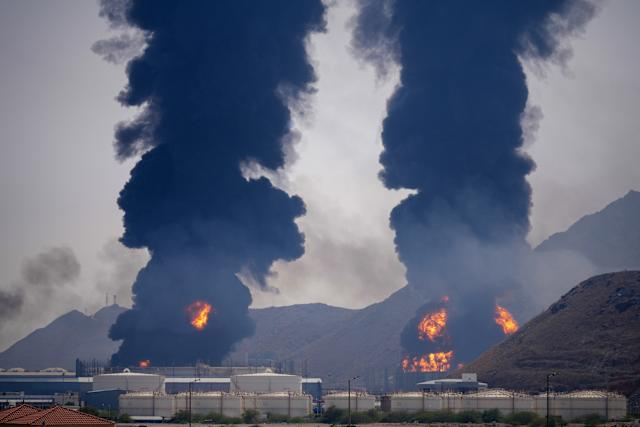 Missile debris sparks fire at one of UAE's biggest gas facility
 No sabotage found in Turkish C-130 crash in Georgia, prosecutors say
 Azerbaijani athletes claim 118 medals last month