|
|

TODAY.AZ / Politics
Fuel shortage has hit Yerevan - what prevents it from turning to Azerbaijan?
16 January 2026 [11:11] - TODAY.AZ
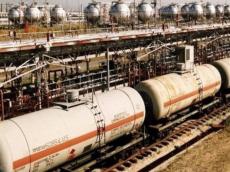
The supply of Azerbaijani fuel to Armenia remains one of the
main topics of discussion in expert and political circles. The Armenian
government, which has essentially done a good deed for the purse of its
citizens, is forced to constantly justify and explain itself, to prove that it
is trying only for the interests of Armenians and peace in the region, without
pursuing any other goals. The Azerbaijani gasoline exported to the country has
long been sold out and has already been consumed by the internal combustion
engines of local cars, and the conversations and discussions continue. And they
are acquiring more and more original forms.
In recent days, the price of liquefied natural gas has risen
in Armenia. No, it's not Azerbaijani. Not yet, anyway. LNG is delivered to
Armenia from Russia and Iran. Liquefied natural gas in the republic has risen
in price from about 200 to 260 drams (from about 52 to 67 cents) per kilogram.
The rise in price occurred for objective reasons, but the opposition found
another explanation. In the relevant media reports, the government was accused
of raising the price in order to force people to buy Azerbaijani gasoline.
The reasons for the rise in gas prices in Armenia are quite
obvious, and you don't need to be an economist to see them. LNG is delivered to
Armenia by tanker trucks. Fuel is moving from Russia through the problematic
border crossing on the Russian-Georgian border "Verkhny Lars". The
passage through which has been closed for more than one day due to weather
conditions. Snowfall, blizzards and the threat of avalanches have made the
checkpoint impassable for trucks for several days, and on Thursday the road was
closed to all vehicles. That is, SGG does not arrive in Armenia every day, and
such situations certainly lead to price increases due to the possibility of
shortages. With Iran, everything is even clearer. The situation in this country
is difficult and not predisposed to the clarity of fulfilling economic
obligations. Supply disruptions are understandable. And when supply disruptions
occur, prices also change.
Economy Minister Gevorg Papoyan tried to explain these
reasons to his critics at a government meeting on Thursday. Prime Minister
Nikol Pashinyan took an even broader approach to the topic, linking the topic
of LNG supplies with the topic of communications diversification. "I think
we will resolve these issues once and for all soon. Rest assured, there will be
no such problem in December of this year," the Armenian Prime Minister
promised. And Deputy Prime Minister Mher Grigoryan added that it is wrong to
transport goods such as liquefied natural gas by tanker trucks, their
transportation by rail is more expedient from the point of view of safety.
Indeed, if Armenia had not only one "Upper Lars"
at its disposal, if it had a railway connection with Iran, if it had
alternative routes to Russia, the January snowfalls would not have created a
threat of fuel shortages in the country.
In this regard, at the last briefing, Nikol Pashinin stated
that "after yesterday's events (meaning the announcement of the terms of
the agreement on TRIPP - ed.), the proper time for the restoration of railways
connecting Armenia with Azerbaijan and Turkiye has already arrived, and we want
it to be done now."
It should be recalled that at the end of last year,
Pashinyan appealed to the concessionaire of the Armenian Railways, the Southern
Railway, to restore railways running to the borders of Turkiye and Azerbaijan as
soon as possible, including the Hrazdan-Ijevan-Gazakh line, which operated
during the Soviet era. As you know, Armenia's railways are managed by a wholly
owned subsidiary of Russian Railways.
Due to the fact that the issue of the Zangezur Corridor, or TRIPP, finally got off the ground on January 13, Pashinyan considered it possible to immediately begin implementing his "Crossroads of the World", which could not be realized without the road through Meghri. Without the Zangezur corridor, Azerbaijan would not have opened a single railway border crossing.
We would not be surprised if the opposition does not now
accuse the government of deliberately raising LNG prices in order to refocus on
the delivery of liquefied natural gas from Azerbaijan. Nikol Pashinyan is
probably considering such a prospect in the hope of ceasing to depend entirely
on Russian energy resources. But this is still a matter of the future. Direct
railway communication and direct pipeline communications with Armenia are not
possible at this stage of the process. The delimitation has just begun, peace
has not yet been signed, and there are still some other conditions that Yerevan
must fulfill. And most importantly, the Armenian society is not yet ready for
such a rapprochement.
They did not even dare to mention the possibility of
purchasing Azerbaijani gas in Armenia until two years ago, at a forum at ADA
University, President Ilham Aliyev stated that Armenia could potentially be a
recipient of Azerbaijani gas following the example of Georgia. It will be
beneficial for her, given the preferential price for gas supplied to Georgia.
"And from the point of view of proximity, from the point of view of
infrastructure, of course, it would be natural to have this kind of
cooperation," the head of state said.
The reaction from Yerevan was immediate. As if that was all
they were waiting for. Parliament Speaker Alen Simonyan said that Armenia is
ready to discuss the issue of gas purchases from Azerbaijan. In his opinion, it
will be good if Armenia buys Azerbaijani gas.
It would not only be good for Armenia, it would be natural.
Azerbaijani gas is supplied to countries located thousands of kilometers from
the South Caucasus, and the nearest neighbor continues to buy fuel from distant
partners due to its own policy, which has brought many troubles to the region.
But it wasn't always like that. Actually, the gasification of Armenia began
with Azerbaijani gas, and this republic has existed on Azerbaijani gas for
decades. And after the start of the military aggression and occupation of the
territories of Azerbaijan, it found itself in a deep energy crisis, in which it
remained for fifteen years, until Russian gas entered the country.
Over the years of conflict, Armenia has been able to make
sure that none of its strong allies can ensure its energy security. It will
always depend on the lack of infrastructure, the scarcity of the budget, the
games of the powers and their own stupidity.
Meanwhile, in Soviet times, gas to Armenia went through three major pipelines. She would not need overseas LNG if there were no conflict and occupation.
As previously reported in an interview with Day.The head of
the Azerbaijan Petroleum Research Center, Ilham Shaban, said that until the 4th
quarter of 1991, Armenia received gas from Azerbaijan and developed due to it.
The gas was supplied via the Hajigabul-Gazakh-Ijevan-Yerevan main pipeline. In
1976, construction of a new gas pipeline infrastructure began - the
Yevlakh-Barda-Aghdam-Askeran-Khankendi-Shusha-Lachin-Gerus-Shahbuz (NAR)
pipeline. The highway was built for two years. In the 80s, an additional
70-kilometer pipe was built from the border of the Nakhchivan Autonomous
Republic to Yerevan. As a result, Armenia received a ring electric power line
and a gas pipeline. Therefore, no matter what kind of accident occurred,
Armenian consumers received uninterrupted Azerbaijani gas and electricity.
It's a beautiful picture, isn't it? Pashinyan wants her back.
Therefore, when talking about the implementation of TRIPP, he always emphasizes
the construction of the gas infrastructure provided for in the project, that
is, the gas pipeline. Of course, Azerbaijan is ready to build a gas pipeline to
the Nakhchivan Autonomous Republic in order to restore its native gas supply to
the autonomy, which has been under de facto blockade since the early 90s of the
last century. Azerbaijani gas enters the NAR, passing a long way through
Georgia and Turkiye and thanks to a number of infrastructure Turkish projects.
So the issue of the NAR gas pipeline is not a distant prospect, as Azerbaijan
itself needs it. Armenia can take advantage of the opportunities that new
communications will create.
So, Prime Minister Pashinyan is not mistaken, seeing a way
out of a difficult situation in unblocking and developing communications. In
the logic of the developing peace process, Baku is ready to meet reasonable
initiatives. But on one condition - they must meet our national interests. Enough
steps of goodwill have already been taken.
URL: http://www.today.az/news/politics/264850.html
 Print version
Connect with us. Get latest news and updates.
See Also
- 03 October 2026 [15:44]
Baku, Tehran discuss bilateral relations - 03 October 2026 [12:58]
Weapons were bought with money at world prices—down to the last bullet - President Ilham Aliyev - 03 October 2026 [12:25]
China and U.S. are world's two superpowers; there is no third - President Ilham Aliyev - 03 October 2026 [11:10]
President Ilham Aliyev sends congratulatory letter to President of Iraq - 03 October 2026 [11:05]
President Ilham Aliyev sends congratulatory letter to President of the Republic of Korea - 03 October 2026 [11:03]
President Ilham Aliyev receives President of International Judo Federation [PHOTOS/VIDEO] - 03 October 2026 [11:01]
President Ilham Aliyev sends congratulatory letter to President of Germany - 02 October 2026 [12:12]
Box and Artak: all that remains of Vardanyan’s female detachment - 02 October 2026 [10:59]
President: The current Armenian leadership used to make territorial claims against us - 01 October 2026 [12:12]
Subtleties of international law and how they are understood in Armenia
Most Popular
 Box and Artak: all that remains of Vardanyan’s female detachment
 President Ilham Aliyev addresses 8th Congress of New Azerbaijan Party
 World Aquatics Swimming World Cup enters second day in Baku
 US could establish military base in Poland, Trump says
 President: The current Armenian leadership used to make territorial claims against us
 Iran launches foreign currency sales through four banks to manage FX Market
 GPT-6 Astra deciphers Napoleon’s 217-year-old secret message