|
|

TODAY.AZ / Politics
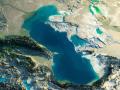
Trans-Caspian Energy Bridge and critical role of Azerbaijan
11 March 2026 [12:21] - TODAY.AZ

An important meeting was held in Baku last week. A launch
seminar organized by the Asian Development Bank (ADB) with the participation of
the governments of Azerbaijan, Kazakhstan and Uzbekistan on the Trans-Caspian
Green Energy Corridor project took place. The participants discussed the
feasibility study of the first phase of the project, analyzed approaches. The
project is focused on the formation of an interregional system for connecting
the electric networks of the three countries, which is designed to facilitate
the exchange of green energy in the Caspian region and open the way for its
export to European energy markets.
As you know, the global energy industry is on the path of
transformation from fossil fuels to renewable energy sources. Although Europe's
overly rapid start on this issue has led to some "exhalation," the
need to combat climate change remains on the agenda. As Baku has repeatedly
pointed out, the transition should take place smoothly, without sudden
movements and taking into account the realities. Azerbaijan itself follows this
formula and continues to develop renewable energy sources, while at the same
time continuing to produce and export hydrocarbon fuels. Today, the country's
partners are also gradually beginning to lean towards a step-by-step path to
achieve the goal as the most rational one.
For its part, Baku continues to be an alternative source of
oil and gas for Europe, while taking steps to assert its role as a supplier of
green energy. A new infrastructure is gradually being formed on the map of
Eurasia, which can connect the Central Asian region with European markets
through Azerbaijan. The Trans-Caspian Green Energy Corridor becomes the central
element of this architecture. We are talking about a large-scale energy communications
system, in which electricity produced from solar and wind sources in Central
Asia and the Caspian region will be transferred through Azerbaijan and the
South Caucasus to the European energy system. This project is gradually turning
from a concept into a real infrastructure initiative capable of changing the
energy map of the entire region.
A key element of the future corridor will be an underwater
high-voltage cable that will connect the energy systems of Kazakhstan,
Uzbekistan and Azerbaijan. According to an analytical report by the Astana
International Financial Center and the Institute for Development and Diplomacy
at ADA University, this transmission line will become the foundation of the
region's new energy architecture.
In fact, we are talking about creating an infrastructure
that will allow exporting clean electricity from Central Asia to the European
Union. The underwater cable across the Caspian Sea will become part of a larger
energy scheme, a project to transport green energy across the Black Sea, which
will connect the South Caucasus with Europe. Thus, an extended energy route is
being formed: Central Asia-the Caspian Sea-Azerbaijan-the South Caucasus-the
Black Sea-Europe. This will be the first such project, and it is expected to
change the very logic of energy cooperation on the continent. Previously, east
and west were connected by oil and gas pipelines, but now the export and
transit of electricity begins.
For the European Union, which is planning to completely
abandon fossil fuels and advocate decarbonization, this corridor is of
strategic importance. It creates an additional source of energy supply and
contributes to the diversification of energy supplies, reducing dependence on
oil and gas. It is no coincidence that the initiative is being considered in
the context of the European infrastructure development program Global Gateway.
In April 2025, Azerbaijan, Kazakhstan and Uzbekistan signed a memorandum of understanding, marking the beginning of the creation of a joint venture for the implementation of the Trans-Caspian Energy Corridor. The initiative has received support from major international financial institutions, including the Asian Development Bank and the Asian Infrastructure Investment Bank. The Italian company CESI has already started developing a feasibility study for the project. It is expected that the feasibility study will be ready by the beginning of 2027, after which the project will move to the stage of financing and practical implementation.
The Trans-Caspian Green Energy Corridor is an integral part
of the Black Sea Energy Black Sea Cable project, implemented with the key
participation of Azerbaijan.
In early December, the European Commission finally granted
Black Sea Energy PMI status. The PCI/PMI status (Project of pan-European
interest) makes the project attractive to investors, primarily European ones.
The status opens up great opportunities for the project. It will allow for the
use of accelerated administrative procedures, provides the project with a
special legal framework, cross-border regulatory compatibility, and the
possibility of obtaining EU funding.
It should be recalled that initially the Central Asian
countries were not involved in the project of exporting green energy to Europe.
The Agreement on Strategic partnership for the construction of Black Sea Energy
was signed on December 17, 2022 by Azerbaijan, Georgia, Hungary and Romania in
Bucharest. The project provides for the laying of an underwater cable with a
length of 1,195 km, designed to supply electricity produced in Azerbaijan
through Georgia and the Black Sea to Romania for subsequent transportation to
Hungary and the rest of Europe. At the initiative of Azerbaijan, Kazakhstan and
Uzbekistan joined the system. And now Black Sea Energy has significantly
expanded the boundaries, which will significantly increase the capabilities of
this energy corridor.
Currently, solar and wind energy are developing in the partner countries of Central Asia. Azerbaijan has also had its say in this matter. The largest Garadag solar power plant in the region with a capacity of 230 MW, built by Masdar, has been commissioned, and the Khizi-Absheron wind power plant with a capacity of 240 MW, implemented by ACWA Power, has begun operation. In addition, construction of a solar power plant has begun in Bilasuvar, which will challenge Garadagh's status as the largest in the South Caucasus. Solar and wind power plants are also being built in other regions of the country, including the liberated territories and the Nakhchivan Autonomous Republic. Baku has set a goal to increase the capacity of renewable energy sources to 6-8 GW by 2030, and their share in the energy mix to about 38-40 percent.
AR Minister of Energy Parviz Shahbazov, speaking at the 12th
ministerial meeting of the Southern Gas Corridor Advisory Council and the 4th
ministerial meeting of the Advisory Council on Green Energy in Baku, said that
Azerbaijan is implementing a plan to produce 8 GW of renewable energy for
domestic consumption, export and operation of data centers. According to him, 2
GW of this capacity will be integrated into the national grid as early as 2027,
and the export of 3.9 GW is scheduled to begin in 2032.
However, this is not the only direction in which Azerbaijan
is working today. Construction of the Zangezur power transmission line with a
capacity of 1 thousand tons has begun. MW, which will become the main link of
the Azerbaijan-Turkey-Europe green energy corridor. In addition, technical
solutions for the integration of 1 GW of solar energy from Nakhchivan into the
Turkish grid are being evaluated, and work continues on the Azerbaijan-Turkiye-Georgia-Bulgaria
energy corridor project.
Earlier, the Turkish side announced plans to bring the
Azerbaijan-Georgia-Turkiye-Bulgaria corridor project to the next stage in March
this year. And recently Romania announced its intention to join this project.
In this regard, the Turkish side has developed a draft protocol on amendments
to the memorandum signed last year, taking into account the interests of
Bucharest.
The memorandum of understanding on the establishment of the
Azerbaijan-Turkiye-Georgia-Bulgaria corridor was signed in April 2025. In the
near future, the selection of a consultant for the development of a feasibility
study of the project will begin.
Needless to say, the implementation of all these projects
will strengthen Azerbaijan's role in the region. He will remain a key link in
any scenario. And this role will only increase with the expansion of
geopolitical perturbations.
URL: http://www.today.az/news/politics/266325.html
 Print version
Connect with us. Get latest news and updates.
See Also
- 12 March 2026 [12:12]
Azerbaijan-EU: Strategic partnership in era of change - 12 March 2026 [09:12]
President of European Council concludes visit to Azerbaijan - 11 March 2026 [14:00]
Russian President Putin makes phone call to President Ilham Aliyev - 11 March 2026 [12:21]
Trans-Caspian Energy Bridge and critical role of Azerbaijan - 11 March 2026 [12:12]
Offended "innocence" of ANCA: the songs are old, the hysteria is new - 11 March 2026 [11:33]
President of Transitional Sovereignty Council of Sudan sends letter to President Ilham Aliyev - 11 March 2026 [11:25]
President of Timor-Leste arrives in Azerbaijan for visit - 10 March 2026 [15:15]
Not so fast, gentlemen - it's time for the Armenian "oppositionists" to face the truth - 10 March 2026 [12:58]
President Ilham Aliyev approves amendments to Constitution of Nakhchivan Autonomous Republic - 09 March 2026 [16:22]
Azerbaijan and UK discuss rising Middle East escalation in high-level phone call
Most Popular
 Trans-Caspian Energy Bridge and critical role of Azerbaijan
 Azerbaijan and Germany discuss Middle East escalation and regional security
 Azerbaijan sends humanitarian aid to Iran on President Ilham Aliyev’s instructions
 US and Israel's 'Plan A' has failed, says Iranian FM
 Ramadan Iftar gathering strengthens Indonesia–Azerbaijan friendship and values-based cooperation in Islamic world
 Pakistan National Assembly Speaker contacts Azerbaijani counterpart amid regional concerns
 India considers restoring Russian LNG imports as energy security concerns rise