|
|

TODAY.AZ / Politics
Azerbaijani oil scares demagogues in Yerevan: where is common sense?
15 December 2025 [12:12] - TODAY.AZ

The news about the possibility of exporting Azerbaijani
petroleum products to Armenia has seriously alarmed the expert community of the
neighboring country. The transit of grain was not greeted so emotionally,
because the origin of the goods belonged to third countries. The prospect of
receiving oil and petroleum products directly from Baku caused a slight
hysteria. Not at the official level, but at the level of the expert community
and the opposition. That is, those who are not burdened with responsibility for
the future of Armenia and can afford the luxury of demagoguery.
The official circles are enthusiastic about this prospect.
Armenian Deputy Prime Minister Mher Grigoryan confirmed to reporters that
Azerbaijan and Armenia are discussing the possibility of cooperation in the
supply of Azerbaijani fuel. He added that discussions on other types of goods
are continuing. Parliament Speaker Alen Simonyan also believes that there
should be a trade turnover of all types of goods between Armenia and
Azerbaijan. Armenia, he told the media, should use all possible alternatives in
energy supplies and provide Azerbaijan with the opportunity to have its own
interests in exporting oil and petroleum products through Armenia to Nakhchivan
and Turkiye.
But the reasonable approach of the establishment is not
noted in expert circles. Armenian experts met the prospect of Azerbaijani oil
supplies with doubt and discontent. And not at all because it can somehow harm
the interests. Not at all. But on the other hand, it may meet the interests of
Azerbaijan, and this cannot be allowed in any way.
Economist Ashot Tavadian scared the readers of the publication, to whom he commented on the issue of Azerbaijani oil, saying that there is a great political factor in this deal, and it also does not fit into any economic logic. Tavadian believes that the Azerbaijani side is much more interested in the deal, which wants to increase Armenia's dependence on Azerbaijan. Responding to a journalist's remark that the Armenian energy market is monopolized and diversification of supplies can have a positive effect on prices, economist Tavadian proudly stated that "this is another problem, and it should be solved in a completely different way, and not by importing petroleum products from Azerbaijan."
Energy security expert Vahe Davtyan also considers the
upcoming deal a political action. But this expert went even further, saying
that such steps fit into the general course of Azerbaijan and the EU to reduce
Russia's role in the South Caucasus. In his opinion, Azerbaijan wants to show
the West that it is ready to unblock communications, which is important for it
to strengthen its key role in the Middle Corridor, which is designed to bypass
Russia. And Armenia is just one of the elements, an object of the emerging
architecture. Nevertheless, the Armenian expert is confident that Azerbaijan
will not be able to strengthen its energy influence on Armenia, as it itself
does not have enough refining capacity. And anyway, it remains to be seen to
what extent Russia will allow its interests in the Armenian energy market to be
harmed. Etc.
Armenian experts are panicking about the situation that has
not yet developed. And the fears are completely in vain. Azerbaijan does not
make any plans for the limited and weak Armenian market in terms of solvency.
Experts, who are confident that Armenia can solve the problem of
diversification "in another way," forget that for many decades
Armenia depended on Azerbaijani oil and gas, and in Soviet times enjoyed all
the preferences, often receiving oil and petroleum products for free. Even
Stalin couldn't contain his emotions.: "I found out that Georgia and
Armenia receive oil products from Azerbaijan for free, which is an unthinkable
case."
It seems that Armenia hardly remembers this, as well as the
fact that the first gas to this country came from Azerbaijan in 1960. Armenia
has always been supported and saved by Azerbaijani energy resources, and as
long as it was possible, it had no problems. The problems began when she
herself cut this "umbilical cord" with the Karabakh conflict. With
the beginning of the military aggression, all pipelines were blocked, as the
resource of good neighborliness was exhausted. After that, the Armenian side
did not receive a canister of gasoline or a cubic meter of gas. In the 90s,
Armenia was in an acute energy crisis, in fact, in darkness, until Russian gas
supplies began in 2003, and Iranian gas began in 2009.
A few years ago, plans were made in Armenia to turn into a
regional oil refining center and get rid of dependence. Since the end of the
noughties, Yerevan and Tehran have begun discussing the construction of a
refinery on the border in Meghri. But it did not go beyond the empty statements
of officials. The construction of the refinery is a very expensive project,
Armenia had no money, and Iran had no reason to invest in a senseless
enterprise. It makes no sense, because Armenia does not have its own oil for
refining and would have to build an oil pipeline, which would require high
costs. The option of pumping Iranian oil through a gas pipeline also
disappeared, as it threatened to leave Armenian power plants without fuel. The
factor of sanctions against Iran also hindered. The Europeans on whom the
calculation was made could refuse to buy gasoline produced from Iranian oil. In
short, the idea to get rid of addiction failed.
Armenia has always been dependent on others. She's no
stranger to it.
By the way, the situation with the refinery was commented on
by the media in 2020 by the same Vahe Davtyan. Then the refinery issue was back
on the agenda, and the expert warned that the United States might not like it.
And today, the factor of sanctions and the potential dissatisfaction of the
White House with the expansion of energy cooperation between Armenia and Iran
is escalating even more. Because of the difficult geopolitical situation and
also because the United States is joining Armenia itself. How do the demagogues
propose to diversify supplies by excluding Azerbaijan from them? Any other
options will cost many times more and may incur the displeasure of Armenia's
new partner.
Azerbaijan's energy resources can be the only source of diversification. Of course, Baku pursues political interests. Any mining country invests in its transactions and political interest, if it is subject and independent in decision-making. Baku-Tbilisi-Ceyhan and the Southern Gas Corridor were also built not only for economic benefit. By contributing to Europe's energy security, Azerbaijan has strengthened its political positions and expanded its circle of friends and partners.
Speaking last April at the international forum on
"COP29 and Green Vision for Azerbaijan" at ADA University, President
Ilham Aliyev stated that Armenia could potentially be a recipient of
Azerbaijani gas following the example of Georgia. It will be beneficial for
her, given the preferential price for gas supplied to Georgia. "And from
the point of view of proximity, from the point of view of infrastructure, of
course, it would be natural to have this kind of cooperation," the head of
state said.
Yerevan immediately seized on this idea. Parliament Speaker
Alen Simonyan said that Armenia is ready to discuss the issue of gas purchases
from Azerbaijan. In his opinion, it will be good if Armenia buys Azerbaijani
gas.
As we can see, the Government of the Republic of Armenia
perceives the realities more objectively than in expert circles.
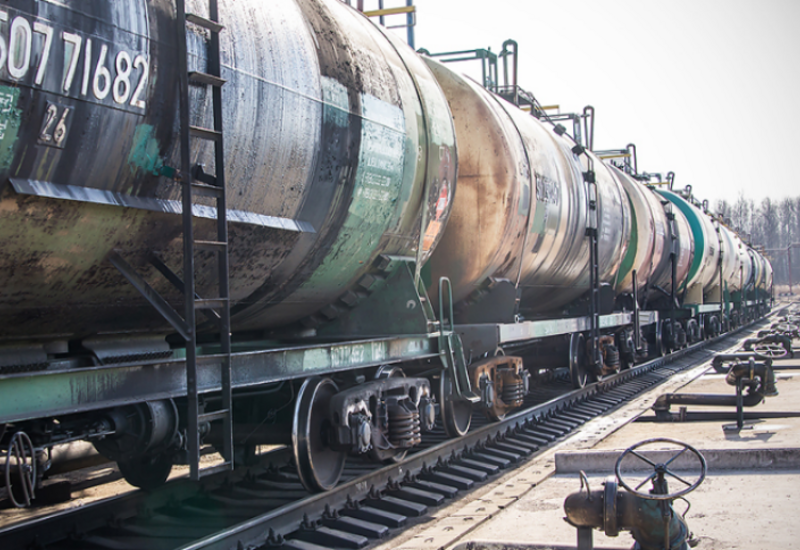
Unlike oil and petroleum products, which were delivered to
Armenia by rail, gas pipelines were built for gas supplies. They stretched from
the Caspian coast to the borders of Armenia, through the former NKAO. While
many districts of the Azerbaijan SSR were not gassed, Armenian homes were
heated by Azerbaijani gas. However, Soviet-era altruism is a thing of the past.
It was forced and imposed. The fact that our energy resources warmed and
illuminated the Armenians, set their vehicles in motion, often for free, was
seen as something self-evident and even a kind of obligation of Azerbaijan.
If Baku agrees to export oil, gas or gasoline to Armenia, it
will not try to bring its neighbor to his knees. Georgia has not suffered at
all from the fact that it depends on Azerbaijan in many matters. Now Armenia
can also count on some benefits, but now in exchange for something substantial,
and not for a big human thank you.
However, Baku has also never heard a big human thank you
from the Armenian side.
URL: http://www.today.az/news/politics/264122.html
 Print version
Connect with us. Get latest news and updates.
See Also
- 15 December 2025 [14:13]
President Ilham Aliyev approves Azerbaijan Business Development Fund OJSC's Supervisory Board composition - decree - 15 December 2025 [12:12]
Azerbaijani oil scares demagogues in Yerevan: where is common sense? - 15 December 2025 [10:10]
Pashinyan once again spoke out against Garegin - 14 December 2025 [14:19]
Azerbaijan participates in 11th UNAOC Global Forum in Riyadh - 14 December 2025 [12:20]
Azerbaijan’s Emergency Ministry continues fire safety awareness campaign in liberated territories - 14 December 2025 [10:35]
Azerbaijan and Pakistan foreign ministers hold talks in UAE - 13 December 2025 [13:15]
High-level political dialogue advances Azerbaijan-Poland relations - 13 December 2025 [11:05]
Baku and Washington explore strategic energy connectivity - 13 December 2025 [09:41]
Memory of National Leader Heydar Aliyev commemorated in Mexico - 12 December 2025 [14:17]
Kazakhstan hopes for swift peace treaty between Azerbaijan and Armenia
Most Popular
 Azerbaijani oil scares demagogues in Yerevan: where is common sense?
 Baku and Washington explore strategic energy connectivity
 Azerbaijan, US assess cooperation opportunities in energy sector
 U.S., S. Korea, other partners sign 'Pax Silica' declaration amid AI race with China
 N. Korea welcomes engineer troops' return from Russia's Kursk region
 Ukraine to disband four international legion units by end of 2025
 High-level political dialogue advances Azerbaijan-Poland relations