|
|

TODAY.AZ / World news
Spotify label AI artists
13 August 2026 [08:00] - TODAY.AZ
By Alimat Aliyeva
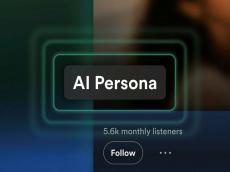
Swedish music streaming giant Spotify is preparing to introduce a special AI-persona label for artists created with the help of artificial intelligence. The new tag is designed to help users distinguish virtual performers from real musicians and, according to the company, make the platform more transparent and trustworthy, AzerNEWS reports.
The AI label will appear in the mobile app on an artist’s profile, in search results, and next to their songs in playlists. A large-scale rollout of the new system is expected to begin in mid-September.
Previously, Spotify launched the Verified by Spotify system, which required musicians to prove that they were real people. Artists could demonstrate their authenticity through social media activity, merchandise, and other forms of public presence. However, the initiative faced criticism. AI-music expert and copyright advocate Ed Newton-Rex argued that such requirements could disadvantage legitimate artists who do not have a strong social media presence or sell merchandise.
Spotify now plans to combine human verification with AI-powered tools to identify profiles representing AI-generated personas. Artists will also be able to voluntarily declare that their profile represents an AI persona. If Spotify automatically applies the label, profile owners will have the opportunity to confirm the status or appeal the decision.
The new policy will also affect Spotify’s recommendation algorithms. AI-persona artists will not be included in editorial or personalized recommendations unless users have already chosen to follow or listen to them.
Importantly, Spotify is not banning AI-generated music. Instead, the company is focusing on transparency, allowing users to listen to AI-created music while making its origin clear. This could become an important step as generative AI continues to transform the music industry.
If an AI-generated artist becomes a global star, should it be treated the same way as a human musician? As AI music becomes increasingly sophisticated, streaming platforms may soon have to rethink not only how music is recommended, but also what it means to be an “artist” in the digital age.
URL: http://www.today.az/news/regions/269499.html
 Print version
Connect with us. Get latest news and updates.
See Also
- 13 August 2026 [21:20]
Investment income props up Türkiye’s insurers as underwriting losses widen - 13 August 2026 [20:45]
Ukraine carries out world's first sea drone combat robot landing - 13 August 2026 [19:51]
Türkiye’s century vision faces its biggest test in human capital - 13 August 2026 [19:27]
Poland may send another batch of Patriot missiles to Ukraine - 13 August 2026 [18:59]
Hormuz closure pushes shipping company’s expenses near $600 million - 13 August 2026 [17:09]
Iran warns US over 'misinformation' - 13 August 2026 [16:27]
Aviation industry expected to add $4.1 trillion to global economy - 13 August 2026 [14:50]
Meta deactivates more than 750,000 suspected underage accounts - 13 August 2026 [13:20]
Rheinmetall tests new FV-014 unmanned aerial vehicle in Germany - 13 August 2026 [13:01]
Fire breaks out at Wildberries facility in Russia’s Bashkortostan after drone strike
Most Popular
 Azerbaijani gas for Ukraine: desires and opportunities
 Jackie Chan's adventure movie begins production in Baku
 Panama-flagged container ship hit by missile in Gulf of Oman
 Attacks on oil refineries in Russia and Saudi Arabia send diesel prices higher in world
 Caspian littoral states to hold high-level meeting in Tehran
 US, South Korea to begin joint drills Aug. 17
 Humanoid robot shipments surged globally