|
|

TODAY.AZ / World news
Seven years on, Kashmir remains South Asia’s unresolved fault line
05 August 2026 [08:00] - TODAY.AZ
AzerNEWS Staff
Read more
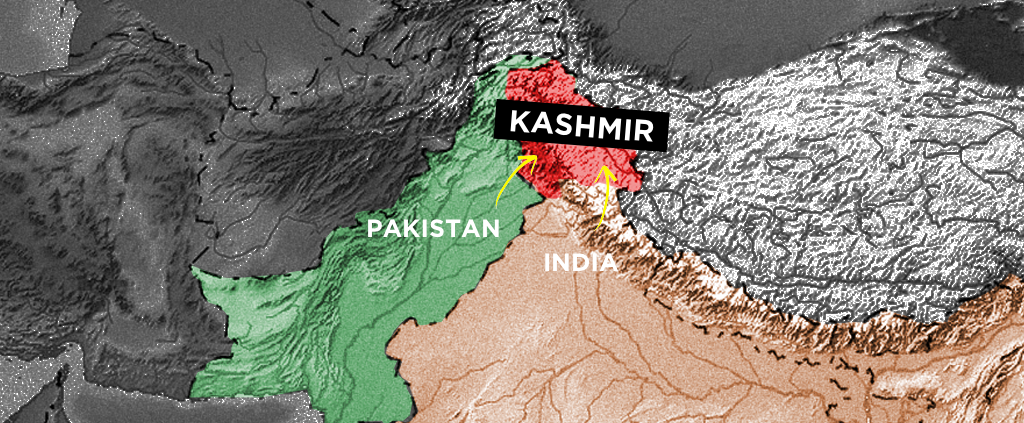
5 August is observed as Yom-e-Istehsal (Day of Exploitation). Seven years ago, India revoked the special constitutional status of Indian Illegally Occupied Jammu and Kashmir (IIOJK) through the abrogation of Articles 370 and 35A of its Constitution. For Kashmiris, the date is far more than a symbolic remembrance. It represents a watershed moment that fundamentally altered the political, demographic and constitutional character of the internationally disputed territory, in violation of international law and United Nations Security Council resolutions.
The events of 5 August 2019 marked an unprecedented departure from the internationally recognised status of Jammu and Kashmir. By dissolving the region’s limited autonomy, dividing it into federally administered territories and introducing new domicile laws, India sought to alter the demographic balance of the Muslim-majority territory and place it under the political dominance of a Hindu majority elsewhere in India.
India’s attempts to bring about illegal demographic changes through revised domicile regulations and land ownership policies allowing non-Kashmiris, including Hindus from other parts of India, to settle in the Indian-occupied territories of Jammu and Kashmir could alter the demographic composition of the Muslim-majority territory. Such measures are an attempt to reshape the political future of the region before any internationally recognised settlement can take place. Such demographic engineering in a disputed territory also undermines international humanitarian principles and the spirit of UN resolutions.
For Pakistan and other responsible nations that respect the rule of law, Yom-e-Istehsal is not merely a political observance but an expression of their unwavering diplomatic support for Kashmiris who continue to face Indian occupation. It also reaffirms the position that the legal status of Jammu and Kashmir cannot be unilaterally changed by India through amendments to its domestic laws.
The humanitarian dimension is equally concerning. The years following August 2019 have witnessed a sharp decline in civil liberties, draconian security measures, further restrictions on political activity, communication blackouts, and constraints affecting journalists and civil society organisations. Such policies have further deepened the sense of alienation between the Indian occupying forces and the Kashmiri population.
The Jammu and Kashmir dispute cannot be viewed in isolation from broader regional security. It continues to be a principal obstacle to lasting peace in South Asia. Relations between Pakistan and India, two nuclear-armed neighbours, have remained strained, with diplomatic engagement largely suspended and confidence-building mechanisms weakened. In this environment, every security incident along the Line of Control carries the potential to escalate into a wider confrontation. Therefore, an amicable resolution of the Kashmir dispute, in line with the wishes of the Kashmiris and relevant UNSC resolutions, is not merely a bilateral concern but a regional security imperative. India’s attack on Pakistan in May last year and Pakistan’s effective response to what it described as illegal Indian aggression serve as a reminder of how quickly tensions can escalate.
The economic consequences are equally significant. Persistent hostility between Pakistan and India has constrained regional trade, cross-border connectivity and economic integration that could otherwise benefit not only South Asia but also Central Asia and the Caucasus. Pakistan maintains that sustainable regional development requires political normalisation, while political normalisation itself remains difficult without meaningful progress on Kashmir. Thus, the dispute continues to impose costs, both human and economic, extending far beyond Jammu and Kashmir.
For Pakistan, seven years after the constitutional changes of 5 August 2019, Yom-e-Istehsal remains a powerful reminder that, for the international community, the Jammu and Kashmir dispute has neither disappeared nor been resolved. The day represents more than remembrance; it reflects Pakistan’s unwavering commitment to its position on Kashmir and its call for the protection of the Kashmiri people’s right to self-determination. Until a mutually acceptable and peaceful settlement is achieved, the Jammu and Kashmir dispute will remain a defining fault line for South Asia, with profound implications not only for the region but beyond.
URL: http://www.today.az/news/regions/269249.html
 Print version
Views: 156
Connect with us. Get latest news and updates.
See Also
- 05 August 2026 [11:01]
US, Iran, and Oman near temporary Strait of Hormuz agreement - 05 August 2026 [09:00]
SpaceX’s unexpected Moon crash - 05 August 2026 [08:00]
Seven years on, Kashmir remains South Asia’s unresolved fault line - 04 August 2026 [13:16]
Lebanon prepares for next round of talks with Israel in Rome - 04 August 2026 [11:01]
U.S. plans to close five diplomatic missions abroad - 04 August 2026 [10:23]
Kyrgyzstan, Uzbekistan begin official transfer of border villages - 04 August 2026 [09:00]
“New Spider-Man breaks Avengers’ first-day box office record” - 04 August 2026 [08:00]
China’s asteroid defense breakthrough - 03 August 2026 [23:30]
Ancient 2,500-year-old statue unearthed in Turkiye - 03 August 2026 [22:59]
Australia to tax tech giants over media payments
Most Popular
 Armenian Railway Crisis: TRIPP and Real sovereignty
 Japan earthquake damages over 4,600 homes in Kumamoto
 Hungarian PM warns of 'critical' days as nuclear plant shuts
 Ukraine faces critical shortage of Patriot air defense missiles
 Heatwave drives €3.1 billion wildfire damage across Europe
 World Bank's latest assessment brings new perspective on Baku's challenge in human capital reform
 Lula registers as candidate for Brazilian elections