|
|

TODAY.AZ / World news
Iran will announce Strait of Hormuz mechanism, collect fees, Iranian MP says
16 May 2026 [19:25] - TODAY.AZ
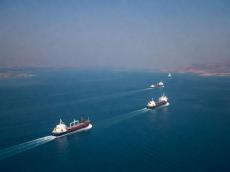
Iran has prepared a mechanism to manage traffic through the Strait of Hormuz along a designated route that will be unveiled soon, the head of the Iranian parliament's national security committee Ebrahim Azizi said on Saturday, AzerNEWS reports, citing Tribune.
Azizi added that only commercial vessels and parties cooperating with Iran would benefit from the arrangement. He said fees would be collected for specialised services provided under the mechanism.
'War of choice'
Iranian Foreign Minister Abbas Araghchi warned that the US would face growing economic consequences from its “war of choice” on Iran.
On X, Araghchi said Americans would be forced to bear the rising costs of a conflict with Tehran. “Put aside gas price hike and stock market bubble. Real pain begins when US debt and mortgage rates start to jump,” he said.
He also pointed to growing economic pressures inside the US, saying auto loan delinquencies had already reached a more than 30-year high.
“This was all avoidable,” Araghchi added.
‘Decadent civilisation’
Iran’s Foreign Ministry spokesperson Esmaeil Baghaei invoked anti-colonial writer Aimé Césaire to criticise what he described as the West’s moral decline, hypocrisy and inability to address crises stemming from its own wars and policies of domination.
In a post on X, Baghaei quoted from Césaire’s seminal work, Discourse on Colonialism, writing, “A civilisation that was incapable of solving the problems it created was a decadent civilisation; a civilisation that chooses to close its eyes to its most crucial problems is a sick civilisation.”
He also cited another passage from the work, saying: “A civilisation that plays fast and loose with its principles is a dying civilisation.”
“Increasingly, it takes refuge in a hypocrisy which is all the more odious because it is less and less likely to deceive,” he added.
Baghaei’s remarks came amid the ongoing US-Israeli war on Iran, which he suggested had exposed growing divisions within the Western alliance and intensified global economic instability.
What Washington and Tel Aviv initially presented as a decisive campaign to weaken Iran and force political capitulation, he argued, has instead developed into a prolonged and costly regional confrontation with no clear outcome in sight.
'Tehran rebuke'
Permanent Mission of the Islamic Republic of Iran to the United Nations accused the US of attempting to manufacture a “false image” of international support for its actions through a politically motivated draft resolution at the United Nations.
In a statement posted on X, the Iranian mission said it had become “crystal clear” that Washington was seeking to exploit the number of co-sponsors backing the resolution to justify what it described as “ongoing unlawful actions” and pave the way for “further military adventurism in the region.”
The Iranian mission further warned that any future escalation by the US would also place responsibility on countries supporting the resolution. "No political excuse or diplomatic cover can absolve them of responsibility for facilitating, enabling, and legitimising US aggression,” it added.
Iran 'remains committed to diplomacy'
Iran "remains committed to diplomacy and peaceful solutions," the country's President Masoud Pezeshkian said in a message to Pope Leo XIV, Iranian state media reported.
Pezeshkian also expressed Tehran's appreciation for the Catholic leader's "moral and logical stance on the recent military aggressions against Iran," according to the IRNA news agency.
Iran targeted the goals of the US and Israel "within the framework of legitimate defence," the president said, calling on the international community to "act responsibly against America's illegal actions."
US can 'knock everything out in two days' in Iran
US President Donald Trump said that Washington could rapidly destroy Iranian infrastructure, while insisting he had not underestimated Tehran's resilience in the war.
"I didn't underestimate anything. We hit them unbelievably hard," Trump said in an interview with Fox News after he visited China.
He added that the US "left their bridges, we left their electricity capacity. We can knock that all out in two days. Everything."
Trump described repeated breakdowns in diplomacy with Iran, saying negotiations had become unreliable and unpredictable.
"They were going to give us the dust, everything we wanted, and every time they make a deal, they -- the next day it's like we didn't have that conversation, and that's taking place about five times, there's something wrong with them, actually they're crazy," he said.
Trump also framed a possible solution as a choice between escalation and restraint. "It's either going to be violent or not violent, and I far prefer not violent," he said.
When asked about the midterm elections in the US in November, Trump said, "I'm not going to let the election determine what's going to happen with respect to Iran," reiterating his position that Tehran cannot have a nuclear program.
Regional tensions have escalated since the US and Israel launched strikes against Iran on February 28, triggering retaliation from Tehran against Israel, as well as US allies in the Gulf, along with the closure of the Strait of Hormuz.
A ceasefire took effect on April 8 through Pakistani mediation, but talks in Islamabad failed to produce a lasting agreement. US President Donald Trump later extended the truce indefinitely.
URL: http://www.today.az/news/regions/267803.html
 Print version
Connect with us. Get latest news and updates.
See Also
- 16 September 2026 [15:35]
Armenia’s Constitutional Court declares TRIPP agreement Constitutional - 16 September 2026 [14:50]
Russian businessman reportedly financed Donald Trump Jr.’s Bahamas wedding celebrations - 16 September 2026 [14:35]
Belarus, US agreed on interim agreement - 16 September 2026 [14:09]
Israeli cyber firm blamed for AI hacking breaches involving Anthropic, OpenAI and Meta - 16 September 2026 [13:55]
Israeli court sentences settler to 22 years for killing Palestinian - 16 September 2026 [12:59]
Moldovan referees to officiate Azerbaijan-Tajikistan friendly match - 16 September 2026 [12:23]
Saudi Arabia intercepts Houthi drone attempting to enter Mecca airspace - 16 September 2026 [11:31]
Malaysia moves to tighten controls on shipments to Israel - 16 September 2026 [11:04]
UK in talks about joining global defence bank to fund NATO projects - 16 September 2026 [10:00]
Argentina summons UK, Israeli envoys over Falklands oil project
Most Popular
 Will European concessions save the Armenian economy?
 China moves to fill Middle East security gap as Gulf states hedge US risk
 Nvidia, Palantir said to restrict AI model use
 Trump envoy backs Lukashenko’s call to unfreeze Belarusian funds
 Why does heritage of Caucasian Albania bother Armenia?
 New chair elected for Azerbaijan Filmmakers Union
 Ukraine prosecutor general accuses anti-corruption chief of crimes and calls for his resignation