|
|

TODAY.AZ / Politics
European Union follows the United States into the Middle Corridor
26 June 2026 [09:00] - TODAY.AZ
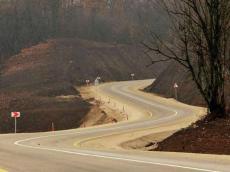
In Brussels, as part of the high-level launch event of the Agenda for Connectivity platform, the European Commission, the European Investment Bank and the Ministry of Territorial Administration and Infrastructure of Armenia signed a joint memorandum of intent, which officially recorded the launch of advisory support within the framework of the EPIC (Eastern Partnership Investment in Connectivity) initiative. This is stated in the message of the Ministry of Territorial Administration and Infrastructures of the Republic of Armenia, according to the Armenian media. According to the report, the initiative provides support for preparatory work on the strategic Akhurik-Kayan and Margara-Kayan road routes, which will connect border checkpoints with the road network of the Republic of Armenia.
So far, we are not talking about investments. This is the first such project that the EU is going to finance in Armenia, so first the European side wants to see what's what. It is reported that at the first stage, the European Investment Bank will provide expert and advisory support to prepare the necessary research and practical solutions.
Let's say right away that cooperation with the EU concerns roads, not railways. The railways remain under Russian concession management for the time being, and Yerevan cannot conclude any agreements on them until the agreement with Russian Railways is terminated. The railway running from the borders of Azerbaijan through Armenia to the border with Turkey has existed since Soviet times, but during the years of conflict many of its sections fell into disrepair due to downtime, landslides and vandalism. It will cost a lot to restore a railway line of this length, and consultations and investments alone are not enough. Armenia has no experience in building railways, others have always done it for it.
The creation of a modern highway network is the best option for Armenia at this stage.
The Akhurik-Kayan project provides for the design and modernization of a 212 km automobile route that will connect checkpoints on the borders of Armenia with Azerbaijan (Kayan) and Turkey (Akhurik) with the country's road network within the framework of the government's Crossroads of the World plan. The same applies to the Margara-Kayan project (258 km), which also connects Armenia's borders with its neighbors.
The mention of the "Crossroads of the World" usually causes a smile, since the appearance of this initiative by Nikol Pashinyan is associated with attempts to neutralize the importance of the Zangezur corridor and push the project into the far corner. Although it is difficult to imagine that the European Union is somehow guided by Azerbaijan's position, nevertheless, the EU's involvement in the Armenian project took place after Armenia signed the agreement with the United States on TRIPP (Zangezur Corridor), that is, after the Azerbaijani initiative was put on track.
Earlier this year, Azerbaijan and the European Union discussed the inclusion of the Zangezur Corridor in the pan-European TEN-T transport network. At the meeting of the Minister of Digital Development and Transport of Azerbaijan Rashad Nabiyev with the Director General of the European Commission's Directorate General for Enlargement and Eastern Neighborhood, Gert Jan Koopman, the key topic of the talks was the development of transport infrastructure, in particular, the preparation of a feasibility study of the Nakhchivan Autonomous Republic railway network, which, as is known, will become part of the future TRIPP.
European Commissioner for Enlargement Marta Kos said at a meeting in Davos with President Ilham Aliyev that the EU is ready to support Azerbaijan in rebuilding the railway in the NAR. The European Union and Azerbaijan, together with the European Investment Bank, have agreed to start work on the preparation of a feasibility study.
The European Union is currently preparing its transport infrastructure for the expansion of the Trans-Caspian International Transport Route (TMTM, Middle Corridor), which is planned for 2030, European Commission representative Bakran Marcic told reporters the other day. When asked about the EU's readiness to increase freight traffic along the Middle Corridor, she confidently replied "yes." She stressed that maintaining the current pace of modernization would allow the TEN-T network to become a reliable European framework for TMTM and help it fully realize its strategic and economic potential.
The involvement of the European Commission in the modernization of Armenian highways, I think, proceeds from the same logic.
It is noteworthy that on the eve of signing the memorandum with the Europeans, Armenian Minister of Territorial Administration and Infrastructures David Khudatyan discussed issues of road and rail communication with Turkish Minister of Transport and Infrastructure Abdulkadir Uraloglu. According to the Armenian media, the progress of work on the restoration of railway and automobile communications was discussed.
The Armenian side, apparently, is optimistic, expecting the opening of the border with Turkey soon. It was reported at the beginning of the year that this would happen "in the near future." Then the deadline was set as "after the election." This week, Armenian Deputy Foreign Minister Vahan Kostanyan outlined a more realistic timetable for 2030.
Armenia expects that by 2030 the borders and transport links with Turkey and Azerbaijan will be opened, and this will turn the South Caucasus into a key link between Europe and Central Asia, Kostanyan said in Brussels. He did not rule out that the opening of communications could happen earlier, as "Yerevan continues to work on regional transport projects and sees signs of greater openness from neighboring countries." Thus, Armenia, together with its American partners, is completing legal preparations for the launch of the TRIPP project. At the same time, a feasibility study of the railway component of the project is being prepared. "Armenia intends to ensure the unhindered movement of goods through its part of the Middle Corridor," Deputy Minister Kostanyan said.
In Azerbaijan, such zeal on the part of the Armenian side is only welcome. Although sometimes we have to remind our neighbors that it will be possible to talk about the full opening of borders and the restoration of communication only after a final peace is achieved. This, in turn, involves certain very difficult but necessary steps on the part of Armenia. She can build all the roads, but they will run into the remaining closed borders. Removing political and diplomatic obstacles is sometimes much more difficult than building a 250-kilometer road. In this context, the deadline until 2030 seems quite reasonable.
Nevertheless, the region hopes that peace will not have to wait so long, and Yerevan will make every effort not only to build roads, but also to provide legal guarantees for the stability and security of international logistics routes. Only with such guarantees will Armenia really be able to become an effective part of the Middle Corridor.
Joining the projects of the USA and the European Union can be considered a good sign.
URL: http://www.today.az/news/politics/268589.html
 Print version
Connect with us. Get latest news and updates.
See Also
- 26 June 2026 [09:00]
European Union follows the United States into the Middle Corridor - 25 June 2026 [14:14]
Strange whip therapy from Margosha - 25 June 2026 [13:31]
President Ilham Aliyev sends congratulatory letter to President of Slovenia - 25 June 2026 [13:11]
Azerbaijani, Polish FMs exchange views on South Caucasus and Ukraine - 24 June 2026 [15:18]
President Ilham Aliyev received delegation led by Speaker of Grand National Assembly of Türkiye - 24 June 2026 [13:13]
Real and "great" - what will the Armenians choose? - 23 June 2026 [14:14]
The world is returning to overland routes, with Azerbaijan at center - 23 June 2026 [13:55]
Presidents of Azerbaijan and Turkmenistan visit construction site of Shusha Mosque - 23 June 2026 [11:00]
President of Turkmenistan Serdar Berdimuhamedov arrived in Fuzuli district - 22 June 2026 [13:07]
Presidents of Azerbaijan and Turkmenistan deliver press statements
Most Popular
 Russian propagandist Simonyan calls for entry ban on Pashinyan supporters
 Real and "great" - what will the Armenians choose?
 European Union follows the United States into the Middle Corridor
 UN: 93 million children globally out of school amid crises
 Chairman of Islamic Consultative Council of Iran arrives in Azerbaijan
 Central Bank of Azerbaijan keeps interest rate corridor unchanged amid stable inflation
 Clean-up campaign held in Dubandi at Leyla Aliyeva's initiative