|
|

TODAY.AZ / Politics
Charter against Rudimentation: Why the US should Repeal the 907th Amendment
21 April 2026 [14:14] - TODAY.AZ
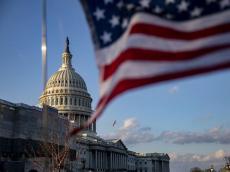
The number of American congressmen who joined the bill to repeal the 907th amendment is growing. Recently it became known that Republican Derrick Van Orden joined the initiative of Anna Paulina Luna.
It should be recalled that in December last year, a member of the U.S. House of Representatives, Anna Paulina Luna, submitted to Congress a bill "On lifting restrictions on the provision of assistance to Azerbaijan," providing for the complete repeal of the 907th Amendment. This fact caused an explosion of indignation among the Armenian Diaspora and the Armenian pool in the US legislature. Most analysts were inclined to believe that the initiative would remain the initiative of a single congressman, because Armenian lobbying in Congress was too strong and the presence of a Republican majority would not be able to outweigh this influence.
The forecasts did not come true. In March, Abraham Hamadeh, a Republican member of the House of Representatives from Chicago, joined the project. In early April, Republican Congressmen Celeste Maloy, Burgess Owens and Pete Sessions became co-authors of the bill. Last week, ANCA harassed another Republican congressman, Randy Fine, a member of the Foreign Affairs Committee, who also joined Paulina Luna's initiative.
The hysteria of the diaspora had not subsided a little, as it became known that another congressman had joined the co-authorship of the project. Derrick Van Orden is a member of several key House committees, including the Armed Services, Veterans Affairs, and Agriculture Committees. Van Orden is a former Special forces soldier, a prominent figure actively involved in shaping security and defense policy. He is known for his position on strengthening strategic cooperation between the United States and its allies.
The appearance of a legislative initiative to repeal the 907th Amendment to the Freedom Support Act, which is unfair and mocks international law, was inevitable. The involvement of the United States and Donald Trump personally in the peace processes in the South Caucasus, the historic trilateral meeting on August 8 in Washington, and especially the Charter on Strategic Partnership between Azerbaijan and the United States signed by President Ilham Aliyev and Vice President of the United States Jay D. Vance in Baku on February 10 - all this made the repeal of the notorious amendment only a matter of time. And the increase in the number of co-authors of projects suggests that the solution of the issue will not be postponed for a very long time.
Some might argue that a few co-authors are no match for the dozens or even hundreds of voices joining pro-Armenian initiatives. Indeed, the initiatives of the Armenian lobby usually garner a lot of votes. Congressmen who have no idea what is happening in our region flock like flies to projects prepared by the Armenian diaspora, because there is always something to profit from. ANKA spares no expense by buying up congressmen in bulk. These dozens and hundreds do not know what they are signing or voting for. The Diaspora pays for mass actions that do not produce results.
As for Paulina Luna's initiative, each of the congressmen who joined it did it consciously, knowing what it was about and understanding the irrationality and abnormality of maintaining such sanctions against Azerbaijan. Especially in today's conditions, when Baku and Washington have raised relations to the level of a strategic partnership. The new regional realities created by Azerbaijan and the current geopolitical alignment in the Eurasian space make Baku an indispensable partner for the United States. Azerbaijan is a serious force in its region, a country with sufficient authority on the world stage to adjust the decisions taken by the powers and promote its interests. The United States, which has never been particularly interested in the South Caucasus, is extremely interested in partnering with Azerbaijan today.
The Charter on Strategic Partnership with Azerbaijan is not as extensive and pompous as a similar document signed with Armenia last January at the end of Joe Biden's rule. That document was hastily drafted and focused more on short-term goals unrelated to bilateral cooperation. There was a long and intense work on the Charter with Azerbaijan. Baku did not need moral support or assurances that "the West is with us." Baku needed a practical document defining steps in specific areas of cooperation, not a collection of slogans and compliments. Therefore, the Charter turned out to be fundamental and comprehensive. The small document covered all issues of mutual interest, as well as the national interests of each side.
After the Charter signing ceremony, Vance stated: "I think we will have even stronger and better relations under the leadership of President Trump and under the leadership of President Aliyev here in Azerbaijan. There is much to talk about and much to announce."
President Ilham Aliyev stressed in a press statement: "It is a great honor for us to be a strategic partner of the most powerful country in the world, the United States of America. We are also very grateful to President Trump, Vice President Vance and their team for their contribution to peace in the Caucasus."
There is no doubt that during the visit of the US Vice President to Baku, the fate of the 907th Amendment was also discussed. Its presence between two countries that have become strategic partners is abnormal. The decision taken by Congress on October 24, 1992 is not normal in itself. 34 years is quite enough time to finally realize her abnormality, illogic and inadequacy.
Azerbaijan and the United States share common interests today. Both in the establishment of lasting peace in the South Caucasus and in the formation of new transport routes. In the latter case, we are talking about the TRIPP project, or the Zangezur corridor.
Azerbaijan plays a key role for the United States due to its strategic position in the South Caucasus, energy security, and involvement in the development of the Middle Corridor. Cooperation is focused on strengthening ties between Asia and Europe, diversifying energy supplies, and cooperating in the field of security. The United States is interested in diversifying Europe's energy security sources. Yes, this interest is geostrategic, Washington pursues its own interests here, but the main thing for us is that these interests fully coincide with Azerbaijan's interests in diversifying its oil and gas exports.
It should be noted that of the 34 years of the unfair amendment's existence, it has not been in force for more than 20. In 2002, it was suspended, and since then, the presidents of the States have annually extended this decision. During his election campaign, Joe Biden promised Armenians to put an end to this practice, but he did not keep his word - after becoming president, he, like his predecessors, suspended the amendment again, and Azerbaijan, accordingly, continued to receive direct American assistance.
The amendment, under pressure from the Armenian lobby, was adopted with the wording "until Azerbaijan takes obvious steps to eliminate all kinds of blockades and offensive forms of use of force against Armenia and Nagorno-Karabakh." The 907th amendment is an example of political absurdity. While Armenia continued its military aggression and ethnic cleansing, sanctions were imposed on the country suffering from aggression. The Khojaly genocide has already been committed, Shusha has been occupied, and congressmen voted against the "blockade of Armenia." The Armenians relied on the lack of information and, by and large, the indifference of American lawmakers to what is happening in the distant Caucasus. The majority voted for the amendment, and there were no discussions, as there were no opposing opinions.
Opposing opinions emerged after the signing of the "Contract of the Century" in Baku. In May 1997, U.S. Secretary of State Madeleine Albright stated that the administration strongly opposes the 907th Amendment. After that, the sanctions were eased, and American companies operating in Azerbaijan were relaxed. And then the events of September 11, 2001, struck, and the United States needed Azerbaijan's support in the fight against international terrorism.
Joe Biden, as a presidential candidate, said that the United States should adhere to the 907th Amendment to the Freedom Support Act and "stop the flow of military equipment to Azerbaijan." However, after becoming president, in June 2022, he retracted his previous statement and included military assistance to Azerbaijan in the budget of the year. This disappointed the diaspora terribly.
In August 2025, Donald Trump signed a decree temporarily suspending the amendment.
For Azerbaijan, the complete annulment of the amendment is more a matter of principle. It was actually bought by the Armenians, and the Armenians subsequently strictly ensured that Congress did not repeal this resolution, believing that the amendment was an effective tool of blackmail and pressure on Baku. The Diaspora does not hide the fact that the amendment was paid for with its money and its preservation continues to be funded by the Armenians all the following years.
Perhaps the amendment could have become an instrument of blackmail and pressure if Baku had perceived it in such a status. The amendment was in effect during the most difficult years for Azerbaijan, and when it was frozen, whether it existed or not, he no longer cared. Azerbaijan is self-sufficient and sovereign, so it is difficult to put pressure on it. In addition, despite all the efforts of the Armenians, the American side found ways to continue cooperation with Azerbaijan. Interests come first. Not Armenian, but American.
But, once again, the cancellation of an unfair resolution, which still remains a wormhole in US-Azerbaijani relations, is a matter of principle. Therefore, we welcome every congressman to join the Anna Paulina Luna project. There may not be dozens of them yet, but the process has begun, and there is confidence that it will eventually lead to the triumph of justice.
URL: http://www.today.az/news/politics/267282.html
 Print version
Views: 1383
Connect with us. Get latest news and updates.
See Also
- 06 May 2026 [13:13]
All roads lead to Azerbaijan: fantasies and realities of the Armenia-EU format - 06 May 2026 [11:32]
President Ilham Aliyev receives delegation led by Chairman of Islamic Development Bank Group - 05 May 2026 [15:02]
EU, Armenia back peace efforts with Azerbaijan, stress agreement signing - 05 May 2026 [14:46]
Pashinyan: Full opening of roads with Azerbaijan and Türkiye is inevitable - 05 May 2026 [14:00]
President Ilham Aliyev receives Secretary General of Inter-Parliamentary Union - 05 May 2026 [09:12]
Footage of President Ilham Aliyev’s meeting with President of Council of Ministers of Italy published on his social media - 04 May 2026 [15:50]
Inter-Parliamentary Union secretary general pays tribute in Baku during official visit - 04 May 2026 [14:14]
Karabakh defendants and a letter to Canada: how they try to put pressure on justice - 04 May 2026 [13:39]
Unfortunately, double standards are today a kind of modus operandi for PACE, says President Aliyev - 04 May 2026 [13:13]
Italian military-industrial complex and Azerbaijan
Most Popular
 Italian military-industrial complex and Azerbaijan
 All roads lead to Azerbaijan: fantasies and realities of the Armenia-EU format
 Shusha State Musical Drama Theate hosts event honoring Sabir Rustamkhanli
 Karabakh defendants and a letter to Canada: how they try to put pressure on justice
 President Ilham Aliyev addresses 8th European Political Community Summit via video link
 Italy, Azerbaijan upgrade partnership built on mutual need
 Azerbaijan Premier League: FC Qarabag to face Turan Tovuz