|
|

TODAY.AZ / Politics
Khachkar as political marker: old Armenian legend about "ancient heritage"
16 March 2026 [15:15] - TODAY.AZ
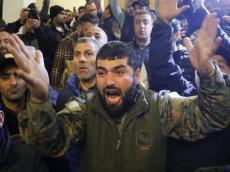
Another act of profound lamentation: Armenian historians
have once again turned their attention to the hurdy-gurdy, a symbol of
cherished cultural memory. Tears flow across the arena, and voices rise to the
world: "Guard! Our ancient heritage is being eroded in Karabakh!"
The pattern has persisted for centuries, as predictable as a
finely tuned timepiece. Wherever Armenian families settle—be it on distant
planets or in the crater of a volcano—a khachkar inevitably emerges, seemingly
sprouting from the earth like a mushroom after rain. And it is never an
ordinary khachkar, but always the "oldest," cloaked in venerable moss
and patina, as if Noah himself had placed it there after the flood. Its
historical narrative often takes the form of oral testimony: "We brewed
coffee here in the sand when dinosaurs were still learning to lay eggs."
These monuments function as political markers of the
territory: by placing a stone inscribed with a cross, the land is declared
“historically Armenian.”
In the 19th century, the Georgian-Armenian intellectual Ilya
Chavchavadze described this phenomenon of "miraculous reproduction"
of history with sharp satire in his work Armenian Scientists and Egregious
Stones. He documented how individuals, armed with chisels and zeal, reshaped
someone else’s history directly onto ancient monuments. His observations, both
humorous and poignant, remain striking today: centuries-old inscriptions were
altered, overwritten, and manipulated to serve new narratives.
A century and a half later, the instruments of revision have
changed. Instead of chisels, today’s actors use glossy reports, paid experts,
and polished briefs for Western policymakers, whose knowledge of Caucasian
history is no deeper than their familiarity with lunar tea varieties.
The result remains the same: lamentation, appeals to the
“genocide of culture,” and, predictably, European resolutions calling for the
“protection of ancient Armenian monuments.”
Yet the historical reality is more nuanced. Many of these
so-called “shrines” are in fact the cultural heritage of Caucasian Albania.
Current Azerbaijani interventions are not acts of destruction, but of
restoration—removing artificial “layers” and historical fabrications that were
imposed centuries ago. This process uncovers the monuments’ authentic
character, cleansed of later alterations and misrepresentations, restoring the
historical integrity of the region.
URL: http://www.today.az/news/politics/266490.html
 Print version
Connect with us. Get latest news and updates.
See Also
- 21 May 2026 [13:46]
President of France makes phone call to President Ilham Aliyev - 21 May 2026 [13:13]
Pashinyan has once again stepped on the Diaspora's favorite corn - 21 May 2026 [12:12]
The pre-election passport scandal in Armenia - 20 May 2026 [12:12]
Baku told how it should be: the theme of the liberated territories on WUF13 - 19 May 2026 [15:22]
President Ilham Aliyev receives Deputy Prime Minister of Slovakia - 19 May 2026 [14:47]
Jeyhun Bayramov: South Caucasus Enters New Era of Peace and Regional Cooperation - 19 May 2026 [14:41]
If not with Nobel, then with Havel: the Vardanyan Theater of the Absurd - 19 May 2026 [13:48]
President Ilham Aliyev receives Chairman of the House of Representatives of the National Assembly of Belarus - 19 May 2026 [09:36]
Footage from opening ceremony of WUF13 shared on President Ilham Aliyev's social media - 18 May 2026 [14:14]
New details of ethnic cleansing of Azerbaijanis in Armenia – from Armenian nationalist
Most Popular
 New details of ethnic cleansing of Azerbaijanis in Armenia – from Armenian nationalist
 The pre-election passport scandal in Armenia
 SOCAR head meets Kenyan President William Ruto to discuss energy cooperation
 Baku told how it should be: the theme of the liberated territories on WUF13
 South African housing activist calls for integrated urban development approach at WUF13
 Saudi Arabia and Azerbaijan can expand cooperation on social development, Princess says
 Khatai Arts Center hosts Days of Azerbaijani Music in Fine Arts