|
|

TODAY.AZ / Politics
Azerbaijan, Armenia and Masdar
04 February 2026 [11:11] - TODAY.AZ
Our neighbors are offended when we say that in Soviet times
Armenia lived at the expense of other republics, and therefore, after gaining
independence, it was left with nothing. Due to large subsidies, the standard of
living in Armenia and two or three other Union republics was higher than in the
whole country. Moscow has always had favorites. Some worked, while others
enjoyed the benefits. Armenia has always been among the last. If the USSR had
not collapsed, the former, in particular Azerbaijan, would have continued to
pay for the construction of cities and the filling of shops with goods in this
republic.
According to Soviet prices, by 1989 only Azerbaijan and
Belarus had a positive balance in the foreign trade of the Soviet Union. In the
Russian Federation, imports exceeded exports. When converted to world market
prices, only the RSFSR and Azerbaijan had a positive balance. That is, our
republic sold more than it bought, both at Soviet and world prices. Azerbaijan
worked, Armenia consumed. As part of the empire, Armenia was a favorite and was
allowed to do everything, including keep records only in Armenian, which even
the Balts could not dream of.
The fact that Azerbaijan received less from the center than
it gave away, of course, was unfair. But it taught him not to depend on anyone.
The experience proved useful, and after the restoration of independence,
Azerbaijan did not stop, but fell into a long-lasting crisis. If it hadn't been
for the Armenian aggression and the internal political chaos, the launch would
have been much more effective. When the chaos was stopped by Heydar Aliyev, who
returned to power, Azerbaijan began to recover quite quickly. It turned out
that unlike many of his former "brothers", he is capable of
successful autonomous navigation.
These thoughts were prompted by a post published in one of the Armenian Telegram channels. Against the background of the meetings taking place in Abu Dhabi, the channel's author wondered why Armenia's cooperation with the Emirati Masdar stands still, while Azerbaijan implements one project after another with this company.
Armenia signed a contract with the Emirati company in 2021,
just a year later than Azerbaijan. But so far, not a single project has been
implemented, from which the author of the post concluded that the reason for
this is the inability to implement large investment projects.
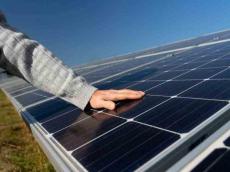
With Masdar, Armenia is going to implement a 200 MW project
of an industrial-scale photovoltaic solar power plant "Ayg-1". The
process has dragged on for five years, and construction is finally due to begin
this year. The case was slowed down due to the confusion with equity
participation. The Armenian ANIF Fund, founded by the state in 2019 to attract
foreign investment in partnership with the private sector, was supposed to own
15 percent of the SES, but fell for violations and was closed in 2024. In five
years, the project has gone through the liquidation of this fund, protracted
land disputes and court proceedings.
Meanwhile, Azerbaijan has implemented more than one project
in partnership with Masdar. The two countries demonstrate the same approaches
to cooperation. The company came to Azerbaijan in February 2020, when a
cooperation agreement was signed between the Ministry of Energy of the Republic
of Azerbaijan and Masdar.
On October 26, 2923, the Garadagh solar power plant built by
Masdar with a capacity of 230 MW was launched, which became the largest solar
power plant in the South Caucasus and is capable of providing electricity to
110,000 apartments, that is, in fact, the whole city. During the opening
ceremony, Masdar signed three investment agreements with the Azerbaijani side
in the field of green energy with a total capacity of 1,000 MW. These include a
solar power plant in the village of Gunesh in the Bilasuvar district, a 315 MW
solar power plant in the village of Bank in the Neftchala district, as well as
a 240 MW wind power plant in the Absheron and Garadagh districts. It is planned
that the annual electricity generation of the SES "Bilasuvar" will amount
to 890 million kilowatt-hours, and the SES "Neftchala" 640 million
kilowatt-hours. The SES in Bilasuvar and Neftchala will be able to provide
electricity to more than 135,000 homes and avoid the emission of over 730,000
tons of CO? per year.
These three agreements represent the initial stage of the
Executive Agreements concluded by Azerbaijan with Masdar in June 2022 regarding
the implementation of megaprojects in the field of renewable energy sources
with a capacity of 4 GW.
Construction of a 445 MW Bilasuvar solar power plant
(Bilasuvar Solar SPV) began in August 2025. When ready, it will become the
largest in the South Caucasus. In the meantime, Garadagh SES retains this
status. Masdar intends to complete the project by 2027, and the solar panels
for it are supplied by China Energy Development.
Baku considers Abu Dhabi as one of its key partners in the
Middle East. The main part of these relations is partnership on renewable
energy projects, but in general, the countries' cooperation is broader. Azerbaijan
not only consumes investments and services, it has something to offer its
partner. This is exactly what Armenia has big problems with - it has nothing to
offer and it is very difficult to be an equal partner. Its international
position is practically nonexistent, its real economic opportunities and
investment attractiveness are very low. Large foreign companies are only now
beginning to carefully look at the Armenian market. The most important thing is
the inability to be independent. To implement large-scale projects, it is not
enough just to sign a contract with a foreign company. The skills of business
activity in the traditional Armenian sense turned out to be useless in the
conditions of free swimming. Armenia has never been able to count on itself
when no one will do anything for you and no one will pay for you.
The Armenian blogger is absolutely right: Azerbaijan knows
how to implement large-scale projects. Let's add that he is able to do this
even without the presence of large partners and investments. This is how the
Baku-Tbilisi-Kars railway corridor project was implemented. In cooperation with
global companies, the Main BTC export oil pipeline and the grandiose Southern
Gas Corridor were built.
By the way, during the current visit of Azerbaijani
President Ilham Aliyev to Abu Dhabi, a document was signed regarding the
agreement on the sale to the investment division of the Abu Dhabi National Oil
Company - XRG of a part of the Ministry of Economy's non-controlling interest
in the Southern Gas Corridor CJSC. Thus, the UAE will become an equity
participant in SGC.
It is also worth recalling that on January 8, the official
opening of the 240 MW Khizi-Absheron wind farm, built by another Middle Eastern
partner of Azerbaijan, the Saudi company ACWA Power, took place.
In conclusion, we should note that our neighbors often,
especially in the old days, had to hear the following: Baku, the oil industry
and the industry of Azerbaijan as a whole, in general, were all created by
Armenians here. When you hear this, a perfectly legitimate question arises: why
didn't they do the same in Armenia, in their own republic? Why wasn't anything
built or developed there either during the Soviet era or after independence? In
theory, if Azerbaijan (like the rest of the world) owes all its successes to
the Armenians, then Armenia itself should be ahead of Singapore today. Why is
this not happening?
This is not a rhetorical question.
URL: http://www.today.az/news/politics/265328.html
 Print version
Connect with us. Get latest news and updates.
See Also
- 17 September 2026 [14:14]
Azerbaijan and the OIC: Decades of Mutual Understanding - 17 September 2026 [13:38]
Opposition lawmaker: Armenia not ready to leave Eurasian Economic Union - 17 September 2026 [11:56]
Hajiyev says Azerbaijan committed to preserving Christian heritage as part of its history - 17 September 2026 [11:46]
President Ilham Aliyev addresses participants of 5th Meeting of Secretaries of Security Councils of OTS member states - 16 September 2026 [13:13]
Geography and security – what the world can expect from Azerbaijani transit - 16 September 2026 [11:45]
President Ilham Aliyev addresses participants of international scientific and practical conference - 15 September 2026 [14:14]
Aftershocks from Ganja: Armenia has received another surprise from international law - 15 September 2026 [13:05]
Jeyhun Bayramov and Hakan Fidan hold one-on-one meeting in Azerbaijan - 14 September 2026 [20:26]
President Ilham Aliyev sends $500,000 Zayed Award Prize to Garabagh Revival Fund - 14 September 2026 [18:25]
President Ilham Aliyev receives National Security Advisor of United Arab Emirates
Most Popular
 Trump envoy backs Lukashenko’s call to unfreeze Belarusian funds
 New chair elected for Azerbaijan Filmmakers Union
 Why does heritage of Caucasian Albania bother Armenia?
 Nvidia, Palantir said to restrict AI model use
 Saudi Arabia discovers 110 million tonnes of rare earth and uranium ore in Madinah
 Ukraine prosecutor general accuses anti-corruption chief of crimes and calls for his resignation
 President Ilham Aliyev receives National Security Advisor of United Arab Emirates