|
|

TODAY.AZ / Arts & Entertainment
Republican Youth Library prepares guide dedicated to renowned poet
12 August 2026 [17:46] - TODAY.AZ
 By Laman Ismayilova
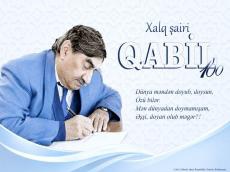
A methodological guide titled "A Look at Gabil's Literary Works" has been prepared at the Jafar Jabbarli Republican Youth Library to mark the 100th anniversary of the birth of People's Poet Gabil, AzerNEWS reports.
The publication comes as Azerbaijan commemorates the centenary of one of the most distinctive voices of modern Azerbaijani poetry.
Born in Baku in 1926, Gabil Allahverdi oglu Imamverdiyev built a literary career that spanned decades and reflected the changing social and cultural landscape of Azerbaijan. His poetry combined lyrical expression with philosophical thought, civic themes, and a strong connection to everyday life.
August 12 marks the poet's 100th birth anniversary. Gabil entered the literary scene in 1944, when his first poem, "Come, My Spring," appeared in the newspaper Literature. His first poetry collection, "Morning Is Breaking," followed in 1950. Over the years, he published a number of acclaimed books, including "My Blue Caspian” (1959), "In Windy Weather" (1964), "Let Nature Speak" (1966), and "Citizen Passengers" (1973).
His name became closely associated with poems that generations of Azerbaijani readers have read, remembered and recited. Works such as "Baku Resident," "Don't Mix It Up," "Bread," "Cleanliness," "They Rained Bullets," "At the Nasimi Market," "It Is My Cradle – It Is My Grave," "Mountains," and "Azerbaijani Land" remain among the notable pieces of his poetic heritage. His philosophical and psychological epic-dramatic poem "Nasimi" also occupies a special place in his work.
During the difficult early years of Azerbaijan's independence, Gabil addressed the country's painful realities in emotionally charged poems such as "Mother of a Martyr," "It Happened," "One This Way, One That Way", etc.
Gabil's contribution extended beyond poetry. For many years, he served as chairman of the Council of Elders of the Azerbaijan Writers' Union, while his literary and public activities earned him widespread recognition. Among his state honors were Azerbaijan’s Order of Glory and Order of Independence.
The poet was also remembered for his sharp wit, humor, and colorful anecdotes. People's Writer Ismail Shikhli collected stories about him and published them under the title "The Strange Adventures of My Friend Gabil."
Years later, on the occasion of the poet's 90th anniversary, his son Mahir Gabiloglu published "The Strange Adventures of My Father Gabil," bringing together amusing stories from the family's memories. Both books have remained popular among readers.
The new methodological guide prepared by the Jafar Jabbarli Republican Youth Library seeks to introduce Gabil's life and literary heritage to a broader audience, with particular attention to young readers.
The publication is intended to encourage a closer study of the poet's work and help promote his literary legacy.
The guide is designed as a practical resource for librarians, teachers, students, researchers, and literature enthusiasts preparing events, exhibitions, literary evenings, and other educational activities dedicated to Gabil.
It traces the poet's life and creative journey, examines his place in Azerbaijani literature, and highlights the principal themes and directions of his poetry.
The publication also brings together full versions of several articles devoted to Gabil, including People's Writer Elchin's "A Few Words About Gabil's Personality and Work," Academician Rafael Huseynov's "The Lines Replaced by the Irreplaceable Poet and the Truths That Are Difficult to Change," and literary critic Vagif Yusifli's "Our Unforgettable Gabil."
Alongside biographical and literary material, the guide offers recommendations for libraries seeking new ways to present Gabil's works to readers. It suggests literary evenings, book exhibitions, discussions, cultural and educational programs, as well as the creation of electronic information resources dedicated to the poet.
The poet passed away on April 4, 2007, but his poems, books, stories and literary ideas continue to live among readers.
The centenary guide is another contribution to keeping that legacy in circulation and introducing the poet's work to a new generation.
The methodological guide dedicated to Gabil's 100th anniversary is available on the library's official website.
URL: http://www.today.az/news/entertainment/269493.html
 Print version
Connect with us. Get latest news and updates.
See Also
- 12 August 2026 [17:46]
Republican Youth Library prepares guide dedicated to renowned poet - 12 August 2026 [14:06]
Mobile Youth Service project reaches young people in Khizi - 12 August 2026 [13:01]
First AVAZ Youth Choir Camp brings young singers together in Shaki - 12 August 2026 [12:26]
Fidan Hajiyeva to celebrate her anniversary with large-scale Int'l Opera Festival - 12 August 2026 [11:02]
Baku gets ready for celebration of world-class dance–Video message from Eldar Jafarov - 11 August 2026 [14:12]
Scientific Council reviews institute's activities and results for first half of year - 11 August 2026 [13:43]
Baku to host int'l forum on Middle Corridor, TRIPP and Eurasia’s transport future - 11 August 2026 [13:30]
Jackie Chan's adventure movie begins production in Baku - 11 August 2026 [12:02]
Azerbaijani film project receives support from Hubert Bals Fund - 11 August 2026 [10:45]
Book on Azerbaijani-Georgian friendship presented in Marneuli
Most Popular
 Rainy and cloidy weather expected in country
 Higher costs expected for iPhone 18 Pro
 Trump tests economic pressure strategy as Iran talks remain frozen
 Pashinyan is preparing for a fight with the revanchists over Meghri — “Not just for life, but for death.”
 Ghalibaf, Araghchi set to visit Pakistan as Iran-US tensions persist
 President Ilham Aliyev thanks Masoud Pezeshkian for remarks on Azerbaijan
 New Muslim defence alliance taking shape - but how far will its members go?