|
|

TODAY.AZ / Analytics
Resilient but reshaped: Global trade adapts to Trump tariffs and AI boom
06 April 2026 [11:14] - TODAY.AZ
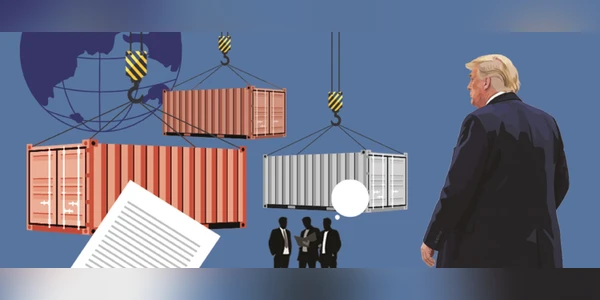
Global trade has proven far more resilient than expected despite tariff pressures linked to Donald Trump, according to a new report by the McKinsey Global Institute.
While many had anticipated a sharp downturn in 2025, the report finds that trade flows did not collapse, instead, they evolved in complex and uneven ways. Some shifts, such as a surge in US imports ahead of tariff hikes, appear temporary. Others, including the decline in direct trade between the United States and China, are likely to persist.
One of the most notable trends is the growing role of geopolitics in shaping trade routes. Exchanges increasingly occur between “geopolitically aligned” partners, even if they are geographically distant. At the same time, the European Union has lost market share in China, while India has expanded its global trade footprint, particularly through rising smartphone exports to the US.
Artificial intelligence has emerged as a key driver of global trade growth. Shipments of semiconductors and data center equipment surged sharply between 2024 and 2025, accounting for a significant share of overall trade expansion. Countries such as Taiwan, South Korea, and several Southeast Asian economies have benefited from increased exports of AI-related products to the US.
Meanwhile, China has reinforced its position as a “factory for factories,” shifting focus from direct exports to supplying components and equipment to third countries. These countries, in turn, often export finished goods to the US, effectively reshaping supply chains rather than breaking them.
Tariffs have nonetheless triggered major adjustments. Direct US-China trade fell significantly in 2025, but much of the gap was filled by imports from alternative markets. Chinese exporters responded by lowering prices and seeking new destinations, contributing to a rise in exports from Southeast Asia. European companies, however, have faced mounting pressure from both US tariffs and redirected Chinese trade flows.
Despite ongoing tensions, the report suggests that the global trading system has remained stable partly because US policy rhetoric has been harsher than actual measures. Experts, including Richard Baldwin of IMD, note that the absence of large-scale retaliatory actions has helped prevent a broader breakdown.
However, structural challenges remain. China’s export-driven strategy, geopolitical risks, and potential disruptions to energy supplies continue to cast uncertainty over future trade dynamics.
The report concludes that while the global economy demonstrates strong resilience, it is entering a period of transformation, with no clear global leader emerging to shape the next phase of international trade.
URL: http://www.today.az/news/analytics/266933.html
 Print version
Connect with us. Get latest news and updates.
See Also
- 16 July 2026 [14:47]
Slovakia's gas push reveals bigger shift in Europe's energy future - 15 July 2026 [14:43]
Slovakia's Shusha diplomacy reinforces Azerbaijan's strategic role in Europe - 15 July 2026 [08:30]
How Shusha put decolonization back at centre of global debate - 14 July 2026 [14:25]
Garabagh becomes Azerbaijan’s next economic powerhouse - 14 July 2026 [08:30]
President Aliyev's Shusha speech reveals Azerbaijan's new diplomatic doctrine - 13 July 2026 [08:30]
Shusha Global Media Forum returns this time in its most consequential form yet - 09 July 2026 [14:20]
How geopolitical shocks transforming Azerbaijan's global role - 08 July 2026 [08:30]
Georgia's Anaklia shift opens door to new investment and stronger Middle Corridor - 07 July 2026 [08:30]
Azerbaijan's growing reserves reinforce confidence in manat peg - 01 July 2026 [14:17]
Europe's return to Baku comes with new strategic realities
Most Popular
 Dream Fest 2026 kicks off in Baku with spectacular red carpet ceremony
 Middle East conflict sends shockwaves across global gas markets
 Cheb Khaled receives star on Sea Breeze Walk of Fame ahead of Dream Fest 2026
 Azerbaijan appoints new ambassador to Türkiye
 AI adoption surges in Türkiye’s manufacturing sector as SMEs modernize production
 Iran rejects Trump's ceasefire proposal over Hormuz Strait concerns
 Fifth National Pasture Festival kicks off in Goygol with cultural showcase