|
|

TODAY.AZ / Analytics
Azerbaijan’s energy pivot gains traction in TotalEnergies–Masdar deal
03 April 2026 [08:30] - TODAY.AZ
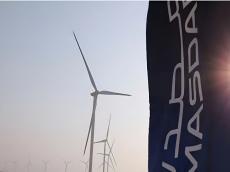
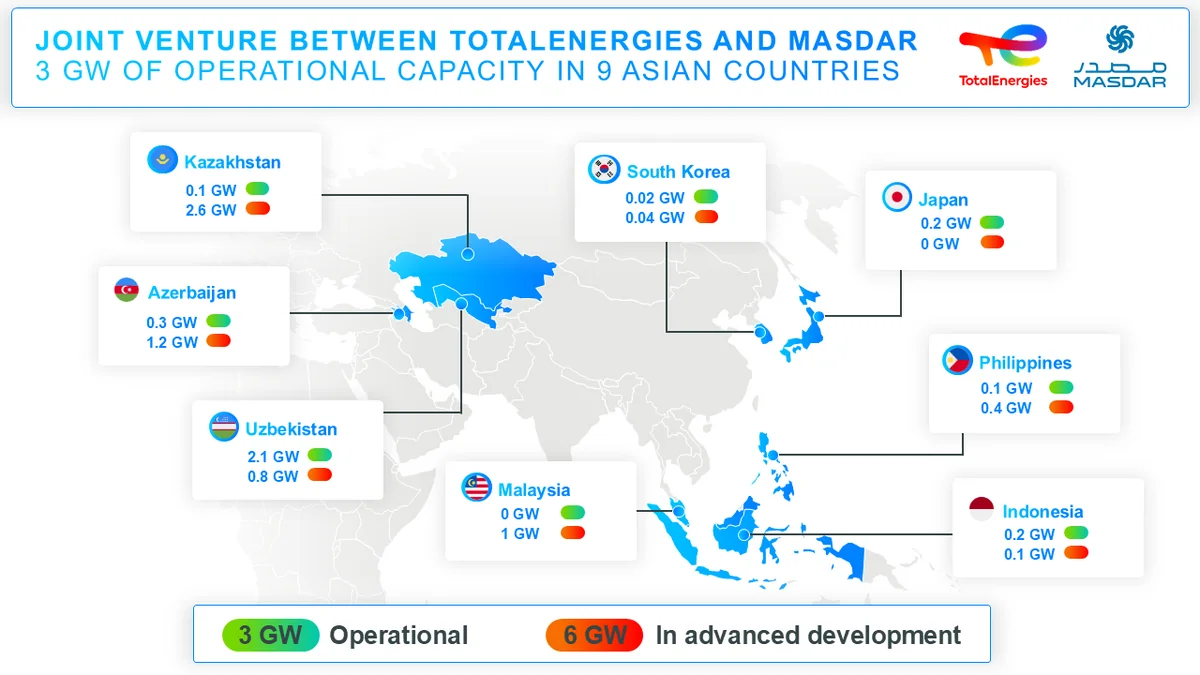
On Thursday, two of the world's most powerful energy companies signed a document that said something significant about where they think the future of energy production lies. TotalEnergies, the French integrated energy company, and Masdar, the UAE's clean energy champion, agreed to form a $2.2 billion joint venture to build solar, wind, and battery storage projects in nine Asian countries. The countries range from Japan to Indonesia, from South Korea to Singapore. And, in a somewhat quieter manner, from Azerbaijan.
For a country that has built its current identity and virtually all of its export earnings on oil and gas, the inclusion is not accidental. Rather, it represents the latest in a series of steps that, collectively, begin to outline the contours of a country in transition: from hydrocarbon exporter to clean energy exporter, from pipeline route to green electricity route, from fossil fuel-based economy to...well, to something rather more complicated, and arguably more sustainable.
The joint venture will operate on a 50/50 basis and will be based at Abu Dhabi Global Market. It will function as the sole platform for both firms’ onshore renewable energy activities in the nine markets. The joint venture will have a portfolio of 3 GW of currently operational assets and 6 GW of projects in advanced development stages, which are set to come on line by 2030. It will have 200 personnel from both firms.
Sultan Al Jaber, UAE Minister of Industry and Advanced Technology and Chairman of Masdar, framed the deal in explicitly strategic terms: "Asia will be the main driver of global electricity demand growth in this decade," he said at the signing. "The partnership with TotalEnergies will accelerate our development on the continent by opening up new opportunities to provide competitive and reliable energy solutions." Patrick Pouyanné, TotalEnergies' chairman and CEO, described it as a chance to "combine the strengths of our two companies to secure significant positions in these markets and create more value than if we were acting alone."
"Masdar embodies this approach. We are a pioneer in the development of renewable energy in Central Asia and the Caucasus, and proud to have an expanding portfolio in the most promising, emerging markets of the Asia-Pacific region"- Sultan Al Jaber, Chairman of Masdar
What Azerbaijan brings to the table?
The involvement of Azerbaijan in this project stems from the country's exceptional potential for renewable energy, which has so far remained underutilized. Azerbaijan's technical potential for renewable energy has been estimated at 135 GW onshore and 157 GW offshore in the Caspian Sea, according to the country's and IEA's assessments. To better understand the potential for growth in this country, it must be noted that the total electricity-generating potential of Azerbaijan is 7 GW, and its technical potential for renewable energy is 135 GW onshore and 157 GW offshore in the Caspian Sea.
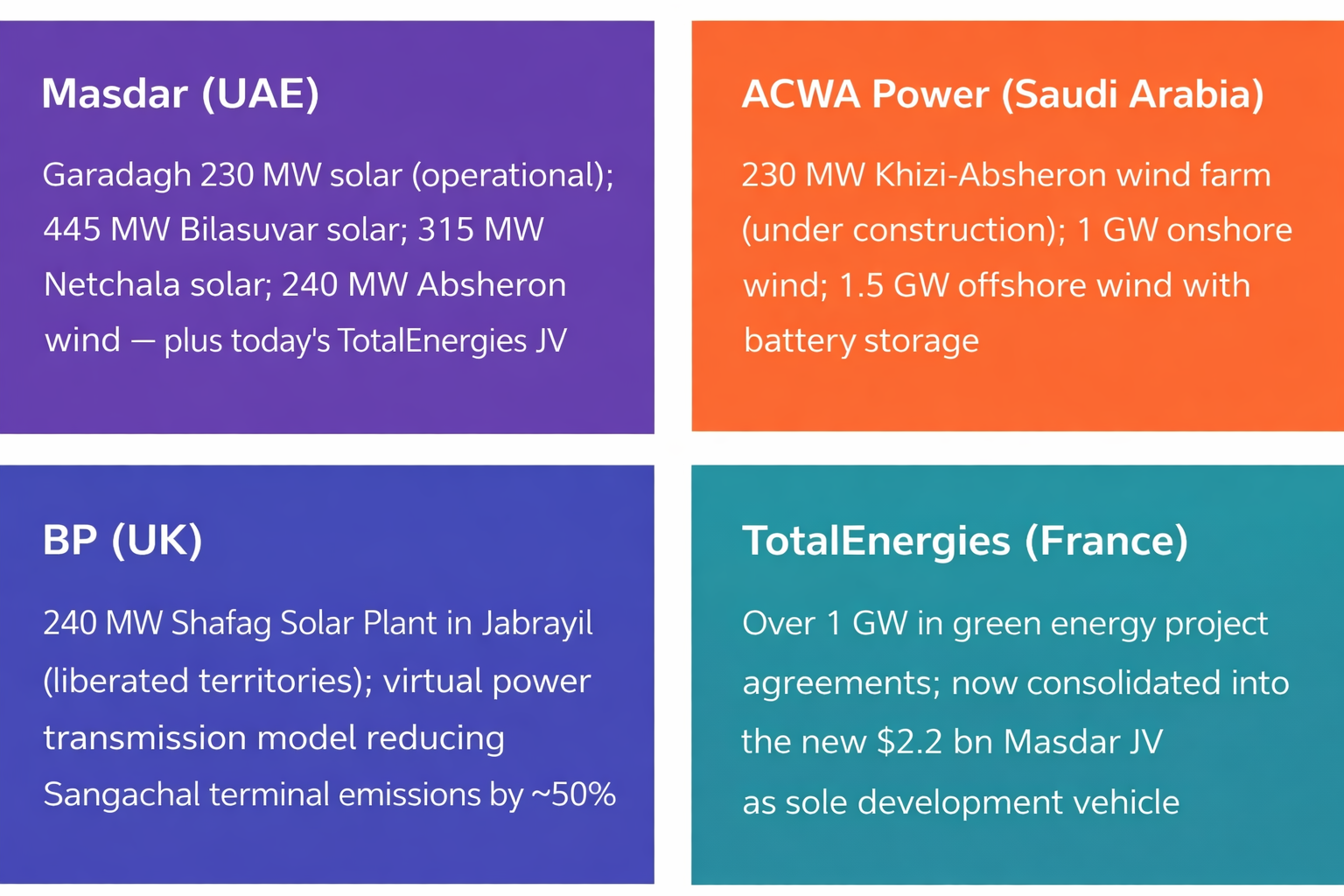
The potential for growth in this country is enormous, considering the difference between its potential and its actual installations so far. Masdar has already invested heavily in this country. Garadagh Solar Power Plant, a 230 MW plant near Baku in Azerbaijan, which was inaugurated in 2023 and is the biggest solar plant in the Caspian region, was constructed in collaboration with the country's government. Further Masdar projects are underway: a 445 MW solar plant in Bilasuvar, a 315 MW facility in Neftchala, and a 240 MW wind farm spanning the Absheron Peninsula and Garadagh districts. Saudi Arabia's ACWA Power, meanwhile, is constructing a 230 MW wind farm in Khizi-Absheron and has signed agreements for a 1 GW onshore wind farm and a 1.5 GW offshore wind farm with battery storage. BP's Shafag project is building a 240 MW solar plant in the liberated Jabrayil region.
The challenge is not just to produce clean electricity. It is to deliver it to the market. And here, Azerbaijan has made arguably its single most important gamble. In December 2022, Baku signed an agreement with Georgia, Romania, and Hungary, with a €2.3 billion commitment from the European Commission to fund the project, to build the Black Sea Submarine Cable: a high-voltage cable running underwater from Anaklia, a Black Sea port on Georgia's coast, to Constan?a in Romania, where it directly connects to the EU electricity grid.
The cable, which has the potential to supply up to 1.3 GW in the first phase, or the power requirements of a million European homes, will enable Azerbaijan to supply clean and green energy directly to the European Union. A study by the Italian engineering consultancy CESI, undertaken in November 2024 in Baku in the wake of the COP29 conference, has confirmed the viability of the project. The cable project has entered the marine survey stage. A memorandum of understanding has been signed by Siemens Energy and the joint venture company. The operational date has been targeted for 2032. Azerbaijan aims to export up to 4 GW via the corridor in a phased manner and reach a capacity of 25 GW by 2037.
Key facts about the Black Sea Cable project:
Route: Anaklia, Georgia ? Constan?a, Romania - 1,195 km total (1,100 km underwater). The world's longest submarine electricity cable of its kind.
Capacity: Phase 1 - 1.3 GW. The capacity of the cable in the future is up to 6 GW. Azerbaijan plans to export 4 GW in phases. The capacity may reach 25 GW by 2037.
Partners involved: Azerbaijan - AzerEnerji, Georgia - Georgian State Electrosystem, Romania - Transelectrica, Hungary - MVM. The joint venture - Green Energy Corridor Power Company. The headquarters of the joint venture - Bucharest.
Finance: The European Commission has allocated 2.3 billion euros for the financing of the cable. The World Bank has provided a $35 million loan for the preparatory work. The EU has designated this cable as one of the five flagship projects.
The challenge in the project: The route of the cable in the Black Sea is close to the Ukrainian conflict zone. There are also the issues of the presence of free-floating mines in the region, the safety of the cable-laying vessel, and the political instability in the region. According to the IEEE, there are only two companies in the world able to lay such a cable - Prysmian and Nexans.
The Black Sea cable is but one direction in which Azerbaijan is seeking to pursue its goals. The presidents of Azerbaijan, Kazakhstan, and Uzbekistan signed a strategic partnership for green energy development and transmission in Central Asia at COP 29 in Baku. The three countries formed a joint venture called Green Corridor Union, connecting the grid operators of the countries. The Asian Development Bank and Asian Infrastructure Investment Bank signed memoranda of understanding with respect to the project. Azerbaijan is located at the western end of this route, connecting Central Asia's renewable energy to both European markets via the Black Sea and Middle Eastern markets via the South Caucasus.
Of course, there is tension in all of this. Azerbaijan's oil and gas industry still generates more than 90 percent of its export revenues and half of its gross domestic product. Azerbaijan is both increasing its gas exports to the EU and planning to increase its gas production by a third by 2030, while at the same time positioning itself as a clean energy leader. The Carnegie Endowment for International Peace has noted, for instance, that Azerbaijan's Paris Agreement targets are "relatively unambitious, aiming for a 40 percent emissions reduction by 2050 without specifying a date for net-zero emissions."
But the investments are real, the infrastructure is being built, and the partnerships being forged – with Masdar, ACWA Power, TotalEnergies, BP, the European Commission, the World Bank, the ADB – carry a weight that rhetoric alone cannot account for. What is being built in Azerbaijan is not a clean energy revolution in the activist sense. What is being built in Azerbaijan is more pragmatic and, in a different sense, more interesting: a hydrocarbon state building the infrastructure to be indispensable to its neighbors and partners long after the oil and gas are gone. The pipeline state is building cables. The gas state is building wind farms. And the state connecting East and West is becoming, incrementally and by design, a state connecting East and West in a corridor for something green.
URL: http://www.today.az/news/analytics/266858.html
 Print version
Connect with us. Get latest news and updates.
See Also
- 13 August 2026 [08:30]
From political dispute to trade artery: How Zangezur Corridor is taking shape - 11 August 2026 [08:00]
U.S. oil reserves hit 1983 low - 09 August 2026 [17:49]
Ukraine war evolves into global contest as Russia, Iran face pressure - 09 August 2026 [08:30]
Azerbaijan banks expand lending while keeping $2.7 billion liquidity cushion - 06 August 2026 [14:45]
Rising fuel prices push drivers worldwide toward electric vehicles - 06 August 2026 [08:30]
Aghdam’s $574 million sales herald new economic era for Karabakh - 04 August 2026 [08:30]
How Azerbaijan–Kyrgyzstan alliance reshape geopolitical map of Middle Corridor? - 03 August 2026 [14:37]
Azerbaijan’s new power grid links renewables to its gas export strategy - 03 August 2026 [08:30]
World Bank's latest assessment brings new perspective on Baku's challenge in human capital reform - 01 August 2026 [08:30]
Azerbaijan's new alliance with Kyrgyzstan marks rise of Central Asian Caspian region
Most Popular
 Attacks on oil refineries in Russia and Saudi Arabia send diesel prices higher in world
 Panama-flagged container ship hit by missile in Gulf of Oman
 Nakhchivan is a crossroads that is reclaiming its historical role.
 What fashion looks like when summer heat in City of Winds
 Death toll from Colombia earthquake rises to 169
 Azerbaijan continues construction of Nakhchivan railway toward Ordubad
 Anthropic introduces machine-readable watermarks for claude content