|
|

TODAY.AZ / Analytics
Iran’s harsh rhetoric towards US and what it says about regime insecurity
14 January 2026 [14:00] - TODAY.AZ
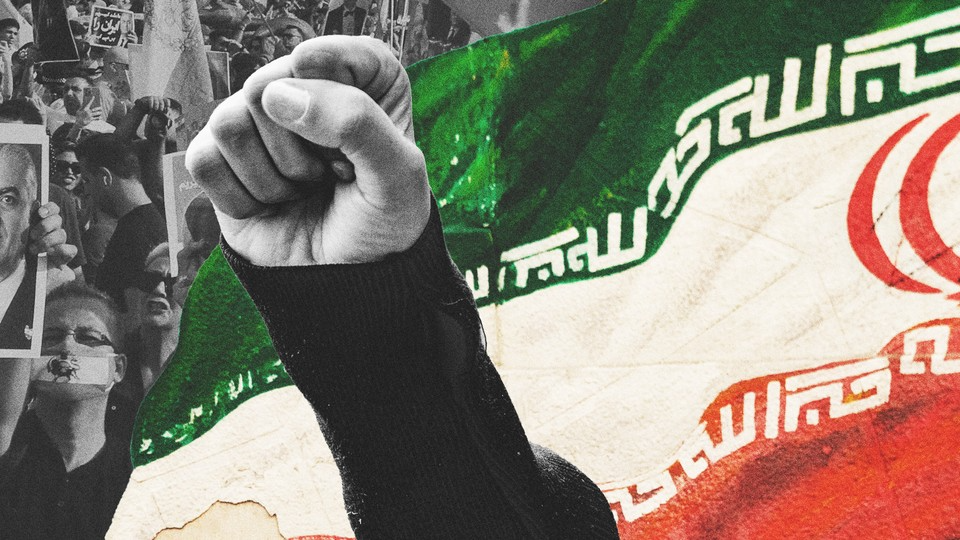
As anti-government protests in Iran enter their third week, the confrontation between Tehran and Washington is no longer confined to diplomatic statements. The United States has openly signaled that it is closely monitoring developments and has not ruled out intervention should violence against civilians intensify. Tehran, in turn, has warned that any U.S. move would be met with a response. Yet recent regional experience, including the exposure of serious weaknesses in Iran’s air-defense capabilities during the latest twelve-day confrontation, has cast doubt on how much of this rhetoric reflects real power and how much is driven by ideology and psychological signaling.
At the same time, reports that the Donald Trump administration is weighing not only conventional military options but also cyber and psychological operations add a new, more ambiguous layer to the crisis. The standoff increasingly appears less like a classic military equation and more like a test of endurance, narratives, and internal resilience.
Against this backdrop, Azernews asked regional and international experts to assess three core questions shaping the current moment: whether Iran’s threats toward the United States are rooted in a rational balance-of-power calculation or an uncompromising “die, but do not surrender” ideology; how Tehran’s Foreign Ministry statements should be interpreted, as domestic posturing or a signal of reliance on unconventional capabilities; and whether U.S. psychological and information operations could accelerate administration erosion or, conversely, reinforce Tehran’s long-standing “foreign enemy” narrative.
Iranian political scientist and researcher Mohammad Rahmanifar argues that Tehran’s posture toward Washington is deeply rooted in ideology rather than rational power calculations:
“Regarding the first question, I would say that what we are witnessing is the implementation of the ideological line you mentioned, the idea of ‘die, but do not surrender.’ Look at Iran: it has already missed major opportunities that came its way. For at least two decades, Iran had multiple chances to reach a certain level of ‘understanding’ or ‘rapprochement’ with the United States, but Khamenei and cadres loyal to the Supreme Leader let those opportunities slip away.
During the period when Bill Clinton was in power in the U.S. and Mohammad Khatami was president in Iran, there was willingness on both sides for dialogue and rapprochement. However, Khamenei strongly opposed this and did not allow it. Later, during Barack Obama’s presidency, the issue of rapprochement resurfaced during the ‘nuclear negotiations.’ At that time, Hassan Rouhani was president of Iran. As you know, that period is remembered for the agreement between Iran and the P5+1, formally known as the Joint Comprehensive Plan of Action (JCPOA), also referred to as the Iran nuclear deal, which aimed to limit Iran’s nuclear program in exchange for sanctions relief and other provisions.
The problem, however, was that even on the very day the agreement was signed, the Islamic Revolutionary Guard Corps, which is directly subordinate to the Supreme Leader, began conducting ballistic missile tests, with the slogan ‘Death to Israel’ written on them. The message was clear: we do not accept these agreements.
My point in recalling this historical context is to show that there have always been opportunities for rapprochement between Iran and the United States. Yet individuals and institutions loyal to Khamenei consistently opposed such potential progress. Today, the situation has reached a point where even those actors realize that the possibility of rapprochement no longer exists. Trump is setting conditions that leave no room for any flexibility. As a result, behind the current exchange of harsh statements lies the same ‘die, but do not surrender’ ideology".
According to him, the regime’s current threats are a continuation of a long-standing worldview shaped by the Supreme Leader and institutions loyal to him:
"As for the statement by Iran’s Ministry of Foreign Affairs, I would describe it more as an expression of desperation. I do not think it is primarily aimed at a domestic audience. Rather, it becomes clear that the government is no longer able to engage meaningfully at the international level. From the tone alone, one senses deep helplessness, as if they themselves understand that these statements will yield no results. The reality is that Iran simply lacks the capacity to pose a serious threat to the United States in any comparable way.
Trump’s threat — ‘if you fire on civilians, we will intervene in Iran’ — actually served to further strengthen the protesters’ morale. Protesters began to believe that there was a power standing behind them. For many years, protests and unrest have occurred repeatedly, only to be suppressed by government forces. This time, however, protesters believed that ‘Trump will support us’ and that the government would not kill people.
Let us not forget that in May 2009, during the Green Movement, one of the main slogans of protesters in Tehran was: “Obama, Obama, ya ba m? hast? ya ba onh??”, meaning, ‘Obama, Obama, are you with us or with them?’ Even then, protesters understood that without U.S. support, they could not confront Khamenei. Yet Obama did nothing beyond condemning the Iranian regime’s policies and its repression of the people.
This time, Trump promised that he would not remain silent about the developments, and this contributed to the protests reaching such a wide scale. The reality, however, is that there has been no tangible progress. As a result, the regime has been able to increase the number of people it kills with relative ease. Internet access is severely restricted, and from this perspective, not every piece of information can be fully trusted. Nevertheless, it is being reported that the figures this time have already reached levels incomparable to previous unrest.
Trump’s recent statements are also deeply disappointing. It appears that even if some form of support is demonstrated, it will be extremely limited. The best-case scenario here would be a limited U.S. airstrike; actions leading to regime change seem highly unlikely. One reason for this can be traced back to the answer to the first question. Clearly, U.S. air power is vastly superior to Iran’s, as was demonstrated in this twelve-day war. However, there is also the fear that, driven by this ‘death-before-surrender’ ideology, Iran could engage in unpredictable and reckless actions, such as targeting U.S. military bases near Iran or attacking projects tied to the economic interests of U.S. allies. Trump’s caution may stem from this concern. The last thing the United States wants is for its regional interests and potential gains to be jeopardized.”
A similar conclusion is reached by Brendan Ziegler, a U.S.-based German analyst, who frames Iran’s warnings as classic ideological posturing designed to serve both domestic and external purposes:
"Iran’s public warnings to the United States amid massive domestic unrest resonate strongly with the regime’s longstanding ideological posture of defiance. Tehran’s leadership has consistently cast foreign powers , especially Washington, as existential adversaries, framing internal dissent as externally fueled “riots” or even “mercenary” activity meant to destabilize the Islamic Republic. This narrative serves two purposes. Domestically, it reinforces the regime’s core legitimacy claim, that external enemies are ever-present and thus justify strict control, and helps retreat public attention from economic and political grievances that sparked these protests. Strategically, though, Tehran’s threats appear disproportionate to its actual ability to militarily challenge the United States, especially given Iran’s weakened economic position and internal fracturing under sanctions and protest pressure.
In other words, Iran’s rhetoric is predominantly ideological posturing aimed at shoring up internal unity and deterring external action, rather than a reflection of a concrete balance-of-power strategy. The regime’s emphasis on defiance, historically rooted and domestically potent, overrides what an objective assessment would suggest: that Tehran’s conventional capabilities are constrained, and its capacity to retaliate against U.S. forces significantly remains limited compared with American advantages."
The Iranian Foreign Ministry’s messaging can indeed be read in two distinct ways, and both serve Tehran’s immediate political needs:
"Appeasing domestic audiences and projecting strength. By portraying foreign governments as meddling and threatening, Tehran taps into nationalist sentiments and legitimizes its suppression of dissent as a necessary defense against external interference. This helps prevent the regime from appearing weak amid protests that have shaken even traditionally loyal groups like the bazaar community.
Signaling unconventional deterrence. Iran’s reference to being “fully prepared” and its readiness to respond if outsiders interfere hints at confidence in non-traditional defense mechanisms, such as asymmetric, proxy, or hybrid capacities, which could complicate direct U.S. responses. These might include proxy networks in the region, cyber operations, or disruptions to global supply routes, which Tehran has cultivated over decades.
The potential impact of U.S. psychological and information operations amid protests in Iran is complex. On one hand, support that counters Iranian censorship, such as promoting alternative communication channels, could energize dissent and raise awareness of domestic issues, increasing pressures on the regime. However, such actions might also reinforce the regime’s “foreign enemy” narrative, allowing authorities to justify crackdowns by framing protests as instigated by the U.S. This could undermine internal criticism while rallying public sentiment around nationalism, even among skeptics of the government. Ultimately, U.S. information operations could paradoxically bolster protest efforts while simultaneously providing the regime with reasons to suppress dissent, complicating any movement toward regime change."
Elyar Kamrani, a member of the Azerbaijan Central Party, who describes the current unrest as the largest protest movement Iran has ever seen and a genuine struggle for regime survival:
“The uprisings that have been ongoing for more than two weeks have pushed the authorities to the brink. This is the largest-scale protest movement Iran has ever experienced. The reasons for this are clear to everyone. Thousands of deaths caused by both government forces and militias have only further inflamed the protests. The internet shutdown, which has lasted for nearly six days, also suggests that the protests are likely to continue for several more days.
The regime’s demonstration yesterday, involving several thousand supporters loyal to the government, shows that this is a political tactic it has repeatedly used. Each time, it tries to convey the message that it has supporters, a strategy long employed by authoritarian regimes. Bashar al-Assad, for example, once used similar tactics against the opposition. The Iranian administration’s threat toward the United States yesterday indicates that it has run out of ‘cards’ to play. In other words, this has become a struggle for survival.
Seeing that the people are no longer on the government’s side, the authorities are now trying to use their last remaining option by threatening Washington. Yet during the twelve-day war, everyone witnessed just how weak Iran actually was. These threats, as you also noted, stem from the ‘I will die, but I will not surrender’ mentality.
The statement by Iran’s foreign minister can be described as a kind of ploy attempt. As always, they try to claim that events are being orchestrated from outside by foreign forces. Unfortunately, when such statements receive support, as they have from some countries, they can lead to the deaths of protesters. When we look at the declaration closely, Iran claims to be the initiator in talks with the United States and to be acting within its own interests, yet in reality it is begging. Washington’s response, meanwhile, suggests that Iran is already contemplating surrender. If this interpretation is correct, we may soon see how many concessions the authorities are willing to sacrifice in negotiations with the United States. Official Tehran is likely to try to delay the process as much as possible and drag it out.
We have also seen during the protests that groups and political or ideological camps have shown no reaction to the prospect of foreign attacks. During the Israel–Iran war, Tehran used this ‘card’ to rally even domestic protesters or opposition figures to its side. But now, if protests continue or if a war breaks out between the United States and Iran, the regime will no longer be able to use this factor. This essentially shows that the regime has already begun to rot from within. These protests are its concrete manifestation.”
URL: http://www.today.az/news/analytics/264795.html
 Print version
Connect with us. Get latest news and updates.
See Also
- 30 September 2026 [14:37]
Azerbaijan’s Absheron gas project: economics behind $4.2 billion investment - 30 September 2026 [08:30]
Azerbaijan’s digital investment surges as its non-oil economy seeks new growth - 22 September 2026 [23:00]
Polish companies eye opportunities as Azerbaijan builds digital trade route - 22 September 2026 [13:42]
Trump-Xi summit puts AI, trade, rare earths at centre of new US-China contest - 21 September 2026 [14:11]
Azerbaijan’s manat faces global dollar surge with $15 bln buffer - 18 September 2026 [08:30]
Azerbaijan’s cotton growth shifts focus from export volumes to industrial value - 17 September 2026 [13:24]
Azerbaijan's role in South Caucasus's new architecture - 17 September 2026 [08:30]
Germany questions 'associate member' term for Canada - 09 September 2026 [14:56]
EU needs Azerbaijan more than it likes to admit - 08 September 2026 [08:30]
Azerbaijan’s wind boom opens new front in Europe’s energy market
Most Popular
 Czech CSG plans to manufacture self-propelled howitzers in Azerbaijan from 2027
 ASELSAN strengthens partnership with Azerbaijan at ADEX 2026
 Pentagon announces new autonomous warfare command to accelerate drone development
 Baku welcomes World Aquatics Swimming World Cup
 Subtleties of international law and how they are understood in Armenia
 Three earthquakes strike Russia
 Rhenus Group plans 14 terminals along Middle Corridor