|
|

TODAY.AZ / Politics
United States takes over nuclear security of South Caucasus
11 February 2026 [14:14] - TODAY.AZ

One of the intrigues of U.S. Vice President Jay D. Vance's
visit to Yerevan was the establishment of cooperation in the field of nuclear
energy, announced back in the fall.
In September 2025, the Armenian media reported, with reference to the country's Foreign Ministry, that Armenia and the United States had begun negotiations to conclude the 123 Agreement, which would lay the legal foundation for the exchange of nuclear technologies, information and experience in compliance with international nonproliferation principles. The negotiations began within the framework of the memoranda of understanding between the governments of Armenia and the United States, signed in Washington on August 8. The conclusion of the 123 Agreement will allow Armenia and the United States to "exchange advanced nuclear technologies and knowledge, which will contribute to strengthening energy security and developing peaceful atom in the country, while strictly observing high standards of non-proliferation of nuclear weapons."
It should be noted that Armenia started looking for a replacement
for Rosatom a couple of years after the war. Perhaps this was one of the most
difficult issues in the context of the "divorce" from Moscow. Nuclear
technology is a delicate thing, moreover, regulated by a mass of international
documents.
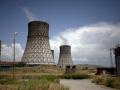
The closure of the outdated and risky Metsamor NPP was
demanded not only by neighboring Turkey and Azerbaijan, but also by the
European Union. Despite all the sympathies for Armenia, the European Union
understood that any accident at the nuclear power plant would affect not only
the closest neighbors of the Armenians, but also negatively affect Europe.
Therefore, back when Serzh Sargsyan was President, Yerevan was ordered to close
the emergency nuclear power plant as one of the conditions of partnership with
the EU. What he didn't do. It was impossible to simply decide to close the
station, as it plays a primary role in supplying the country with electricity.
Armenia had no opportunities to solve the problem on its own, neither
technologically nor financially. The Metsamor NPP was built with funds from the
Union budget using Russian (Soviet) technologies and was actually managed by
the Russian side. However, as well as the energy sector of this country as a
whole. Rosatom is still the main contractor dealing with the maintenance of the
Armenian NPP. Nuclear fuel is also supplied to the station from Russia. In
November 2022, Armenia signed a memorandum with Rosatom on the construction of
a new power unit, but no steps were taken in this project, as Yerevan began to
receive signals from the West.
The construction of a nuclear reactor is both financially
very expensive and very difficult from the point of view of logistics.
According to experts, in some countries, nuclear power plants are not being
built only because there is no appropriate infrastructure to accept the
equipment. Moreover, railways are often built specifically for the
implementation of nuclear projects. Large-scale equipment for nuclear power
plants is delivered only by rail, which has caused Armenia great problems since
the beginning of the Karabakh conflict.
By embarking on the path of real normalization, Armenia has gained the opportunity to begin expanding its geopolitical and geo-economic horizons. To really cope with dependence on Russia, one desire is not enough. We need opportunities that Yerevan did not have. After the meeting in Washington on August 8, Yerevan received these opportunities. The same TRIPP, or the Zangezur Corridor, will allow Armenia to solve the logistics problem and become part of a strategic international corridor for the first time. Plus, after the opening of the border with Azerbaijan, Turkiye will also open its border to Armenians. Without resolving the issue of the road through Meghri, the Turkish side was slow to open the border. Now Armenia is gradually beginning to realize how much it needed the Zangezur Corridor, called TRIPP after August 8. First of all, he gives her freedom.
An agreement on civil nuclear cooperation with the United
States was signed in Yerevan on Monday. The agreement establishes the legal
basis for the export of nuclear technologies, fuels and services by American
companies to Armenia and opens up the opportunity for American firms to compete
for a contract to replace the Soviet-built Metsamor nuclear power plant.
Armenia will receive small modular reactors from the United States, J. D. Vance
said at a joint press conference with Nikol Pashinyan. According to him,
Armenia will become the recipient of small modular reactors with American
technologies. He clarified that the agreement provides for Yerevan to receive
equipment worth up to $5 billion, and in the long term, contracts for fuel
supplies and reactor maintenance worth another $4 billion will be implemented.
It should be noted that $9 billion is half of the state
budget of the Republic of Armenia for 2026.
The Russian side has never offered such investments to the
Armenians. Apparently, realizing that such an amount will never be refunded.
Besides, Moscow did not need such generosity, since Armenia was already in its
hands. Even now, it's not easy enough. By signing an agreement with the
Americans alone, Yerevan will not be able to solve the problem of dependence on
Armenian energy at a click. The 9 billion announced by Vance is the amount that
the United States is willing to spend to help Armenia do this. Washington will
have to start from scratch in Armenia.
The Russian Foreign Ministry has already responded to what
is happening. Deputy Foreign Minister Mikhail Galuzin stated that there are no
real alternatives to Russian proposals for the construction of a new nuclear
power plant in Armenia. Galuzin pointed out that Russia had submitted a package
of detailed proposals to the Armenian side, and Rosatom was ready to start
implementing the project as soon as possible, if the Armenian side so desired.
In addition, Russian and Armenian nuclear scientists, as the deputy minister
said, "come from the same Soviet school and understand each other
well."
However, Yerevan is determined. Negotiations on the 123
agreement in the field of atomic energy have been completed between the
Armenian and American sides.
The 123 Agreement is a bilateral intergovernmental agreement
required for the export of nuclear materials, technology, and equipment from
the United States to other countries. It is so named under section 123 of the
United States Atomic Energy Act of 1954. This section requires compliance with
strict nonproliferation criteria, including a ban on the use of technology for
weapons.
The agreement must pass through Congress and be approved by
the President. There is no doubt that such a document with Armenia will pass
the Congress without any problems. The reason is not only the activity of the
lobby, but also the fact that this country does not have nuclear weapons and
has no ambitions to possess them. The irresponsible statements made by
individual politicians at various times do not mean that Yerevan will ever
seriously consider becoming a nuclear power. Not to mention that no one will
let him do that. But the agreement allows the United States to control the
nuclear energy industry of the country with which they enter into partnership.
Armenia undertakes not to use nuclear materials and technologies for military
purposes (we "honor" the memory of the dirty bomb from the time of
the Karabakh clan), enrich and recycle nuclear materials, transfer information
to other parties, and so on.
The 123 Agreement with the United States has been signed by
about 50 countries since 1955, including the European Union, China, India,
Japan, Kazakhstan, the Republic of Korea, Turkiye, Ukraine, the United Arab
Emirates and others. If there are no force majeure events, Armenia will soon be
among them.
The Armenian authorities have decided that the new NPP will
be of a modular type, but the final choice of the model has not yet been made,
the Minister of Territorial Administration and Infrastructures of the Republic
of Armenia, David Khudatyan, said in early January. According to him, Yerevan
continues to study proposals from partners from Russia, the United States,
China, South Korea and France. The final decision on the choice of the model
will be made in 2026-2027, said Khudatyan, who believes that it is not worth
rushing to make a decision, because modular reactor technologies have not yet
become widespread in the world and we still need to think about it.
Yerevan was not allowed to think long. Judging by the
figures announced by Vance, Armenia will receive small modular reactors from
the United States.
It should be noted that the life of the Metsamor NPP, after
several extensions, finally ends in 2036, after which the plant must be closed.
This nuclear power plant produces 40 percent of Armenia's electricity, and its
closure without replacement capacity will definitely cause an energy crisis in
the country.
In May 2023, it became known that the United States was
exploring the option of building small modular nuclear reactors in Armenia and
other Eurasian countries. According to Maria Longa, coordinator of the US
government's assistance programs in Europe and Eurasia, this is necessary to
"lead to greater energy independence of countries from both Russia and
China."
There is a practice in the world when the operation of a
nuclear power plant can be extended after the completion of the planned period.
However, according to experts, there is no technical possibility to extend the
life of the Armenian NPP once again, and if Armenia is interested in continuing
to use nuclear energy, it needs to build a new power unit. The average
construction period of power units is 7 years from the start of construction
work. Plus financial issues, preparation, and so on. And Armenia, as experts
advise, should start thinking about it today, because the nuclear power plant
in Metsamor has only 10 years left.
What will happen then? Then, if the station is not closed by
that date, it will turn into a weapon of mass destruction.
URL: http://www.today.az/news/politics/265543.html
 Print version
Connect with us. Get latest news and updates.
See Also
- 12 February 2026 [11:11]
Rhymes won't help! - 11 February 2026 [14:14]
United States takes over nuclear security of South Caucasus - 11 February 2026 [13:32]
President Ilham Aliyev chairs meeting on Azerbaijan's new digital architecture action plan - 11 February 2026 [12:43]
President Ilham Aliyev receives delegation headed by President of Arab Parliament - 11 February 2026 [12:41]
CBA, U.S. Chamber of Commerce discuss expanding financial and investment cooperation - 11 February 2026 [11:25]
President Ilham Aliyev sends congratulatory letter to President of Iran - 11 February 2026 [11:09]
Footage of President Ilham Aliyev's meeting with U.S. Vice President JD Vance posted on his social media - 11 February 2026 [10:43]
U.S. Vice President JD Vance pays tribute to Azerbaijani martyrs in Baku - 10 February 2026 [14:32]
President Ilham Aliyev appoints new chairman of State Statistical Committee - decree - 10 February 2026 [13:13]
Lapshin's eternal complaints and eternal adventures
Most Popular
 United States takes over nuclear security of South Caucasus
 Baku, Tehran explore restoring passenger travel via land border amid regional connectivity talks
 Billions in a backpack and Generals' daughters: a little bit about Zatulin's crazy career
 Abbas rejects Israel's 'dangerous' West Bank reform plan
 Trump posts map showing Greenland, Canada and Venezuela under US flag
 G-77 and China Group hold plenary at UNESCO under Azerbaijan's chairmanship
 Elon Musk pledges to cover legal costs for witnesses in Jeffrey Epstein case