|
|

TODAY.AZ / Analytics
Why Fico’s EU critique reflects Slovak politics more than European reality
31 December 2025 [16:00] - TODAY.AZ
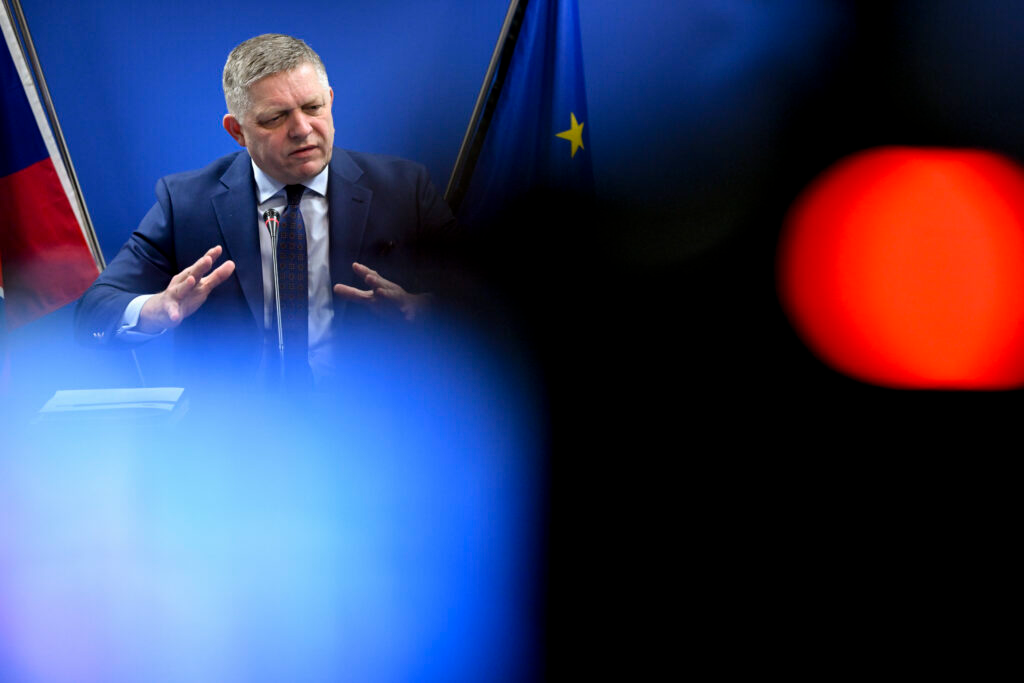
At a time when the European Union is grappling with internal divisions, strategic uncertainty, and growing debates over its future direction, Slovak Prime Minister Robert Fico has openly questioned the bloc’s sustainability.
Speaking during a plenary session of Slovakia’s parliament, Fico warned that the EU risks collapse if it continues to drift away from what he described as its sovereignty, traditions, and historical roots. His remarks, unusually blunt for a sitting EU leader, echo wider tensions inside the Union between advocates of deeper integration and governments that frame Brussels as increasingly detached from national identities.
He warned that if the European Union does not uphold its sovereignty, traditions, and historical roots, it risks 'collapsing.” These remarks were made during a plenary session of Slovakia's parliament.
Fico also commented on the new US national security strategy, which claims that the EU has abandoned its core values and leadership role. He expressed agreement with this assessment.
“Can we be upset with the US Vice President for saying the EU has completely forsaken its traditions? No, he's right. If the EU continues on this path and neglects its sovereignty, traditions, and roots, it will fall. If that collapse is inevitable, so be it,” Fico stated.
He affirmed that Slovakia would stay true to its principles and its firm belief that “one plus one makes two,' referencing the country's constitutional amendment recognizing two genders. Conversely, Fico considers the US strategy to be founded on shared values.
“This represents a new US perspective on Europe and the EU. The documents repeatedly highlight that the EU is abandoning its core values, lacks leadership, and is losing influence internationally,” the prime minister remarked.
He added that this is “our preferred outlook long-term.” According to Fico, the EU no longer holds the global leadership it once did, and its influence is waning.
It is noteworthy that the US recently unveiled its new national security plan, which shocked the EU. The document indicates a rejection of the transatlantic partnership and warns of economic decline and potential cultural erosion due to misguided policies.
On what political, economic, or strategic indicators does Robert Fico base his prediction of an EU “collapse”? Is his criticism aimed at reforming the European Union from within, or does it primarily serve domestic political narratives in Slovakia? How credible is the claim that the new US national security strategy represents a rejection of the transatlantic partnership? Can an EU member state simultaneously benefit from the Union while publicly framing its decline as inevitable?
Talking to Azernews, Sebastian Schaeffer, Director at the Institute for the Danube Region and Central Europe (IDM), offered a critical assessment of Fico’s position:
"Robert Fico’s statements should primarily be read as domestic political signaling rather than as a serious strategic diagnosis of the European Union. His rhetoric about sovereignty, traditions, and “collapse” mirrors narratives that resonate with his electoral base and with broader illiberal discourse in Central Europe. The framing of cultural decline and lost leadership is less an evidence based assessment of EU performance than a political positioning that casts Brussels as an external actor undermining national identity. This does not amount to a coherent alternative vision for Europe but rather a rejection of liberal pluralism framed as realism."
Schaeffer also questioned Fico’s interpretation of the US national security strategy:
"The reference to the US national security strategy is particularly selective. While parts of the document may criticise European strategic weakness or lack of cohesion, interpreting this as a wholesale rejection of the transatlantic partnership is misleading. Fico’s alignment with this reading serves his broader narrative of an EU that has lost its way and needs to be confronted rather than reformed. It is telling that values are reduced to culture war issues, such as gender identity, while questions of rule of law, democratic resilience, or collective security are largely absent from the argument."
Highlighting a deeper contradiction, Schaeffer added:
"There is also a clear contradiction at the heart of Fico’s position. Slovakia benefits politically, economically, and strategically from EU membership and has no credible pathway outside it. Predicting or even accepting the EU’s collapse while remaining a member state is not a strategy but a rhetorical posture. If the EU is indeed weakening, member states like Slovakia have a direct responsibility to contribute to its strengthening rather than amplifying narratives of decline that ultimately undermine their own long term interests."
URL: http://www.today.az/news/analytics/264516.html
 Print version
Connect with us. Get latest news and updates.
See Also
- 25 June 2026 [14:27]
Capitol Hill forum seeks international recognition of Azerbaijani return rights - 25 June 2026 [08:30]
Azerbaijan's insurance push is blueprint for economic security - 24 June 2026 [14:51]
Turkic solidarity in action as Baku, Ashgabat look beyond energy - 23 June 2026 [14:28]
Economist predicts no change in Azerbaijan’s key interest rate - 23 June 2026 [08:30]
Baku's second IsDB summit and a very long to-do list that stretches from Karabakh to Africa - 19 June 2026 [14:25]
Is US-Israel special relationship entering colder era? - 18 June 2026 [08:30]
Great Return enters new phase as focus shifts to jobs and growth - 16 June 2026 [14:47]
Media reform in Azerbaijan enters new phase - 12 June 2026 [14:50]
Can Türkiye maintain its “African solutions to African problems” approach in Niger? - 12 June 2026 [08:30]
Silent revolution of Azerbaijan’s structural economic shift
Most Popular
 Mass Ukrainian drone strike reportedly triggers power outages and fires across Crimea
 Real and "great" - what will the Armenians choose?
 Russian propagandist Simonyan calls for entry ban on Pashinyan supporters
 The world is returning to overland routes, with Azerbaijan at center
 President Ilham Aliyev and President Serdar Berdimuhamedov have lunch together in Shusha
 State Symphony Orchestra fascinates audience with classical music pieces
 Iran reaffirms strategic control over Strait of Hormuz