|
|

TODAY.AZ / Society
Caspian Sea decline prompts five countries to seek joint solutions
10 October 2026 [08:30] - TODAY.AZ
 By Ulviyya Poladova
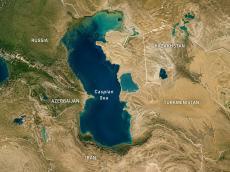
The Caspian Sea’s falling water levels are turning out to be more than an environmental warning. They are a test of whether regional cooperation can deliver results before the damage becomes harder to reverse.
On 9 October, the presidents of Azerbaijan, Turkmenistan, Russia, Kazakhstan and Iran agreed at the first Caspian Environmental Summit in Avaza, Turkmenistan, to establish a commission to investigate the decline and develop joint measures to mitigate its consequences.
The initiative is welcome, but declarations alone look not strong enough to save the Caspian. The commission, involving government representatives and scientists from all five countries, however, is looking to turn shared concern into practical action.
Its first meeting, scheduled for Azerbaijan in the first half of 2027, will be an early test of that commitment.
The sea obviously knows no borders and its future depends on whether the five governments can put scientific evidence and collective responsibility ahead of political differences. The time for action is now.
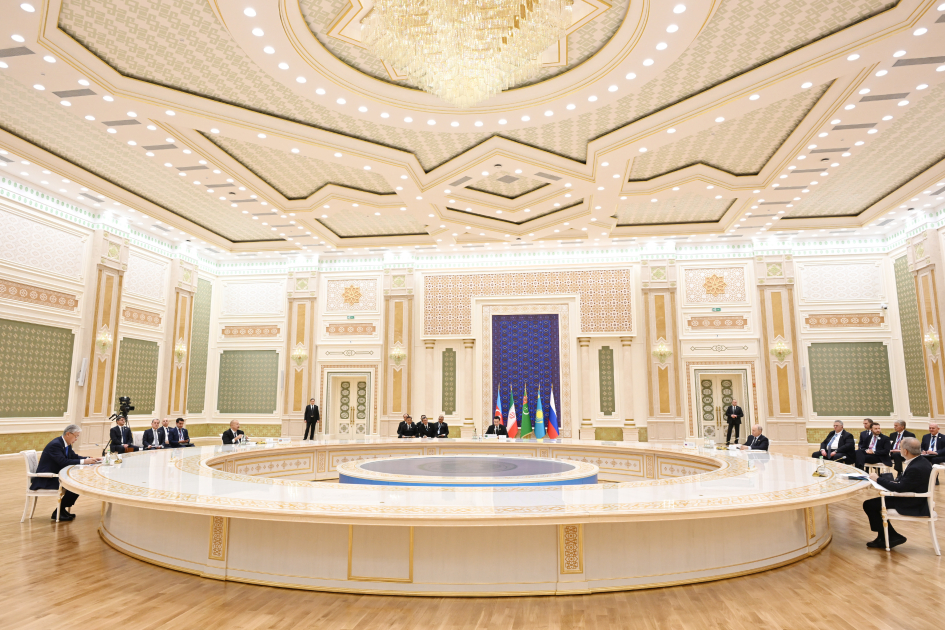
The sharp decline in the Caspian Sea’s water level has already become a strategic problem that goes beyond environmental issues of the individual coastal countries. It affects the region’s economic security, transport connections, and prospects for future development of countries. Statements by President Ilham Aliyev at the extended meeting of the Caspian Environmental Summit on October 9 in Turkmenbashi, Turkmenistan, once again showed the importance of a systemic approach to solving this problem.
"One of the most serious problems facing the Caspian is its shallowing. The decline in the water level of the Caspian Sea has been ongoing for many years. Regrettably, this process has accelerated noticeably in recent times, and the situation continues to deteriorate. A substantial reduction in the sea’s surface area is being observed. The total area of the sea surface has already decreased by more than 20,000 square kilometers," President Ilham Aliyev said.
The head of state also emphasized that if the current trend continues, the consequences could be catastrophic. He noted that the problem of shallowing has implications beyond the environment.
It is worth recalling that back in summer, news emerged about the formation of an island in the middle of the Caspian Sea. According to Yerbolat Mukhashov, founder of Caspian Holiday, new islands have been appearing over the past four to five years in the northern Caspian, especially around a group of islands known as habitats for Caspian seals. A few years ago, the Caspian was full of water, and the thought of such islands forming was unthinkable. But today, the situation with the largest lake on Earth says otherwise. Scientists are sounding the alarm: if the current trend of decreasing water levels continues, the newly formed island could gradually increase in size. Over time, it might become an important habitat for wildlife, including nesting grounds for rare bird species and resting or breeding sites for Caspian seals.
The Caspian Sea problem has been discussed for many years - from scientific publications to UN forums. However, in recent years the rate of shallowing has noticeably accelerated. According to research from the University of Leeds, the Caspian Sea’s level has dropped more than 2.3 meters in the last 30 years. Forecasts suggest that by the end of the 21st century, the sea could lose another 5 to 21 meters of its water level depending on climate change scenarios. Even now, the coastline in some areas has retreated from the places where waves used to lap.
Experts point to climate change as the main cause. The Caspian’s surface temperature has risen by about 1.5°C in recent decades, significantly increasing water evaporation. Meanwhile, the Volga and Ural Rivers - the main sources feeding the sea - are no longer able to compensate for these losses due to droughts, reservoir construction, and growing water withdrawals for agriculture.
The Volga deserves special attention in discussions about the Caspian’s shallowing. About 80% of the river water flowing into the Caspian comes from the Volga. Therefore, changes in river flow directly affect the sea’s water balance. Water resource management in the Volga basin, operation of reservoirs and hydraulic structures on the river, water intake for irrigation, and use of water for industrial and other purposes are all factors capable of influencing the volume of water reaching the Caspian. Accumulation of part of the river flow in reservoirs and water consumption for various needs alter the natural flow pattern. The scale of these factors’ impact on the water volume reaching the Caspian must be determined through regular measurements and scientific analysis.
Sea retreat adds new risk to Eurasian energy markets
The Caspian region is rich in hydrocarbons, making it a key energy hub for countries such as Azerbaijan, Kazakhstan, and Turkmenistan. While oil and gas extraction bring significant economic benefits, they also contribute to greenhouse gas emissions, further worsening the climate crisis, which in turn drives the sea’s decline. This creates a feedback loop where economic dependence on fossil fuels worsens environmental degradation.
The consequences of the Caspian’s shrinking are multifaceted. Ecologically, falling water levels threaten biodiversity, disrupt fish spawning grounds, and degrade critical habitats. Economically, the retreating shoreline poses serious challenges to coastal infrastructure, tourism, and fisheries. In the northern Caspian, particularly along Kazakhstan’s shallow coastline, even a 10-meter drop could push the shoreline back by up to 200 kilometers, rendering ports and seaside developments obsolete.
Discussions on forums increasingly focus on transport corridors, but it is difficult for them to develop when one link in the chain is broken. The impact of breaks in the transport chain can be explained through the Middle Corridor, which runs from China toward Europe. Goods reaching Kazakhstan pass through the Caspian, then to Azerbaijan, and from there toward Europe. Over time, the shrinking Caspian Sea could force ports in Kazakhstan and Azerbaijan to face higher operating costs, restrictions on cargo loading, and expensive infrastructure upgrades.
It should be noted that as the sea and approaches to the berths become shallower, loading ships must be done more cautiously. As a result, ships that once carried maximum volumes of containers or other goods are forced to sail partially loaded. To transport the same volume of goods, more trips may be needed. This increases the cost per ton of cargo and reduces transportation efficiency across the Caspian. According to the OECD, the water level drop already limits full loading capability in Kazakhstan’s Aktau and Kuryk ports. To solve this problem, dredging operations were carried out in the port of Kuryk, which made it possible to increase the working depth to 8.5 meters and restore full load capacity.
The causes of shallowing are diverse, and from here follows the question - what will happen if appropriate measures are not taken? A vivid example from history is the Aral Sea, which became one of the biggest man-made ecological disasters of the 20th century. Another disturbing example is the situation with Lake Urmia in Iran. A few decades ago, it was considered one of the largest salt lakes in the Middle East, but due to drought, dam construction and excessive water consumption, the reservoir has practically disappeared. Experts warned that the drying up of Urmia would lead to the formation of billions of tons of salt and large-scale migration of the population. This experience shows that without timely and coordinated action, an environmental problem gradually turns into economic and social crises. For the Caspian, through which important trade routes pass, the cost of inaction could be especially high.
The shrinking of the Caspian Sea is not just an environmental issue but a systemic crisis that crosses climate science, resource management, and regional politics. Ecologists and climate scientists agree that no single country can solve the problem of the Caspian Sea's declining water level on its own. Preventing a major environmental disaster will require coordinated efforts to manage water resources, preserve river inflows, strengthen environmental monitoring and limit uncontrolled economic activity across the Caspian basin. Without cooperation among the five Caspian states, efforts to address these challenges are likely to remain fragmented, while the environmental and economic consequences continue to grow.
Photo generated by AI
URL: http://www.today.az/news/society/270744.html
 Print version
Connect with us. Get latest news and updates.
See Also
- 10 October 2026 [15:32]
Baku and Absheron weather forecast for October 11 - 10 October 2026 [14:05]
Azerbaijan’s life expectancy exceeds 77 years, health official says - 10 October 2026 [10:29]
Youth Artificial Intelligence Forum held at Nakhchivan State University - 10 October 2026 [08:30]
Caspian Sea decline prompts five countries to seek joint solutions - 09 October 2026 [17:09]
Hadrut’s liberation: strategic turning point in Azerbaijan’s 44-Day war - 09 October 2026 [14:37]
Baku hosts NATO partnership training on peacekeeping operations - 08 October 2026 [12:02]
Turkmenbashi hosted ceremony to sign documents - 08 October 2026 [11:18]
President: Azerbaijan's interaction with Central Asian countries has expanded significantly in recent years - 08 October 2026 [11:15]
Azerbaijan's participation in C5 format opens new opportunities for cooperation, Turkmen president says - 08 October 2026 [10:34]
8th Consultative Meeting of Heads of State of Azerbaijan and Central Asia commences in Turkmenbashi
Most Popular
 MEM?M holds seminar with People's Poet Sabir Rustamkhanli
 US approves $2.27 billion in arms sales to Egypt, Kuwait and UAE
 Puccini's 'Turandot' set for major Baku premiere with People's Artist Yusif Eyvazov
 Russia warns against spreading 'false information' as reports emerge of second plague case
 Unhealed wound of Azerbaijan
 Azerbaijan explores critical minerals logistics cooperation with Dutch C. Steinweg Group
 Russia warns US-backed AI data centre could strain Armenia's electricity supply