|
|

TODAY.AZ / World news
Iran reaffirms strategic control over Strait of Hormuz
23 June 2026 [13:04] - TODAY.AZ
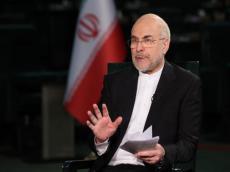
Iran’s Speaker of Parliament Mohammad Bagher Ghalibaf has stated that the situation regarding control of the Strait of Hormuz will not return to its pre-crisis state following recent tensions with the United States, emphasizing that Tehran will maintain its strategic role over the vital waterway, AzerNEWS reports.
According to Press TV, Ghalibaf told reporters upon returning from Switzerland that "everyone must understand that the management of the Strait of Hormuz will never return to the pre-war situation." He added that while international regulations will be respected, Iran will continue to oversee the strait.
Ghalibaf was one of the key members of the Iranian delegation in talks with the United States.
It was also reported that high-level negotiations between Iranian and U.S. representatives concluded in Switzerland, with Pakistan and Qatar acting as mediators.
U.S. Vice President J.D. Vance, who led the American delegation, said after the talks that the sides had made significant progress. He noted that mechanisms aimed at keeping the Strait of Hormuz open and ensuring a ceasefire in the region were agreed upon.
The Strait of Hormuz is a narrow maritime passage between the Persian Gulf and the Gulf of Oman, holding significant strategic importance as approximately 20% of global oil supplies and around 25% of liquefied natural gas (LNG) exports pass through it. Essentially, it serves as an energy artery for countries in Asia, Europe, and even the United States.
The strait separates Iran from Oman, and in some areas, the width of the shipping channel is only two miles on each side. Given its critical role in global energy supply chains, ensuring the safety and security of this vital waterway is paramount for international trade and economic stability.
URL: http://www.today.az/news/regions/268532.html
 Print version
Connect with us. Get latest news and updates.
See Also
- 10 September 2026 [15:11]
Algeria severs diplomatic relations with UAE - 10 September 2026 [15:00]
Houthi forces advance toward Bab-el-Mandeb Strait, threatening Red Sea trade routes - 10 September 2026 [14:00]
JPMorgan could become first bank to reach $1 trillion market cap - 10 September 2026 [13:24]
US military strikes suspected drug-trafficking boat in Caribbean - 10 September 2026 [12:32]
Singapore PM becomes world’s highest-paid political leader - 10 September 2026 [11:56]
Israel opens embassy in Slovenia for first time - 10 September 2026 [11:25]
Drone attack on Makhachkala sparks fires at port - 10 September 2026 [10:34]
Israel appoints new head of mission to Türkiye - 10 September 2026 [10:22]
Zelensky’s plane delayed after drone threat in Moldovan airspace - 10 September 2026 [09:00]
Russian Embassy vows dialogue, warns Hungary
Most Popular
 Masochism and diaspora: how Armenian community reminds world of its crimes
 East-West and North-South corridors should not be seen as competing routes
 Azerbaijan expands transport capacity as Baku Port targets 260,000 tons
 Hungary expels 10 Russian diplomats over ‘unacceptable activities’
 Middle Corridor countries need better coordination to unlock its potential, says expert
 International Sulut Symposium held in Ismayilli
 Former Obama-era official urges US to prepare extreme measures to block China’s AGI ambitions