|
|

TODAY.AZ / Analytics
America First, NATO Second? - Impact of U.S. policy on alliance unity
15 April 2026 [14:00] - TODAY.AZ
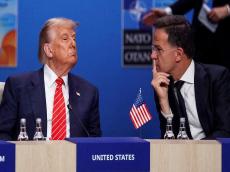
The North Atlantic Treaty Organization (NATO) is facing one of the most complex periods in its modern history. Once seen as the cornerstone of Western security, the alliance is now challenged not only by external threats, such as Russia and China, but also by internal fragmentation, political disagreements, and shifting transatlantic priorities.
Recent developments, including debates in Slovenia over NATO membership, U.S. President Donald Trump’s rhetoric, and the crisis over Greenland, highlight structural weaknesses that raise fundamental questions about NATO’s future.
The return of Donald Trump has intensified tensions within NATO. Trump has repeatedly questioned the alliance’s value, arguing that the United States carries a disproportionate burden.
Recent events show that this is not just rhetoric. NATO allies have refused to support U.S. initiatives, such as proposed military actions in the Middle East, exposing deep divisions.
At the same time, Trump has openly considered reducing U.S. military involvement in Europe and even hinted at withdrawal from NATO mechanisms. According to The Wall Street Journal, Washington is already considering a plan to redeploy American troops from "disloyal countries" in Europe. Germany, Italy and Spain may lose the American military presence.
Since the end of World War II, the United States has maintained a significant military presence across Europe, shaping the continent’s security landscape for decades. What began as a postwar stabilization effort soon evolved into a strategic necessity during the Cold War, when tensions between the Western bloc and the Soviet Union were at their peak. At that time, the number of American troops stationed in Europe reached as high as 500,000.
During his first term, President Donald Trump proposed reducing the U.S. troop presence in Europe by 10,000 personnel, a move that sparked debate among policymakers and allies. The plan was later reversed by former President Joe Biden.
Experts have warned that recent political rhetoric surrounding the United States’ role in NATO could have significant diplomatic consequences. In particular, discussions about a possible U.S. withdrawal from the alliance have raised concerns about the future stability of transatlantic security cooperation.
Analysts argue that if the United States were to reduce its commitment to NATO or leave the alliance entirely, it could weaken the strategic position of the organization. NATO has long relied on U.S. military, financial, and logistical support as a cornerstone of its collective defense system. A reduction in this support could undermine trust among member states and create uncertainty about the alliance’s ability to respond effectively to emerging threats.
European leaders, meanwhile, are reportedly considering how to adapt to a potential shift in U.S. policy.
American experts say that European allies pay at least a third of the cost of maintaining US military bases. In 2013, it cost European countries at least $2.5 billion a year. Now this figure may be several times higher. According to Italian estimates, American bases in the country cost taxpayers 200 million euros annually. In addition, many American facilities in Europe do not pay rent for the use of real estate, and military personnel in Europe are exempt from European taxes, for example, they do not pay VAT.
At the same time, defense spending remains a contentious issue. Despite repeated commitments, several NATO members still fall short of the alliance’s benchmark of allocating 2% of GDP to defense.
It should be noted that U.S. military bases are not located only in Europe, but are also widely deployed across the Middle East and other strategic regions around the world. American forces are stationed in several countries, including Qatar, Bahrain, Kuwait, the United Arab Emirates, and Iraq.
The alliance would not collapse overnight. Under the terms of the eponymous treaty that established NATO, member states must adhere to a formal mechanism to leave, as outlined in Article13.
According to former US official Joe Kent, discussions around a potential U.S. withdrawal from the North Atlantic Treaty Organization are not primarily about expanding American freedom or reducing international constraints.
"Unfortunately, leaving NATO will not be about getting rid of bonds that restrict our freedom. We will leave NATO so that when Turkiye and Israel eventually clash in Syria, we can stand on Israel’s side," Kent stated.
Meanwhile, Türkiye’s Foreign Minister Hakan Fidan says Israel may shift its strategic focus toward portraying Türkiye as its next regional rival after Iran, warning that Israeli policy increasingly depends on identifying external adversaries.
Speaking to Anadolu Agency on Monday, Fidan said Israel "may seek to designate Türkiye as a new adversary after Iran".
Expert assessments suggest that a complete U.S. withdrawal from NATO is highly improbable in the near term, particularly against the backdrop of intensifying tensions across the Middle East. Any move to suspend relations with NATO would not merely signal a diplomatic rupture; it would effectively leave the USA strategically exposed within an increasingly volatile regional environment, depriving it of the collective security architecture that underpins its global military posture.
Moreover, with the Russia-Ukraine war still far from resolution, Washington cannot easily afford to disengage from the Western front. Turning away from its transatlantic allies, particularly the European Union, would carry profound geopolitical costs. The entrenched American military footprint across Europe, comprising roughly 40 bases, further underscores the structural depth of these ties and renders any abrupt strategic decoupling both impractical and counterproductive.
At most, such rhetoric may reflect a temporary political posture rather than a durable policy shift. Even if pursued, it is unlikely to extend beyond the tenure of figures such as Donald Trump, whose foreign policy instincts have at times aligned closely with the current leadership of Israel. However, the fluid nature of American electoral politics introduces a high degree of uncertainty. The outcome of forthcoming U.S. elections, and the policy orientation of any new administration, could fundamentally reshape Washington’s alliances and its broader engagement with both Europe and the Middle East.
URL: http://www.today.az/news/analytics/267155.html
 Print version
Connect with us. Get latest news and updates.
See Also
- 16 July 2026 [14:47]
Slovakia's gas push reveals bigger shift in Europe's energy future - 15 July 2026 [14:43]
Slovakia's Shusha diplomacy reinforces Azerbaijan's strategic role in Europe - 15 July 2026 [08:30]
How Shusha put decolonization back at centre of global debate - 14 July 2026 [14:25]
Garabagh becomes Azerbaijan’s next economic powerhouse - 14 July 2026 [08:30]
President Aliyev's Shusha speech reveals Azerbaijan's new diplomatic doctrine - 13 July 2026 [08:30]
Shusha Global Media Forum returns this time in its most consequential form yet - 09 July 2026 [14:20]
How geopolitical shocks transforming Azerbaijan's global role - 08 July 2026 [08:30]
Georgia's Anaklia shift opens door to new investment and stronger Middle Corridor - 07 July 2026 [08:30]
Azerbaijan's growing reserves reinforce confidence in manat peg - 01 July 2026 [14:17]
Europe's return to Baku comes with new strategic realities
Most Popular
 What caused last-minute delay in Iraq-Türkiye Development Road deal?
 Azerbaijan, Pakistan expand justice cooperation
 Coca-Cola hits all-time high on nearly 7% surge
 Ukraine downs 65 Russian drones overnight
 New poll finds 49% of Americans favor Netanyahu's arrest during U.S. trip
 Iran says those accepting its frozen funds won't pass via Hormuz
 Saudi Arabia confirms attack on militias in Iraq