Today.Az » Politics » Corridors and Fantasies: Why Armenia needs to hurry up with TRIPP
06 August 2026 [12:12] - Today.Az
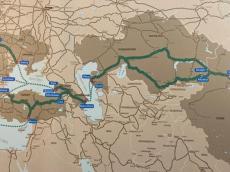
Recently, an article was published in the Iranian media
telling about Iran's plans to turn Armenia into a key transit artery. Both in
terms of logistics and global energy projects. Armenia itself is not capable of
turning into anything worthwhile on its own, and Tehran is ready to help it in
this.
It is not only in Armenia that people can fantasize.
The Iranian publication tried to bring back to the agenda
the abandoned idea of an alternative to the Middle Corridor, of which
Azerbaijan is known to be a key link. Armenia is a long-time partner of Tehran,
but it is accepted into the game only when it is necessary to adjust the
situation in relations with Baku. Iran is well aware that transit through
Armenia, whether logistical or energy, will require huge investments due to the
lack of appropriate transport, pipeline and electrical infrastructure in this
country.
Iran, by offering such ideas to the Armenian side, does not
imply Iranian investments. The issue of Armenian transit bypassing Azerbaijan
has been raised for several years, but no steps have been taken so far. All
that was done was to provide Armenia with an office in the Iranian port of
Chabahar. This is the only thing that the Iranian side was willing to do as
proof of partnership.
It is characteristic that plans for Armenia were loudly
discussed in Tehran after 2020. This was due to the appearance of the Zangezur
Corridor on the regional agenda. Iran does not want communications from
mainland Azerbaijan to its Nakhchivan Autonomous Region, seeing this project as
the last missing link in uniting the Turkic world. However, the opposition to
the project is explained by the interests of Armenia. Thanks to Iranian
support, Yerevan has been stubbornly rejecting the corridor through Meghri for
several years. In return, the southern neighbor promised him the transformation
into a logistics and energy hub of the region. Yerevan believed it. The
Armenian fantasy knows no borders, and in 2024 Armenia announced plans to
participate in the management of the Chabahar port. She pinned hopes on this
port to become part of a hypothetical multimodal high-speed route that would
leave the Middle Corridor out of business and help Yerevan finally close the
topic of the Zangezur corridor. Our neighbors didn't really hide the latter.
Armenia is not the partner that Iran and India needed in the
Chabahar project. It is not a major exporter and does not have major business
interests in the Persian Gulf and the Indian Ocean. It was invited to manage
the port only as a country capable of acting as a barrier for projects that
Iran does not like and curbing Azerbaijan's ambitions.
The Chabahar port project has been implemented jointly by
Iran and India since 2022. And again, not "for", but
"against". The Iranian-Indian idea was supposed to put a stick in the
wheels of the Chinese "Belt and Road". This is probably why the
project failed. Cases that begin with a desire to harm or circumvent someone,
as a rule, are rarely successful. By the way, this also applies to the grandiose
fantasy of the United States and the European Union about some kind of
international economic corridor from India to Europe, which was supposed to
leave China with nothing and reset the Middle Corridor.
The ideologists of all these projects did not foresee one
very important and defining moment - the regions along the route should be
stable and safe.
After last year's escalation between Iran and Israel, the
Chabahar project began to slow down. In September last year, the United States
expanded sanctions against Iran, and in early 2026, India stopped investing in
the project. Indian financing is not provided in the current year's budget. It
is doubtful that this decision will change in the coming months, given what is
happening in the Middle East. The strange US war against Iran continues.
Strikes are being carried out, among other things, on the port infrastructure.
So, in July, a strike was carried out on Chabahar in order to disable the
Maritime Traffic Control Center. The port has been damaged. No one can predict
when all this will end and what the situation in the region will be like after
this war.
After the transformation of the Zangezur Corridor into
TRIPP, it became more difficult to deal with the project. If Yerevan could
previously build its opposition to Baku with fantasies about "threats to
sovereignty," it can no longer talk in this spirit with Washington. And
Iran understands this too.
By and large, Azerbaijan does not care about which projects
Armenia participates in with Iran or anyone else. No matter what you think, the
region already has a reliable, functional modern communications system that
will be difficult to compete with. People in Azerbaijan write and talk about
this not in order to prohibit neighbors from interacting as they want, but to
return them to earth and not let them be distracted from the main task. The
main task of Armenia, if it really wants to become a transit country and feel
like part of a truly important global effort, is to implement the Zangezur
Corridor as soon as possible. Well, or TRIPP, as she prefers to call this road.
And fantasies about a transit hub and the like distract from this task.
Another publication in the Iranian media caused a joyful
excitement in the expert circles of Armenia and aroused old illusions. Ara
Poghosyan, a political scientist and expert on regional security, said:
"Such projects are strategically important for both Iran and Armenia. The
creation of the Armenian-Iranian logistics corridor, whether as a balancing
factor or a counterweight, would be a real alternative to the TRIPP project,
which Iran regards as a threat."
Poghosyan believes that this is very important for Iran, as
the ring with the "participation" of Azerbaijan and Pakistan is
shrinking around it (?!). In general, according to Poghosyan, TRIPP is a
political, not an economic project, and its implementation will depend on the
balance of power in the region and the position of the United States in the new
scenario.
What new scenario is the Armenian expert on regional
security talking about? Apparently, it is about the one that the opponents of
the current course of Yerevan expect following the results of the current war.
They expect Iran to increase its influence in the South Caucasus and put
pressure on Baku. At the same time, the "disgraced" States are
predicted to abandon their consolidation in the region and, accordingly, the
project of communications through Meghri. Therefore, the Armenian so-called Iranists
and others who consider themselves experts in the region advise Yerevan not to
rush into TRIPP.
Armenian experts are also mistaken in the fact that the
Iran-Armenia link is very necessary for Russia as part of the North-South
corridor. It is precisely for this that the Russian side does not need Armenia.
Its geography, lack of necessary infrastructure, and lack of common borders
with the Russian Federation pose problems. Since the late 90s, there have been
talks in Armenia about plans to build a railway between Armenia and Iran. There
was no one to finance the project. At that time, Tehran did not intend to turn
Armenia into a logistics hub and did not plan to allocate funds. The Russian
side unequivocally called the project a dead end. Russia has always considered
Central Asia and Azerbaijan as a route to the Persian Gulf. It is no
coincidence that Moscow has undertaken to co-finance the Rasht-Astara road,
which is supposed to close the North-South railway corridor through Azerbaijan
into a single chain.
Due to Iran's delay in work on this section, as well as in
connection with the implementation of the Araz corridor, interesting opinions
have emerged in the Russian expert community, according to which it would be
more expedient to use the already actively under construction Araz corridor
rather than the hypothetical expensive Rasht-Astara project for cargo
transportation between Russia and Iran.
We are talking about a communication route from the western
borders of Azerbaijan to the Nakhchivan Autonomous Republic through the
territory of Iran. The total length of the Agband-Kalale-Julfa route is
estimated at about 107 kilometers, and less than half of it will pass through
Iran. This means less work and lower costs. After the construction of the road,
it can be connected to the North-South corridor as a seamless North-South
railway route. And this has already happened. The road to Iran and further
south through Azerbaijani Julfa existed during the Soviet period. Russian
experts recall that in the 1970s and 1980s, shipments through the Julfa
junction amounted to over 1.5 million tons per year. To this day, the sorting
unit, which is huge by local standards, has been preserved, and it is possible
to restore the wheelset changing stations. It is necessary to build about 60
kilometers of tracks, which is much easier than about 150 kilometers from
Astara to Rasht.
In other words, a seamless North-South railway will appear,
but it will not pass through Armenia. The Araz corridor may also deprive
Armenia of the opportunity to join transit to the West. Roads to the Nakhchivan
Autonomous Republic are being built on Turkish territory, and the Araz corridor
may well be regarded as the southern route of the Zangezur Corridor. By
opposing the road through Meghri, Iran is quite openly trying to take away the
transit role from the Armenians.
Therefore, Yerevan should hurry up.
In mid-July, the Armenian Foreign Ministry announced the
submission to the Constitutional Court of a framework agreement on strategic
cooperation within the framework of the Trump's Route for International Peace
and Prosperity (TRIPP) project, signed between Armenia and the United States.
After the EU decision, the document will be submitted to the National Assembly
for ratification.
The Armenian side is acting very slowly, taking long pauses.
It's like he's expecting some kind of change and unexpected circumstances.
However, Baku is in a hurry. At a press conference with member of the Swiss
Federal Council, Head of the Federal Department of Foreign Affairs and OSCE
Chairman-in-Office Ignazio Cassis in Baku, Azerbaijani Foreign Minister Jeyhun
Bayramov expressed hope that the implementation of TRIPP would begin in 2026,
and pointedly stressed that although this is a bilateral project between
Armenia and the United States, the American side "He regularly informs
Baku about the progress of the project, as this project will not be able to
function without Azerbaijan's participation.
There are four and a half months until the end of the year.
The Constitutional Court of Armenia should hurry up so as not to deceive Baku's
expectations.
|
