Today.Az » Politics » Moscow must restrain its own mouthpieces like Solovyov.
16 January 2026 [13:13] - Today.Az
It is obvious that Russia has no intention and is
objectively incapable of conducting a "CBO" against Central Asia.
However, the very possibility of such threats in the public space creates
another barrier to constructive cooperation. This undermines Moscow's
long-standing efforts to create an image of a partner rather than a metropolis.
The Russian authorities should distance themselves from such outrage.
Otherwise, the country's strategic interests will be undermined not by external
opponents, but by the internal incontinence of its own mouthpieces, like
Solovyov.
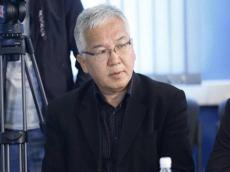
This was stated by the Kyrgyz political scientist Mars
Sariev.
The aggressive rhetoric of individual Russian propagandists
is perceived sensitively, he noted. Vladimir Solovyov's latest attacks have
stirred up the space from the South Caucasus to Central Asia. Formally, these
statements are not the official position of Moscow, but in real politics it is
not only the formal status that matters, but the signal that the elites and
societies of neighboring countries read, Sariev believes.
"If we assume that there really is an unspoken
understanding between the major centers of power on the division of spheres of
influence - the settlement of the Ukrainian issue, recognition of the dominant
role of Russia and China in Central Asia, and the search for a constructive
solution to the Taiwan problem - then it is precisely such shocking rhetoric
that undermines these delicate agreements. Such statements destroy trust and
increase anxiety in the region. Systemic policy requires predictability and respect
for the sovereignty of neighbors. The militaristic fantasies of odious
propagandists work exactly in the opposite direction - they turn even neutral
initiatives, such as exercises within the framework of the OTG, into a source
of anxiety and distrust," said the Kyrgyz expert.
It should be recalled that at the OTG summit in Gabala last
October, President Ilham Aliyev took the initiative to hold joint exercises for
the countries of the Organization of Turkic States. In an interview with local
TV channels in early January, the head of state, referring to this topic, said:
"We are now sending our messages through various diplomatic channels. If a
general agreement is reached, then this year we will see these exercises. If we
see that the exercises did not take place, then we will need to ask: "Who
did not support this?" But I hope that all member countries will support
this."
Commenting on these statements, Mars Sariev noted that the
delay in supporting the initiative was not due to a change in attitude towards
the very idea of cooperation, but to a radically different international
environment. According to the political scientist, in the last two years, the
Turkic states have repeatedly conducted military exercises in a bilateral and
multilateral format. For example, in October last year, joint exercises
"Unity - 2025" were held in the Samarkand region with the
participation of military personnel from Azerbaijan, Kazakhstan, Tajikistan,
Kyrgyzstan and Uzbekistan. In 2025, joint maneuvers were conducted as many as
25 times between Azerbaijan and Turkiye alone.
"But today the situation is different. The world is
entering a phase of fierce block confrontation. Against the background of the
general growth of instability, tensions are increasing in the Middle East,
Africa and in a number of other strategically important regions of the world.
In such a situation, military maneuvers on a regional scale can be perceived as
part of a global configuration of forces. They can be viewed by non-regional
players through the prism of belonging to one of the sides of the global
confrontation. The caution of the Central Asian countries, I think, is related
to this," said the Kyrgyz political scientist.
|
