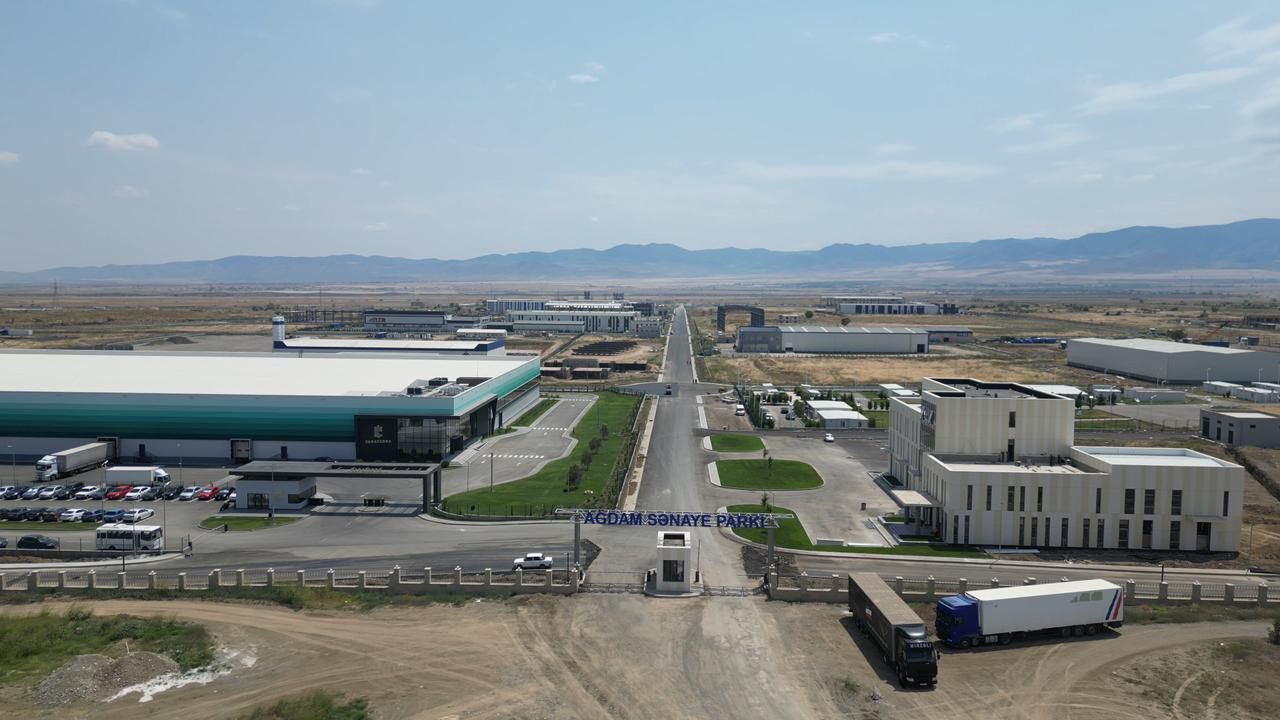
The expansion of manufacturing in the Aghdam Industrial Park illustrates how investment in liberated territories can support employment, strengthen domestic production and introduce Azerbaijani goods to international markets. The production of specialist safety footwear and polyurethane boots links the rebuilding of Karabakh with the country’s ambition to develop a competitive non-oil economy.
The enterprise operating across 2.5 hectares in the industrial park manufactures protective footwear for industrial and working environments. Its products serve the domestic market and reach customers abroad, giving the facility a role in export development. Supplying these sectors creates opportunities for local industrial capabilities, skilled employment and stronger links between manufacturers and business customers.
The company’s disclosed export activity points to a growing international reach. In Kazakhstan, it has signed agreements with three companies and completed deliveries at different times. Further orders from the Central Asian market are under consideration, creating scope for deeper commercial relations. In Albania, an agreement with a local distributor envisages an initial shipment of 1,200 pairs of products, including natural-leather safety shoes with polyurethane soles and polyurethane boots. The order covers footwear in O4 and S5 safety classes and is ready for export.
The Canadian market adds another significant dimension. A Canadian company has ordered more than 3,500 pairs of polyurethane boots, with shipment planned for the following month. Italy represents a further European opportunity: negotiations on a cooperation agreement are continuing, initial orders have arrived, and the planned November shipment covers 1,200 pairs of polyurethane boots under the Made in Azerbaijan label. Interest from the United Arab Emirates and Jordan also creates prospects for additional market development.
The three quantified orders for Albania, Canada and Italy together account for more than 5,900 pairs. This figure provides a useful snapshot of the scale of the announced business pipeline, while Kazakhstan’s deliveries and potential new orders add another established export channel. Interest from the Gulf and the Middle East broadens the potential geography further.
For Azerbaijan, the significance of such projects extends beyond individual sales contracts. A manufacturer based in Aghdam contributes to the revival of economic activity across liberated territories and demonstrates how industrial infrastructure can support the next stage of regional development. Every operating facility creates demand for workers, transport, maintenance, packaging, utilities, suppliers and business services. As production expands, these connections can generate employment across a wider local economic network, supporting household incomes and strengthening the commercial life of surrounding communities.
The employment effect extends beyond the factory floor. Production requires operators, technicians, quality specialists, warehouse staff and managers, while shipments create work for drivers, freight forwarders and customs services. Training workers for these roles can build skills and support career paths. As suppliers and service providers respond to the factory’s needs, an industrial investment can stimulate economic activity across the region.
Industrial parks can bring together land, infrastructure, utilities and investor support in a planned environment, helping businesses establish operations and build supply relationships. In Aghdam, this model is particularly important because manufacturing can complement reconstruction in housing, roads, public services and agriculture. New jobs give residents opportunities to participate directly in the region’s economic recovery, while demand for local services can encourage further entrepreneurship.
Export growth also adds value to the national diversification agenda. International orders help manufacturers test their products against demanding customer requirements, improve production processes and build commercial credibility. The Made in Azerbaijan label gives overseas buyers a clear national identity for locally manufactured goods. Success in specialised footwear can also encourage the development of related activities, including materials processing, moulding, design, quality control, logistics and technical services.
The next stage of this progress will depend on production capacity, consistent quality, certification, competitive pricing and reliable delivery. The announced orders already provide a concrete indication of international demand and a foundation for future expansion.
Aghdam’s emerging manufacturing base shows how regional reconstruction and export-oriented industrialisation can reinforce one another. By turning investment into production, jobs and overseas sales, Azerbaijan can broaden the foundations of economic growth and strengthen the role of liberated territories in its national development. The journey from a 2.5-hectare industrial site to customers across several regions captures an important ambition: building a diversified economy whose products carry Azerbaijani value into global markets.