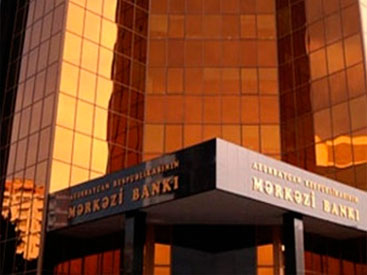
Source: AzerNews
The economic figures of Azerbaijan continue to grow as it was predicted by the government and the Central Bank of Azerbaijan (CBA), as well as international institutions, ensuring it stronger resistance to external influences.
According to the CBA report on the monetary policy, the ratio of the strategic currency reserves to the country's GDP in the second quarter kept unchanged close to 70 percent.
Azerbaijan's strategic currency reserves are formed from CBA reserves, SOFAZ assets and treasury of the Finance Ministry.
In January-June in 2013, the country's strategic currency reserves increased by 3.5 percent, or $ 1.6 billion to $47.7 billion compared to early 2013. Azerbaijan's strategic currency reserves allow the country to finance three-year imports of goods and services. The volume of strategic currency reserves exceeds the external debt of Azerbaijan about eight-fold.
The CBA reports that high growth rates of the strategic currency reserves are a factor that reduces the sensitivity of the Azerbaijani economy to external crisis influences and forms strong macroeconomic buffer.
During the reporting period, the foreign exchange reserves managed by the CBA grew up by 8.8 percent and reached $12.7 billion, which is enough to finance nine-month imports of goods and services.
The report read that the growth of the country's strategic currency reserves continued and considerably exceeded the international norms of sufficiency.
The State Customs Committee reported that the foreign trade turnover with 137 world countries amounted to $17.14 billion in January-June 2013. The volume of import increased by 16.01 percent and hit $5.17 billion. Azerbaijan exported 1,560 products, and imported 5,347 different goods. As of Jan.-June 2013, the nominal index of export exceeded import. This formed the foreign trade surplus to the amount of $6.8 billion.
An increase in production on the main types of chemical products was observed. The share of chemical products was 0.27 percent in the total volume of exports.
Also high growth rates are seen in exports of cotton fiber, vegetable oils, metal pipes, potatoes and other products. Ten per cent of imports accounted for food and its volume in the period fell by 0.3 percent, which can be viewed as an extension of domestic production.
In addition, a greater increase is expected in the level of self-sufficiency in most agricultural commodities and food products by the end of the year.
According to the CBA report, in addition to export, the dynamics of remittances and capital flows from abroad had an enhancing effect on the foreign exchange earnings.
The State Statistics Committee reported that the volume of foreign investments in the country's economy was $ 2.4 billion in the first half of 2013, more than 40 percent increase compared to the same period in 2012 .
Forecasts of the World Bank, the International Monetary Fund and the United Nations show that economic growth in the country this year will be at around 3.5 percent.
The IMF in its latest report said the average annual inflation in Azerbaijan is projected at 3.4 percent in 2013.
The European Bank for Reconstruction and Development (EBRD) also predicts Azerbaijan's GDP growth at 3.5 percent in 2013 and 4 percent in 2014, compared to 2.2 percent in 2012.
The state forecast on GDP growth rate in 2013 is at 5.3 percent, and the total volume of Azerbaijan's GDP is expected to reach $71 billion, with 55 percent of the growth to be provided by the non-oil economy.
The country recorded a 9.7 percent growth rate in the non-oil sector and its share in GDP reached 52.7 percent in 2012.
Manat appreciates against USD
In Azerbaijan, where the structure of the strategic currency reserves is determined based on the currency structure of foreign trade, foreign debt and the currency of the monetary policy, the U.S. dollar plays the key role in all components.
The CBA continued its exchange rate policy in the framework of bilateral targeting of the dollar/manat. Under the conditions of large surplus in the country's balance of payments, the offer in the currency market exceeded the demand.
In January-June 2013, exchange rate of the manat against the U.S. dollar has not changed, and has appreciated by 0.06 percent.
Standard deviation was also low (0.0001). The stability of the national currency had a positive impact on the environment and sustainability of the financial sector. During the reporting period, manat has appreciated in both nominal and real terms in relation to the currencies of the U.S., UK, Turkey, Russia, Ukraine, Japan and South Korea.
During the reporting period, the nominal effective exchange rate (NER) of manat on non-oil sector in the total turnover rose by 2.6 percent. According to the model estimates, the strengthening of NER by one percent leads to lowering of prices by 0.28 percent. The real effective exchange rate of the non-oil sector has strengthened during the reporting period by 1.5 percent.
Thus, the CBA has ensured stability of bilateral exchange rate of manat and the dollar. Multilateral same rate of manat rose, which is a positive development from the point of view of achieving the inflation objectives.
CBA says strong macroeconomic buffer ensured for Azerbaijan