Today.Az » Politics » Important project for Baku receive approval of EU: East-West energy chain close
08 December 2025 [10:10] - Today.Az
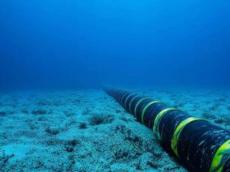
Last week, positive developments appeared in the Black Sea
Energy cable project, implemented with the key participation of Azerbaijan. The
project has finally received PMI status from the European Commission.
The PCI/PMI status (a project of pan-European interest) is
very important, as it makes the project attractive to investors, primarily
European ones. The status opens up great opportunities for the project. It will
allow for the use of accelerated administrative procedures, provide the project
with a special legal framework, cross-border regulatory compatibility, and the
possibility of obtaining EU funding. We are not talking about prestige and
transparency, which will attract increased attention to the project. The
project is now subject to European energy legislation, which will give it
access to special grant financial instruments from the European Union.
The strategic partnership agreement for the construction of
the Black Sea Energy was signed on December 17, 2022 by Azerbaijan, Georgia,
Hungary and Romania in Bucharest. The project involves laying an underwater
cable with a length of 1,195 km. The cable will be designed to supply green
electricity produced in Azerbaijan through Georgia and the Black Sea to Romania
for subsequent transportation to Hungary and the rest of Europe. Of the 1,195
km of cable, 95 km will pass overland, 1,100 km under water. At the initial
stage, the cable will be designed to export 4 GW of green energy.
The project cost is 3.5 billion rubles. euro. The European
Commission, as previously reported, is ready to allocate 2.3 billion. euro. The
implementation will take about 3-4 years.
In May 2024, the energy operators of Azerbaijan, Romania,
Georgia and Hungary signed a memorandum on the establishment of a joint venture
within the framework of the Black Sea Energy project. In September of the same
year, a shareholder agreement was signed between the energy operators of four
countries - Transelectrica (Romania), Georgian State Electrosystem (Georgia),
Azerenerji (Azerbaijan) and MVM Energy (Hungary).
On March 10, Azerbaijan, Georgia, Hungary and Romania sent a
letter to the EU Commissioner for Energy Dan Jorgensen with a request to assign
the Black Sea Energy project the status of a Project of common European
interest. The decision to apply to the EU was made at a meeting of the steering
committee for the creation of a green energy corridor. As the Minister of
Energy of Azerbaijan, Parviz Shahbazov, noted in the social network X on this
occasion, the meeting brought important results. The necessary steps were
agreed upon to include the project in the Ten-Year EU Network Development Plan
(TYNDP), Bulgaria's accession to the project and the fiber optic cable
component.
Only EU member states can apply for the status, and Hungary
and Romania have completed this mission.
The status issue went into active standby mode in October,
when it became known that the final list of projects to be awarded the status
of a Project of Common European Interest would be compiled by the end of 2025.
Commenting on this issue, analysts noted that Black Sea Energy can well count
on financial injections, as it is considered one of the flagship initiatives of
the Global Gateway program aimed at strengthening energy ties between the EU
and the countries of the South Caucasus. Today, Central Asia is already
included in the Global Gateway.
It should be noted that in October, the project was included
in the eight-year development plan of the European Association of Energy System
Operators for 2026-2036. In addition, the project has passed an active
feasibility study at the Directorate of Energy of the European Commission,
which once again confirmed that it is necessary for Europe and contains great
potential.
Today, Black Sea Energy is no longer the project it was
originally conceived to be, or even the one it was signed in December 2022.
Black Sea Energy was an initiative of Georgia, and the plans
were initially made between the EU and that country. Azerbaijan joined later,
and with its involvement, the project began to expand towards Central Asia. Our
country, one might say, was the missing link that would make the project work.
It is well known that when Baku gets involved in a case and when it suits its
interests, it does not allow the mechanisms to stop.
In his speech at the opening ceremony of the COP29 Leaders'
Summit on November 12, 2024 in Baku, President Ilham Aliyev stated that
Azerbaijan focuses on export markets and actively cooperates with partners to
implement another important project in the field of energy security. In
particular, we are talking about laying the Black Sea submarine cable.
"This will allow us to export green energy to Europe, and the technical
potential of this cable - by the way, the feasibility study for this project will
be ready very soon - is about four gigawatts," the head of state said,
adding that "this is just the beginning."
With Azerbaijan's connection to the Black Sea energy
project, the opportunity has opened up to integrate Central Asia into it. For
this purpose, the issue of implementing a similar Black Sea Caspian energy
cable, which will supply green energy from Central Asian countries, is being
resolved. In early July of this year, Azerbaijan, Kazakhstan and Uzbekistan
signed a document on the establishment of the Yasil Dehliz Birliyi joint
venture, which will implement the green energy corridor project across the
Caspian Sea. The document was signed between Azerenergy, KEGOC and National
Electric Grids of Uzbekistan. The ceremony took place in Baku.
The corresponding project provides for connecting the energy
systems of the three countries and exporting electricity by laying a
high-voltage cable along the bottom of the Caspian Sea.
The EU-Central Asia summit was recently held in Tashkent.
The transit of green energy from Central Asia to Europe was one of the topics
of discussion.
A company has recently been identified to prepare a
feasibility study. The Italian company CESI S.p.A. will work on the first stage
of the feasibility study of the Central Asia-Azerbaijan Energy Green Corridor
project. The Italians who won the relevant tender will also act as consultants
to Green Corridor Alliance LLC.
It should be recalled that within the framework of the 29th
Conference of the Parties to the United Nations Framework Convention on Climate
Change (COP29), the Presidents of Azerbaijan, Kazakhstan and Uzbekistan, Ilham
Aliyev, Kassym-Jomart Tokayev and Shavkat Mirziyoyev, met in Baku, following
which a Memorandum of Understanding was signed between the three countries in
terms of the development and transfer of green energy. Afterwards, the leaders
held a four-way meeting with Saudi Arabia's Energy Minister Prince Abdulaziz
bin Salman and signed an "Executive Plan for cooperation in the field of
green energy development and transfer" between the energy ministries of
the four countries.
The "executive Plan," as Energy Minister Parviz
Shahbazov noted, cemented Saudi Arabia's role as a key partner in this
trilateral project. According to the minister, this event was an important
strategic step that will give a significant impetus to international energy
cooperation and environmental investments to transform the region into a single
geo-economic space with a focus on creating and strengthening strategic
partnerships between the countries. The head of the department did not rule out
that Kyrgyzstan and Tajikistan, with their vast water resources, could join
this project in the future and make a valuable contribution to it.
At the same time, during the G20, the head of the Ministry
of Energy of Tajikistan, Daler Juma, announced his country's readiness to
consider this issue. Tajikistan, together with other Central Asian countries,
is currently implementing the CASA-1000 project to supply electricity to
Pakistan, so they have sufficient experience in solving such tasks.
As we can see, Azerbaijan, as on the Middle Corridor, is
once again turning out to be a link between East and West and opening windows
of opportunity for its partners. Today, no one will deny that Black Sea Energy
would not have acquired such a scale if Azerbaijan had not been among the
signatories of the project in December 2022.
|
