
On Thursday, global oil prices began to creep up again. Slowly but noticeably, amid fears of renewed escalation in the Middle East.
As reported, January Brent crude futures on the London ICE Futures Exchange were trading at $95.33 per barrel, which is 0.76 percent higher than the day before. Azerbaijani Azeri Light has risen in price even more noticeably. Its CIF-based price in the Italian port of Augusta increased by $4.21, or 4.4 percent compared to the previous indicator, and reached $100.34.
A new escalation in the Middle East is expected amid the news that continues to come from Iran. The Iranian media report daily on the country's "exploits" in the Strait of Hormuz. The IRGC proudly declares the bombing of tankers and other vessels "unauthorized" by the Iranian side. Against this background, observers do not rule out an escalation, since such a situation cannot remain unanswered for long.
The latest oil quotes confirm the correctness of those analysts who warned importers against being overly happy about falling oil prices. Analysts, including Azerbaijani ones, pointed out that the sharp decline was temporary and related only to price adjustments.
The crises of recent years, and especially this year, have forced everyone who had previously buried hydrocarbon energy to take a more realistic look at the situation. Three years ago, the International Energy Agency (IEA) announced that oil and gas were a thing of the past. But it soon became clear that the IEA had been too hasty with its forecasts.
According to the Agency's estimates, oil demand will continue to grow until about 2030, although it was previously assumed that this growth would stop in the next couple of years. And this is only if it is possible to implement all the planned reforms leading to a green transition. If it fails, the demand for fossil fuels will grow until 2050. After this period, regardless of the demand for oil, the demand for natural gas will grow.
The energy transition proclaimed by the European Union is noticeably stalling. The enthusiasm that has gripped the world for a while is waning. The reason may not be that awareness of the threat of future climate disasters is weakening, but rather a too radical approach and separation from reality. Initially, the ideologues of the green transition set unrealistic goals that would eventually lead to an energy crisis. In addition, climate rescue was considered in isolation from the Global South. This imbalance and discrimination could not but affect the fate of the initiative.
Azerbaijan forced Azerbaijan to think about the Global South, which, as part of its COP29 chairmanship, literally wrested from the conditional Global North a document on financing by developed countries of developing countries within the framework of decarbonization goals. Following the results of the climate conference in Baku in November 2024, a New collective quantitative goal (NCQG, "Baku Financing Goal") was approved, defining the mobilization of significant funds by 2035. The Azerbaijani side has done a lot of work to achieve this decision.
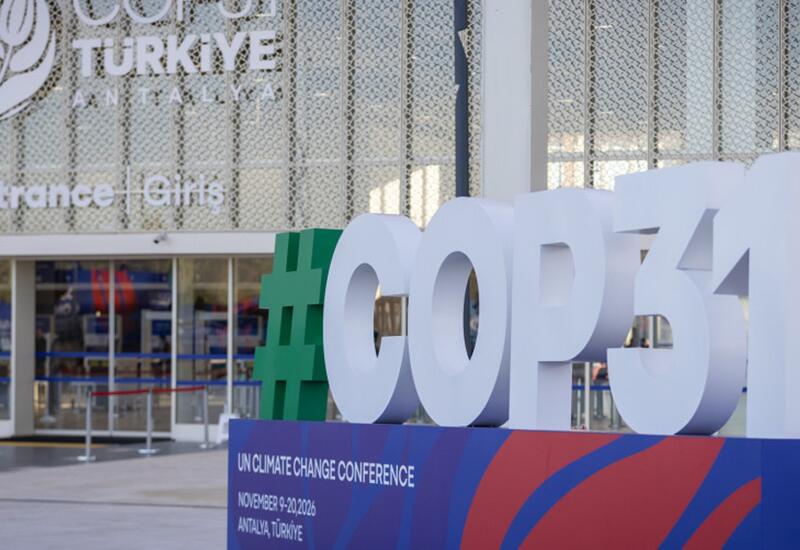
However, developed countries have forgotten about their obligations. Western media articles about the failure of COP31 in Antalya mainly write about the "oil lobby", which prevented the adoption of the final document. Negotiations on the final document lasted two days, which was a record for the COP, and led to nothing. The final document was blocked by the European Union, as it did not provide for the abandonment of oil, gas and coal. The inclusion of such formulations was opposed by the producing countries, primarily Saudi Arabia. As a result, for the first time, the COP was left without documented results.
The failure of the climate agenda is also the fault of the European Union, which has completely forgotten about its obligations. European countries, as observers note, arrived in Antalya without new financial guarantees for the countries of the South. Analyzing the results of the conference, some media outlets cite the refusal of developed countries to increase their contribution to the fight against warming as the second main reason for the collapse of negotiations. According to the agreement reached in Baku, rich countries pledged to increase aid to the developing world to 300 billion euros per year by 2035, but the final text of COP31 did not contain a word about specific deadlines and guarantees.
"France and the European Union came empty-handed," the Vert.eco website quotes a statement from the French Network for Combating Climate Change (RAC). "The EU cannot condemn the failure of negotiations and at the same time refuse to consider the necessary financial means to fulfill climate commitments and ensure adaptation."
On Wednesday, OPEC Secretary General Haytham al-Ghaith posted an article on his blog titled "What really happened at COP31?" The article emphasizes that a fair energy transition requires the use of all available technologies and types of energy, taking into account the interests of all countries.
The head of OPEC rejected the accusations against Saudi Arabia. Al-Gays emphasizes that the oil and gas producing countries supported the Antalya Pact, acted in good faith throughout COP31 and were not the ones who paralyzed the negotiations.
"The European Union is developing initiatives to reduce the share of hydrocarbons in its energy mix, but at the same time continues to relax its own rules regarding the future use of hydrocarbons. Between 2021 and 2025, the EU increased its liquefied natural gas import capacity by more than a third, and also almost doubled its LNG imports over the same period. In addition, the EU recently noted the need to review the situation with oil refining facilities in the interests of energy security, and many European countries are postponing the phased decommissioning of coal-fired power plants," the OPEC Secretary General reasonably recalled.
Al-Ghaith also pointed out that COP31 showed the lack of collective willingness of developed countries to help developing countries adapt to climate change. According to the author, the reference to the target of financing climate change adaptation in the amount of 120 billion dollars was excluded from the draft COP31 final decision.
"How can the exclusion of means of implementation be combined with the promotion of a global energy transition? It is worth recalling that developed countries have industrialized, having spent about 4/5 of the carbon budget. The principles of justice and historical responsibility require developed countries to lead climate action and provide support to developing countries in the form of implementation tools, including financing, technology transfer and capacity building," Haysam al-Ghaith's article says.
The remarks made by the head of OPEC allow us to see the whole picture, and not only in the interpretation of the European media, which accused Turkey and the producing countries of almost conspiring against saving the planet. COP31 has indeed failed in terms of its contribution to the fight against climate change, but it has shown that there are serious systemic problems of a political nature. The Global North and the Global South cannot agree, leaving aside their own interests or balancing them for the sake of common benefit.
The accusations against mining countries were especially loud before COP29. Azerbaijani President Ilham Aliyev has repeatedly criticized Western politicians and the media for blaming the oil and gas states for the climate crisis. And during the climate conference in Baku, the head of state put an end to this issue with his high-profile speech at the opening of the event.
"Oil, gas, wind, sun, gold, silver, copper are all natural resources. Countries cannot be blamed for having these resources. Also, they should not be blamed for bringing these resources to the market. Because the market needs them. People need them. So, here's my message: As president of COP29, we will, of course, strongly advocate for a green transition, and we are doing so. But at the same time, we must be realistic," said Azerbaijani President Ilham Aliyev.
The global economy really needs oil and gas. Paradoxically, the success of the energy transition also depends on them. Despite the importance and relevance of the decarbonization agenda, this is a complex and expensive process that not everyone can handle. Without a realistic approach, there will be no effect from the decisions made. Even if a document had been signed at COP31 stating the abandonment of fossil fuels, the world would still not be able to do without oil and gas for a very long time. And perhaps he will never be able to give them up.